Trying to decide between Klarna vs Affirm for your store or next purchase? Here's the quick version:
Klarna serves 114 million users across 26 countries, went public on the NYSE in September 2025, and just secured an exclusive Walmart partnership, making it the stronger pick for global merchants and subscription businesses.
Affirm serves ~23 million users primarily in the U.S. and Canada, charges zero consumer fees, hit profitability in FY2025, and excels at high-ticket financing (avg. order value: $276) — making it the better fit for large-purchase retailers.
Klarna fees for merchants: ~3.29%–5.99% + $0.30 per transaction. Affirm merchant fees: ~6% + $0.30.
Both charge a $15 chargeback fee.
For consumers: Affirm wins on zero fees; Klarna wins on flexibility and global acceptance.
The BNPL market hit ~$560 billion GMV in 2025 and is still growing fast, both platforms are solid choices depending on your use case.
The global Buy Now, Pay Later (BNPL) market reached approximately $560 billion in gross merchandise volume in 2025, growing at a projected 20.7% CAGR. So it's no wonder why BNPL payment providers like Klarna and Affirm command significant attention in the industry.
Klarna and Affirm Payments are transforming the eCommerce landscape with a suite of features designed to meet the diverse needs of their customers. But the affirm vs klarna debate is more nuanced than it might first appear. Both platforms offer BNPL installments, but they differ significantly in fees, merchant reach, interest rates, and target markets.
That's the question we want to help you answer in today’s guide. We'll explore the strengths, benefits, and challenges of Klarna and Affirm, offering a clear comparison to help you decide which platform best fits your payment needs. Whether you're choosing klarna or affirm as a merchant, or affirm or klarna as a shopper, this guide covers everything you need to know.
Aperçu des fonctionnalités de Klarna
Klarna is a leading Buy Now, Pay Later payment provider enabling consumers to purchase items from eCommerce and physical stores without paying the full amount upfront. Founded in Stockholm, Sweden, in 2005, Klarna's growth spurt began with the streamlining of invoice payments for eCommerce customers. The reduced payment friction meant more sales and high conversions for the business.
But Klarna's rapid expansion came after the team introduced the BNPL model in the early 2000s, onboarding over 850,000 global merchant partners and ~114 million customers across 26 countries, with ~34 million based in the U.S. Klarna went public on the New York Stock Exchange in September 2025, the largest fintech IPO of the year, raising $1.37 billion and reaching a market valuation of over $17 billion on its first day of trading.
In March 2025, Klarna secured an exclusive partnership with Walmart through OnePay, a significant move that previously belonged to Affirm. Klarna reported $2.8 billion in revenue in 2024, with $105 billion in gross merchandise volume processed.
Klarna's BNPL model has proven especially beneficial to online retailers, reducing cart abandonment rates, which had plagued the industry due to complicated checkout processes. Klarna’s higher-converting checkout experience allows shoppers to pay for purchases in four interest-free installments every two weeks or settle the entire amount within 30 days. Klarna is said to process two million transactions daily, with big-name users including Nike, Adidas, H&M, and now Walmart.
How Does Klarna Work? Key Features
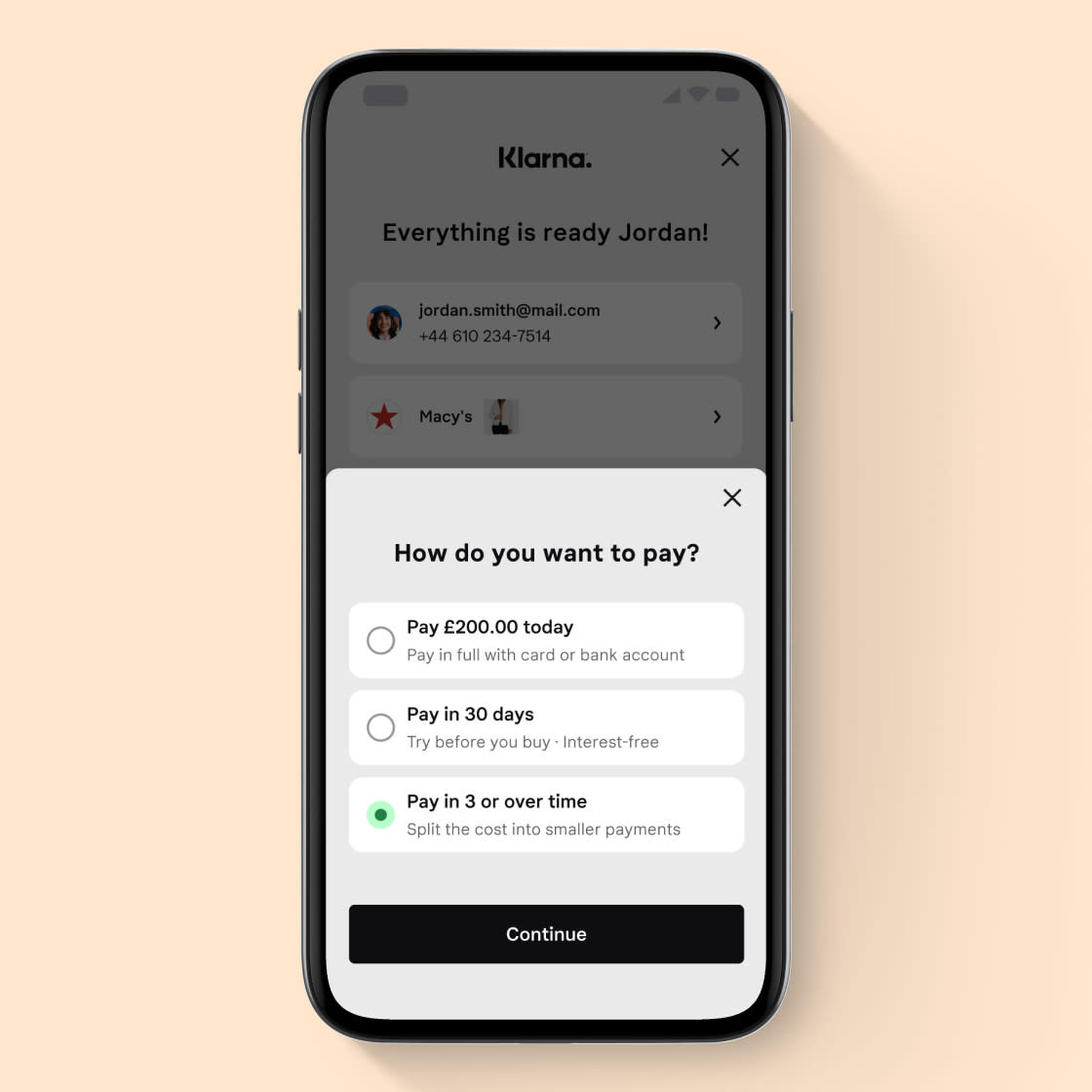
Klarna gives users a convenient payment process, whether they're purchasing from an eCommerce website, a mobile app, or a physical store. Understanding how Klarna works is straightforward: shoppers choose Klarna at checkout and select a repayment plan.
Klarna empowers users to avoid predatory debts by enabling them to track orders, payment programs, payment history, and access customer support all within the Klarna app. Notable Klarna features include the following:
Paiement en 4 fois : les consommateurs peuvent régler leurs achats en quatre versements sans frais, le premier étant dû au moment du paiement et les trois suivants étant prélevés toutes les deux semaines.
Paiement différé de 30 jours : les clients peuvent effectuer leurs achats dès maintenant et régler leur commande dans les 30 jours s'ils sont satisfaits de leur achat.
Crédits à long terme : Klarna propose des solutions de financement pour les achats importants sur une longue durée — généralement comprise entre 6 et 36 mois, avec des taux d'intérêt compétitifs à partir de 7,99 % — par l'intermédiaire de son partenaire WebBank.
Klarna Card: Consumers can use a Klarna virtual card for installment payment and financing even if the store they're transacting with has yet to integrate the service. As of 2025, Klarna also launched a U.S. debit card pilot with FDIC-insured funds.
KlarnaUSD Stablecoin: Launched in November 2025, Klarna released its own stablecoin on Stripe's blockchain to reduce costs on international payments.
AI Shopping Assistant: Klarna has deployed an OpenAI-powered shopping assistant to help users manage spending and discover products.
For banks, fintechs, and merchants, Klarna's open banking makes finance "more accessible, fair, and simple for everyone." Klarna achieves this by enabling companies to leverage its connectivity to develop new products that benefit end users. Klarna says 15,000 partners are currently using its open banking API service. Half of the top 100 U.S. online retailers used Klarna's payment tools over the past year, and two-thirds ran advertising campaigns on its platform.
Grâce à leur intégration simple et rapide, les commerçants peuvent enrichir leur boutique en proposant une option de paiement différé. Vous pouvez choisir le mode de paiement le mieux adapté à vos clients, élaborer une solution sur mesure ou procéder à l'intégration via des prestataires de services de paiement sur des plateformes telles que Shopify, WooCommerce ou Magento.
Klarna Fees: What Do Merchants Pay?
Klarna's business model is to charge merchants a flat fee per transaction and a percentage of sales, around 5% in the U.S. This is slightly higher than traditional card processors like Stripe or Shopify Payments charge. Understanding Klarna fees is important for merchants evaluating their margins. Klarna says its fees can also vary based on the country and which Klarna service the consumer chooses to use:
Klarna Pay Later: Klarna's Pay Later option, which allows customers to settle their purchase within 14-30 days, generally attracts transaction processing fees between 3.29% + $0.30 and 5.99% + $0.30 per transaction.
Klarna Pay Now: Klarna's Pay Now option, offered through SOFORT, a notable bank transfer system available in Austria, Belgium, Germany, the Netherlands, and Spain, carries a transaction fee of ~2.99% + 40.30 per transaction.
Financement Klarna : l'option de financement à tempérament proposée par Klarna comprend des frais de transaction allant de 3,29 % + 0,30 $ à 5,99 % + 0,30 $.
Frais de commerçant Klarna : bien qu'il n'y ait pas de frais d'inscription, les frais de commerçant Klarna varient chaque mois en fonction du contrat du commerçant et du volume de ventes.
Chargeback Fees: Klarna charges a ~$15 chargeback fee for every transaction dispute filed against you.
Buyers can also use the Klarna app at other retailers for a $2.12 service fee. There may be other costs, like currency conversion fees for international payments and integration fees. These costs vary based on the platform involved.
Les avantages de Klarna
Klarna s'est imposée comme l'un des principaux prestataires de services de paiement « achat maintenant, paiement plus tard » (BNPL) aux États-Unis et dans le monde entier. Parmi les principaux avantages de Klarna, on peut citer :
Global availability with ~850,000 global merchant partners and ~114 million customers across 26 countries.
Les processus de paiement accélérés réduisent la durée des transactions et le taux d'abandon de panier, un problème récurrent dans le commerce électronique.
Multiple repayment options are available; shoppers can choose from Pay in 4, Pay in 30, or longer-term financing plans.
Les taux d'intérêt nuls proposés dans le cadre des formules « Pay in 4 » ou « Pay in 30 » favorisent la fidélisation de la clientèle, car les clients satisfaits qui peuvent étaler le paiement de leurs achats sont plus enclins à revenir.
Klarna protège les commerçants contre les conséquences financières liées au non-paiement en assumant les risques liés à son financement.
Klarna est facile à configurer et convivial, et s'intègre aux principales plateformes de commerce électronique pour permettre l'acceptation rapide des paiements.
Les mesures avancées de prévention de la fraude mises en place par Klarna permettent de réduire les pertes financières.
Les vérifications de solvabilité informelles, qui offrent un taux d'acceptation élevé, permettent aux entreprises de générer des revenus.
Klarna went public in September 2025, adding institutional transparency and credibility for merchants evaluating long-term platform risk.
Les inconvénients de Klarna
Chaque plateforme présente des inconvénients qu'il convient d'examiner afin de prendre une décision éclairée. En ce qui concerne Klarna, les inconvénients signalés sont les suivants :
Klarna facture aux entreprises des frais de transaction correspondant à un pourcentage du montant total de la transaction.
Consumers who miss repayment deadlines incur a $7 fee after 10 days. However, Klarna ensures the total late fees for an order will not exceed 25% of the total purchase amount. Affirm has called attention to these as "junk fees", a point worth noting when comparing klarna vs affirm.
Defaulting on repayment may result in a shopper being handed over to a collection agency and reported to the credit bureau, negatively affecting a person's credit score.
Selon certains analystes, comme les services « achat maintenant, paiement plus tard » (BNPL) s'appuient sur des algorithmes internes plutôt que sur les vérifications de solvabilité traditionnelles, le système peut être vulnérable à la fraude.
Présentation d'Affirm et aperçu des fonctionnalités
Affirm is another household name in the buy now, pay later financing vertical. PayPal co-founder, Max Levchin, founded the payment network in 2012. The company went public on Nasdaq in January 2021 and has a market capitalization exceeding $28 billion as of early 2026, nearly double Klarna's IPO valuation.
Affirm delivered 46% revenue growth in 2024, reaching $2.32 billion, the fastest growth of any major BNPL provider that year, and crossed into profitability with a net profit of $52 million in fiscal year 2025.
Affirm se veut une alternative saine aux cartes de crédit. Les prêts Affirm s'accompagnent d'un échéancier de remboursement fixe, et les acheteurs connaissent leurs options avant de finaliser chaque transaction. Ainsi, ils ne paient jamais plus que le montant convenu. Les utilisateurs peuvent effectuer des transactions en ligne ou via l'application Affirm chez les commerçants participants, qui peuvent générer des numéros de carte virtuels pour les achats dans n'importe quel magasin acceptant les cartes Visa. De plus, les clients d'Affirm peuvent choisir des plans de paiement allant jusqu'à 48 mois, ce qui est plus flexible que les options traditionnelles de paiement en 4 versements proposées par des concurrents comme Klarna.
Lorsque vous créez un compte Affirm, la société évalue votre situation et vous attribue une limite de dépenses personnalisée. Bien que cette limite varie d'une personne à l'autre, elle ne peut en aucun cas dépasser 17 500 $.
Affirm now has approximately 23 million active users and 377,000 merchant partners, with deep integrations at Amazon, Shopify, and, until March 2025, Walmart.
Principales fonctionnalités d'Affirm
Affirm is for purchase financing with partner merchants. Unlike some platforms that provide short-term loans alongside bill payment or money transfer services, Affirm focuses solely on shopping financing. Notable Affirm features include the following:
Aucuns frais : les clients ne paient ni frais de retard, ni frais de remboursement anticipé, ni frais annuels, ni frais d'ouverture ou de clôture de compte.
Pay in 4: Affirm's "Pay in 4" option lets you pay in four equal installments over six weeks, with zero interest or fees for purchases between $50 and $1,000.
Carte Affirm : les clients peuvent utiliser les cartes de débit Affirm pour régler la totalité du montant, comme avec une carte de paiement classique, ou opter pour des plans de paiement flexibles via l'application.
Financement mensuel : Affirm permet aux acheteurs de financer des achats jusqu'à 17 500 $, avec des durées de remboursement allant de 3 à 48 mois à un taux annuel effectif global (TAEG) d'environ 30 %. Ce taux dépend de votre profil de risque et du commerçant concerné.
Affirm typically allows merchants to determine credit limits for their shoppers, with a maximum threshold of $17,500. They’ve partnered with thousands of retailers across categories like apparel, travel, electronics, home, and fitness. You can shop using Affirm online or with the mobile app, and for in-store purchases, you can use the virtual card.
How Much Does Affirm Charge Merchants?
Affirm does not charge any fees to shoppers. So how much does Affirm charge merchants? The BNPL provider charges a percentage of each transaction. Here's the breakdown:
Affirm Loan Interest Rates: Affirm's APR ranges from 0% to 36%, depending on a user’s credibility. A user can pay more for Affirm compared to credit cards with an average APR of 19.07%, according to Federal Reserve data.
Frais de traitement des transactions Affirm : les frais de traitement des transactions Affirm pour les commerçants s'élèvent à environ 6 % + 0,30 $ par achat. Ce montant peut varier en fonction du risque estimé, de la taille de l'entreprise et du programme choisi.
Affirm propose des formules personnalisées avec des solutions sur mesure aux grandes entreprises, selon une structure tarifaire différente. Parmi les autres frais figurent les commissions d'interchange et les frais de gestion des prêts facturés aux investisseurs tiers.
Les avantages d'Affirm
Affirm propose des taux d'intérêt pouvant descendre jusqu'à 0 % pour des durées allant jusqu'à 48 mois. L'intégrer à votre boutique est particulièrement avantageux pour les vendeurs d'articles haut de gamme dont le prix dépasse 500 $ et pour ceux qui ciblent les consommateurs de la génération Z, dont les dépenses sont inférieures à 100 $. Parmi les principaux avantages d'Affirm, on peut citer :
C'est très simple de commencer ; la procédure d'inscription ne nécessite que quelques étapes et un minimum d'informations.
Affirm procède à une vérification de solvabilité sans incidence sur le dossier de crédit des acheteurs afin d'évaluer leur solvabilité.
Buyers can split costs into four interest-free biweekly payments, with the first installment due at purchase, or choose extended repayment over three or more months –meaning high conversion for merchants.
Affirm's “Pay in 4” service attracts no interest, making it appealing to Gen Z and Millennial shoppers. This could translate into repeat purchases for you.
Shoppers do not pay any fees for late repayments, prepayment, account opening, or closure. This is a key differentiator in the affirm vs klarna fee debate.
Affirm achieved net profitability in fiscal year 2025, a major milestone that adds long-term stability and confidence for merchant partners.
The platform has positive ratings and integrates with major stores, including Amazon and Shopify.
Les inconvénients d'Affirm
Les prestataires de services « acheter maintenant, payer plus tard » (BNPL) tels qu'Affirm ont fait l'objet de critiques pour diverses raisons. Les inconvénients notables d'Affirm sont les suivants :
Affirm propose des options sans intérêts, mais certains plans à long terme sont plus coûteux que le financement par carte, avec des taux d'intérêt pouvant atteindre 36 %.
Bien qu'Affirm ne facture pas de frais de retard, un défaut de paiement de plus de 120 jours pourrait entraîner le transfert de votre prêt à une agence de recouvrement, ce qui pourrait nuire à votre cote de crédit.
Affirm facture aux entreprises des frais de transaction correspondant à un pourcentage du montant total de la transaction.
Le remboursement d'une commande Affirm équivaut à un remboursement par carte de crédit, mais Affirm prélève des frais sur chaque transaction.
Affirm lost its exclusive Walmart BNPL partnership to Klarna in March 2025, which was a notable blow to its U.S. retail footprint.
Klarna vs Affirm : les principales différences
The BNPL services that Klarna and Affirm provide are quite comparable to a large extent. But differences abound. When examining klarna vs affirm closely, key differences emerge across fees, reach, and purchase size. Let's examine these distinctions to help you decide which platform is best for you.
Based on Estimates
Modes de paiement
Klarna :
Propose plusieurs formules de paiement flexibles, notamment le paiement en 4 fois, le paiement dans les 30 jours et des options de financement à long terme via WebBank.
Un acompte de 25 % du montant de la transaction est exigé.
Il n'y a pas de montant minimum de dépenses requis et aucune limite de dépenses n'est prédéfinie. À la place, une décision d'approbation automatique est prise à chaque fois que vous remboursez votre prêt, ce qui détermine le montant que vous pouvez dépenser.
Affirmer :
Offers Pay in 4, Pay in 2 plan, Pay in 30 plan, or long-term loans that typically span 3 to 48 months.
Les clients peuvent bénéficier du programme « Payez plus tard » pour les transactions éligibles supérieures à 100 $ et financer des achats jusqu'à 17 500 $.
Permet d'effectuer des achats sans apport initial.
Taux d'intérêt et frais
Klarna :
Propose généralement des facilités de paiement sans intérêts pour les options à court terme.
Les financements à plus long terme sont assortis d'un taux d'intérêt à partir de 7,99 % pouvant aller jusqu'à 29,99 %.
Des frais de 7 $ sont facturés après 10 jours de retard de paiement.
Pourrait signaler les retards et les défauts de paiement à l'agence d'évaluation du crédit.
Les frais de commission varient chaque mois en fonction du contrat du commerçant et du volume des ventes.
Affirmer :
En général, les prêts « Pay in 4 » sont proposés sans frais d'intérêt.
Long-term financing interest rates up to 36% APR.
Ne facture ni frais de retard ni intérêts composés en cas de paiement tardif.
Les frais facturés aux commerçants varient en fonction du risque perçu, de la taille de l'entreprise et du programme choisi.
Caters to a diverse customer base and partners with ~850,000 merchants across 26 countries.
Largement adoptée dans les principaux secteurs de la distribution, du voyage et de l'hôtellerie, de la santé et du bien-être, ainsi que de l'automobile.
114 million active consumers as of 2025.
Listed on the NYSE under ticker KLAR as of September 2025.
Les utilisateurs doivent être résidents des États-Unis ou de leurs territoires, être âgés d'au moins 18 ans, disposer d'une carte bancaire ou d'un compte bancaire valide, avoir un historique de crédit positif et être en mesure de recevoir des codes de vérification par SMS.
Des taux d'approbation plus élevés.
Affirmer :
S'adresse principalement aux entreprises qui vendent directement aux consommateurs américains et canadiens.
Approximately 23 million active users and 377,000 active merchants as of early 2026.
Les utilisateurs doivent être résidents des États-Unis, du Canada ou d'Australie, être âgés d'au moins 18 ans, disposer d'une carte bancaire ou d'un compte bancaire valide, avoir un historique de crédit positif et être en mesure de recevoir des codes de vérification par SMS.
Des taux d'approbation plus faibles.
Public cible
Ces deux plateformes attirent principalement les jeunes.
Selon Affirm, ses services séduisent particulièrement les milléniaux et la génération Z, 46,14 % des utilisateurs se déclarant hommes et 53,86 % femmes.
Is Klarna or Affirm Better? The Final Verdict
Klarna and Affirm Payments have transformed how consumers make payments and experience products they love. They are safe to use and packed with features, and the interest rates are generally manageable. Integrating them into your store helps you improve your AOV and minimize cart abandonment. So, is Klarna or Affirm better for your business? And is Affirm or Klarna better as a consumer? The answer depends on your use case. Here's our verdict on which is better, Klarna or Affirm:
Quand choisir Klarna
Subscription service: Klarna enables customers to subscribe to services, tokenizing payment preferences for automatic renewals. Shoppers can manage their settings in the Klarna App.
Produit à la demande: le fait de choisir Klarna comme mode de paiement par défaut dans un portefeuille numérique simplifie l'achat en un clic d'articles à la demande grâce à des options de paiement flexibles.
Open banking service provider: Vendors offering Pay Now services can have their users bypass card networks by paying Klarna directly from their bank account.
PME actives à l'international : Klarna offre une couverture plus étendue.
Businesses targeting Walmart shoppers: Following Klarna's exclusive Walmart/OnePay partnership secured in March 2025, Klarna is now the BNPL provider of choice for the world's largest retailer.
Quand choisir Affirm
Large purchases: Shoppers often use Affirm for large online transactions, providing a reliable and cost-effective solution. Affirm's average order value of $276 is nearly triple Klarna's ~$101, making it ideal for high-ticket merchants.
Urgences: les utilisateurs d'Affirm comptent sur la plateforme pour faire face à des dépenses imprévues, telles que des réparations automobiles ou des urgences médicales.
Transactions locales aux États-Unis ou au Canada: si votre clientèle est basée aux États-Unis et au Canada et que vous disposez d'une excellente solvabilité, Affirm pourrait être la solution la plus adaptée à vos besoins.
Zero-fee environments: If your customers are sensitive to late fees and penalties, Affirm's no-fee model is a clear differentiator over Klarna.
Amazon merchants: Affirm's deep Amazon integration makes it the default BNPL option for one of the world's largest marketplaces.
Comment Chargeflow accompagne les commerçants proposant le paiement différé
Chargeflow aide les prestataires de services « Achetez maintenant, payez plus tard » à récupérer automatiquement les rétrofacturations injustifiées et frauduleuses. Grâce à notre tarification à la performance, vous ne payez que pour les dossiers gagnés, et notre taux de réussite dans le règlement des litiges dépasse régulièrement les moyennes du secteur.
Take control of your chargebacks today! Our advanced technology, seamless integration, and exceptional dispute win rate are ideal for eCommerce businesses looking to improve payment processes and protect sales revenue. Here’s how to get started.
Frequently Asked Questions: Klarna vs Affirm
What is the difference between Klarna vs Affirm?
The core difference in klarna vs affirm comes down to geographic reach, fee structures, and purchase size. Klarna serves 114 million consumers across 26 countries and charges consumers late fees starting at $7 after 10 days. Affirm serves approximately 23 million users primarily in the U.S. and Canada, charges zero fees to consumers, and is better suited for higher-ticket purchases averaging $276 per order.
Is Klarna or Affirm better for merchants?
Whether Klarna or Affirm is better for merchants depends on your customer base and average order value. If you sell internationally or to a broad demographic, Klarna offers more global reach and higher approval rates. If you sell high-ticket items in the U.S. and want a no-fee model your customers will appreciate, Affirm is the stronger choice.
Is Affirm or Klarna better for consumers?
For consumers deciding between Affirm or Klarna, the key question is: do you want zero fees or more flexible repayment options? Affirm never charges late fees, hidden fees, or prepayment penalties. Klarna offers more payment plan variety and is accepted at more global retailers, but does charge late fees.
How much does Affirm charge merchants?
Affirm's merchant transaction fee is approximately 6% + $0.30 per purchase. This is slightly higher than Klarna fees, which typically range from 3.29% + $0.30 to 5.99% + $0.30. Both platforms charge a $15 chargeback fee. Affirm may offer custom pricing for enterprise merchants.
What are Klarna fees for merchants?
Klarna fees for merchants vary based on which product is used. Klarna Pay Later fees range from 3.29% + $0.30 to 5.99% + $0.30 per transaction. Klarna Pay Now (via SOFORT) is approximately 2.99% + $0.30. There are no setup fees, but monthly fees vary by agreement and sales volume. A $15 chargeback fee applies per dispute.
How does Klarna work?
At checkout, shoppers select Klarna as their payment method and choose a plan: Pay in 4 (four interest-free biweekly payments), Pay in 30 (pay in full within 30 days), or monthly financing (6–36 months through WebBank). Klarna pays the merchant upfront and collects repayments from the consumer. Shoppers can manage payments, track orders, and access support in the Klarna app.
Which is better, Klarna or Affirm, for high-ticket items?
For high-ticket purchases, Affirm is generally better. Affirm supports financing up to $17,500 with terms of up to 48 months, and its average order value of $276 is significantly higher than Klarna's ~$101. If you're asking which is better, klarna or affirm, for a $1,000+ purchase, Affirm's longer-term plans tend to be more competitive, though interest rates can reach 36% APR on extended plans.
Did Klarna take Walmart from Affirm?
Yes. In March 2025, Klarna secured an exclusive partnership with Walmart through its OnePay fintech subsidiary, replacing Affirm as Walmart's BNPL provider. This was one of the biggest competitive shifts in the klarna vs affirm landscape in recent years and significantly boosted Klarna's U.S. market position ahead of its September 2025 IPO.