Agentic Commerce and Its Impact on Fraud and Chargebacks: Insights from Frank Frantz


Chargebacks?
Dat is niet langer jouw probleem.
Recover 4x more chargebacks and prevent up to 90% of incoming ones, powered by AI and a global network of 20,000+ merchants.


 Meer dan 600 beoordelingen


TL;DR:
- Agentic commerce puts an AI agent between the customer and the checkout, so device and IP evidence may describe the agent, not the buyer.
- Frank Frantz's Money20/20 view is that weak support and friendly fraud already drive most disputes, and delegated agent purchases add a harder-to-attribute layer.
- Visa's 24 October 2026 rules (section 4.1.23) require cardholder consent before an agent acts and make the cardholder responsible for agent actions, but add no dispute procedure.
- OpenAI launched ChatGPT Wallet on November 13, 2026, and the EU's Digital Fairness Act proposal of November 11, 2026, would let consumers set how much an AI agent may buy without confirmation.
- Keep agent consent and token data with each order, screen between checkout and fulfillment, and track agent orders as their own dispute segment.
Inzichten van Frank Frantz, Business Development Executive bij Chargeflow
Agentic commerce is shopping where an AI agent searches, chooses, and pays for a customer using delegated payment credentials. For merchants, it splits the person who wants the item from the actor at checkout. That changes what you can prove about who authorized a disputed order.
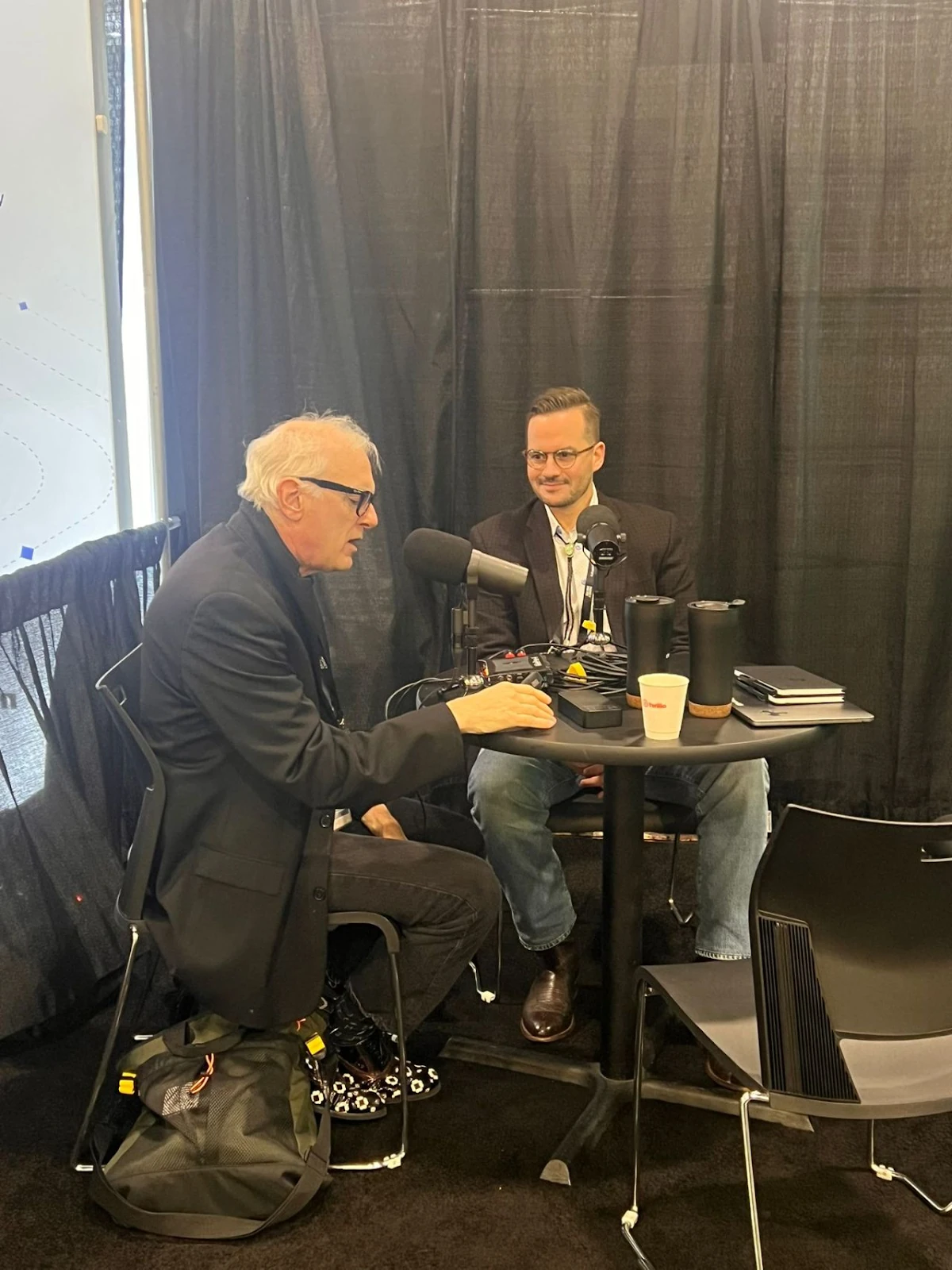
At Money20/20 USA 2025, one theme kept coming back: agentic commerce is here, and it is already reshaping fraud and chargebacks. In his interview on Bankadelic Live, Chargeflow's Frank Frantz said the biggest changes in ecommerce are not happening on storefronts. They are happening in the invisible layers of automation underneath them.
This page covers his four takeaways, the data that tests them, and what the card networks changed by November 2026. It ends with where to go next on liability, evidence, regulation, and fraud prevention.
359M chargebacks projected for 2029, up from about 286M in 2026 | $46.1B projected global chargeback cost in 2029, up from $36.9B in 2026 |
+693% year-over-year growth in generative AI referrals to US retail sites, 2025 holiday season | 31% higher conversion for AI referrals than for other traffic sources, same period |
Sources: Mastercard, What is the true cost of a chargeback for businesses? (updated June 2026, research by Datos Insights); Adobe Analytics, January 2026.
1. Customer Friction Is Quietly Driving a Chargeback Crisis
Frank's first point: the line between customer experience and chargeback risk is thinner than most merchants budget for.
“Als klanten geen snelle, effectieve ondersteuning krijgen, slaan ze het hele proces over en wenden ze zich direct tot hun bank.”
- Slow support leads to frustration
- Frustration leads to disputes
- Disputes become chargebacks
These are not professional fraudsters. They are real customers who feel boxed out of service channels. So they take the shortest path to a refund. The psychology of chargebacks explains this pattern.
Support failures are a large indirect driver of disputes. It is cheaper to invest in support and the ways to prevent chargeback fraud than to fight each dispute later.
2. Vriendschappelijke fraude is geen uitzondering. Het is de regel.
On the Bankadelic stage, Frank reminded listeners that the chargeback mix is not what most merchants assume:
“Eighty percent of chargebacks are actually fraudulent.”
He did not mean stolen cards or hacked accounts. He meant cardholders who received the goods and dispute the charge anyway. This pattern is known as friendly fraud.
The exact share depends on who does the counting. Chargeflow's own State of Chargebacks analysis is covered in 80% of chargebacks due to friendly fraud. It put friendly fraud at roughly 8 in 10 disputes across its merchant base.
In the Mastercard and Datos Insights survey, merchants said about 45% of their chargebacks were fraudulent (first-party and third-party combined). Issuers put the share at 72%.
| Who counts | Share treated as fraud | What it covers |
|---|---|---|
| Chargeflow merchant base | About 80% | Friendly fraud share of disputes |
| Merchants (Mastercard and Datos Insights) | About 45% | First-party and third-party fraud, combined |
| Issuers (Mastercard and Datos Insights) | 72% | Disputes classified as fraudulent |
Treat the figures as a range. First-party misuse is too large to plan for as an edge case.
Money20/20 sessions echoed the same shift. Fraud is moving away from pure crime and toward first-party misuse, policy abuse, and “digital shoplifting,” a term Frank used in his interview. Merchants across verticals reported:
- Een groter aantal geschillen
- Nog meer ‘dat ben ik niet’-claims
- Customers using chargebacks as a convenience button
- Toenemende operationele druk op kleine teams
Two controls work on this pattern. Chargeback alerts flag a dispute early, so you can refund the order and keep it out of your ratio. For disputes that do land, Visa's Compelling Evidence 3.0 can defeat a first-party fraud claim under dispute condition 10.4. It uses two prior undisputed transactions with matching customer data.
3. Agentic Commerce is the New Frontier (And the New Risk Layer)
The strongest trend on the show floor was a question, not a booth. What happens when AI agents start making purchases on behalf of customers?
Frank put the shift plainly:
“Platforms like [AI assistants] are now letting customers research and buy in the same place, with their stored payment credentials.”
A year later, that is a shipping product. On November 13, 2026, OpenAI launched ChatGPT Wallet, built with American Express, Mastercard and Visa. See ChatGPT Wallet chargebacks for what it means for disputes.
It starts with US ChatGPT Pro users aged 18 and over who hold eligible US-issued cards. It uses tokens, so merchants and agents never see the real card details. Users approve each buy with a biometric check, and OpenAI calls the start limited (launch coverage).
The traffic data points the same way. The Adobe Analytics figures above show AI-referred shoppers arriving in volume and converting better than other traffic. That is why merchants will accept agent-placed orders. The same shift introduces new challenges:
- An AI agent may buy the wrong item
- Klanten kunnen vergeten wat ze hebben gedelegeerd
- Oplichters kunnen geautomatiseerde patronen nabootsen
- Handelaren kunnen inzicht in de intentie van klanten verliezen
- Traditional fraud tooling can't read agent-driven behavior
Orders placed by AI agents also blur who is to blame. They raise three questions:
- Wie heeft toestemming gegeven voor de aankoop?
- Who is the merchant of record?
- Who is liable when an AI makes a mistake?
Visa's October 2026 rules now answer part of this, as the consent section below shows, but the liability answer is not fully settled. AI agent chargeback liability sets out who pays in each scenario. who is liable when AI agents shop for your customers covers what counts as an authorized agent purchase.
The practical difference shows up in the evidence you hold. Disputes are still filed under existing card network reason codes. So the question is what each side can prove:
Open a section to compare the details.
Who authorized the purchase
- Human checkout
- The cardholder, at checkout, often with 3D Secure 2.0 authentication
- Agent-placed order
- The cardholder delegates in advance, then the agent completes checkout
- What the networks are building
- Mastercard agentic tokens carry the consumer's authorization of the agent. Visa's Trusted Agent Protocol lets merchants verify an agent's identity. Visa's October 2026 rules require cardholder consent and identity verification before an agent stores a credential or acts
Evidence of intent
- Human checkout
- Device, IP address, browsing session, delivery confirmation
- Agent-placed order
- Session signals describe the agent, not the shopper
- What the networks are building
- Mastercard says agentic token intent data (cart contents, transaction limits, validity windows) gives merchants an audit trail that may help avoid or resolve cardholder disputes
Bot management
- Human checkout
- Block automation
- Agent-placed order
- Blocking all automation also blocks legitimate agents
- What the networks are building
- Visa built the Trusted Agent Protocol with Cloudflare (October 2025) to separate legitimate agents from malicious bots. In September 2026, Mastercard added trust and intelligence services to Agent Pay, including an Agent Pay Trust Framework and an AI Transaction Probability Score
Dispute rules
- Human checkout
- Chargeback windows and evidence requirements were designed around human buyers
- Agent-placed order
- Disputes are filed under existing rules and evidence requirements
- What the networks are building
- Visa's 24 October 2026 rules add agentic platform requirements (section 4.1.23), including order confirmations kept for at least 120 days, but set no separate dispute procedure. A July 2026 Visa report said dispute mechanisms for agent purchases were not yet established
Sources: Mastercard, agentic token framework; Visa, Trusted Agent Protocol announcement (October 14, 2025); Visa, agentic payments report (July 2026). Updates: Visa Core Rules (24 October 2026 edition); Mastercard, Agent Pay trust and intelligence services (September 30, 2026). Visa Intelligent Commerce Connect, announced April 8, 2026, remained in pilot with select partners at announcement.
One consequence deserves attention. Compelling Evidence 3.0 requires matching data elements across the disputed order and two prior undisputed transactions between 120 and 365 days old. At least one matching element must be the IP address or device ID.
If an agent places the order from its own infrastructure, those two signals may describe the agent, not your customer. That leaves account ID and delivery address as the weaker matches. The agentic commerce chargebacks evidence playbook covers what to capture instead.
How Do Merchants Manage Consent, Liability, and Chargebacks in Agentic Commerce?
Start from the card network rules, then write your own terms around them. The Visa Core Rules (24 October 2026 edition) add section 4.1.23, “Agentic Platform Requirements.” Most consent duties sit with the agent platform. The cardholder carries responsibility for what the agent does.
| Visa rule | What it requires | Wat dit betekent voor winkeliers |
|---|---|---|
| 4.1.23.3 Pre-transaction | Cardholder consent and identity verification before the agent stores a credential or acts on payment instructions. Instructions carry an expiration date. | When a customer says “not me,” ask the agent platform for the consent record. |
| 4.1.23.4 Processing | The agent uses only cardholder-defined criteria, passes cardholder details to the merchant, and uses the provisioned token. | Save the cardholder details and token data the agent sends with each order. |
| 4.1.23.8 Order confirmation | Order confirmation available for at least 120 days from the processing date. | Keep your own confirmation for at least as long. |
| 4.1.23.9 Agentic Repeated Transactions | Consent to repeated transactions that continue until changed, cancelled or expired. | For repeat agent orders, show the consent was still active on the order date. |
| 4.1.23.10 Responsibility | “A Cardholder is responsible for any actions taken by an Agentic Payment Provider.” | The agent order is treated as if the cardholder made it. |
| 4.1.23.11 Disqualification | Visa may disqualify an Agentic Payment Provider. | Watch which agent platforms send you orders. |
Section 4.1.23 sets no dispute procedure. Agent orders are still disputed under the normal reason codes, so your evidence decides the outcome.
In the EU, the European Commission proposed the Digital Fairness Act on November 11, 2026. It is a proposal, not law, and now goes to the European Parliament and Council. Its Article 26 covers AI agents that conclude contracts for consumers (William Fry; Pinsent Masons):
- At first use, the consumer chooses to confirm every contract, only contracts that meet set criteria such as a maximum price, or none.
- If an agent provider is paid for proposing a contract or has a conflict of interest with the merchant, it must disclose this and get the consumer's confirmation.
- In widespread cross-border cases, the Commission could fine up to 6% of worldwide annual turnover.
For merchants, the steps are the same in both regions. Keep the agent's consent and token data with each order. Ask for human confirmation above a price you set. Put agent terms in your policies, as covered below.
How Does Agentic Commerce Affect Conversion Rates and Dispute Rates?
Conversion goes up, but no one has published a dispute rate for agent orders yet. Adobe measured 31% higher conversion for generative AI referrals than for other traffic in the 2025 holiday season. Card networks have not released dispute rates for agent-placed orders. The best early signals come from agent traffic data:
77.4% of AI agent sessions were legitimate, vs 7.9% of known bot sessions | 2.3% of legitimate AI agent sessions carried a verified Web Bot Auth signature | 78.4% of ChatGPT agent sessions were signed | 17.7% of checkout sessions were card testing or payment fraud |
Source: Arkose Labs Agentic AI Trust Report, Q3 2026 (July 1 to September 30, 2026).
Most agents are legitimate, but very few prove who they are. So your dispute rate on agent orders depends on the evidence you keep. Track AI-referred and agent orders as their own segment. Then you can see their dispute rate before it moves your monitoring ratios.
4. Repeat Disputers Look Like Good Customers: Where Chargeflow Prevent Fits
Frank was asked whether Chargeflow tracks repeat abusers across its network. His answer:
“Vorige maand hebben we een product gelanceerd dat precies dat doet.”
That product is Chargeflow Prevent. It scans orders after checkout and before fulfillment, between the transaction and the shipment in the order-to-cash process. It draws on a network of 20,000+ merchants. So a customer who is new to your store can still carry a dispute history from others.
Prevent cancels high-risk orders, asks for checks on doubtful ones, and approves the rest. It follows rules you set, with a reported false positive rate under 0.1%.
Frank's reasoning for why this matters as agents arrive:
- Agentic commerce increases transaction volume, and higher volume gives abusers more openings
- Consumenten betwisten tegenwoordig aankopen die automatisch zijn geïnitieerd
- Chargeback abusers slip past fraud prevention because they look exactly like good customers: same card, same identity, same behavior
AI Is Changing the Checkout. And the Chargeback.
Frank's direction of travel is clear. Fraud is getting subtler, chargebacks are becoming more behavioral, and customers are delegating more decisions. So protection has to work after the purchase as well as at checkout. Digital goods make this harder still, since digital goods chargebacks already lack the proof of delivery physical orders provide.
What to do now:
- Write agent terms into your policies. Deloitte's legal-risk guidance says to update your terms and conditions for AI agent orders. It also suggests a human check for big purchases or the first agent setup, and clear limits on what an agent may do.
- Watch your ratios. More disputes push you toward monitoring programs. Visa VAMP divides TC40 fraud reports plus TC15 disputes by settled TC05 card-not-present VisaNet transactions.
- Know the VAMP thresholds. Since April 1, 2026, the standard Excessive Merchant level is a 1.5% ratio with 1,500+ monthly fraud-and-dispute records. This applies in AP, Canada, the EU and the US when the acquirer is not Above Standard or Excessive. Apply exclusions and country and regional rules.
- Check Mastercard's program too. The Mastercard Excessive Chargeback Program uses separate count and ratio tests. It compares this month's chargebacks with last month's captured payments. Check the actual program and your acquirer's notice. A ratio alone does not prove you are in a program or owe penalties. See Visa’s VAMP fact sheet and Stripe’s monitoring-program guidance.
- Close the loop on disputes. Mature chargeback management blends prevention, alerts, and representment. Smart chargeback recovery turns lost disputes back into revenue.
- Treat agent orders as card-not-present orders. They carry the same risk as card-not-present fraud, plus the consent questions above.
The specialist guides below go deeper on each angle:
| If your question is | Read |
|---|---|
| What rules apply to agent purchases | Agentic commerce regulation: card network agent programs, US and EU rules, and compliance steps |
| How bad actors abuse agents and bots | Preventing AI agent fraud: malicious agents, fake agents, agent identity fraud, and detection controls |
| How to run legitimate agent orders safely | Preventing fraud and chargebacks in agentic commerce: verification, scoring signals, post-checkout screening, and dispute readiness |
| Why AI-assisted shopping raises disputes | AI shopping chargebacks: expectation mismatch, auto-purchase, renewals, and returns |
| Where AI fits across payments | How AI is changing online payments: authorization, routing, fraud models, and chargeback operations |
| The wider fraud picture | Payment fraud: types, who commits them, and who bears the loss in any channel |
| What agents do after checkout | AI agents for post-purchase actions: tracking, cancellations, returns, refunds, and chargebacks |
Chargeflow covers three stages. Alerts work before a dispute becomes a chargeback. Prevent screens between checkout and fulfillment. Automation handles evidence and submission on the disputes that still land.
Veelgestelde vragen
What is agentic commerce?
Agentic commerce is online shopping where an AI agent finds, picks, and pays for items on a customer's behalf with delegated credentials. The customer does not check out in person. For merchants, orders can arrive from an agent acting within limits the customer set earlier.
Is agentic commerce real or still hype?
It is real but early. Adobe Analytics saw generative AI referrals to US retail sites rise nearly eightfold year over year in the 2025 holiday season. Mastercard unveiled Agent Pay in April 2025, and Visa released its Trusted Agent Protocol in October 2025.
In 2026 it moved into rules and products. Visa added agentic platform rules on 24 October 2026. OpenAI launched ChatGPT Wallet on November 13, 2026, for a limited first group.
Volumes and dispute rules are still forming.
How does agentic commerce affect chargebacks?
It changes the dispute story more than the dispute mechanics. Customers can claim they never approved what an agent bought, or that it bought the wrong item. The usual evidence of device, IP address, and browsing session may describe the agent instead of the customer.
More disputes also raise the ratios that card network monitoring programs track. Mastercard says agentic token intent data can serve as an audit trail to help resolve cardholder disputes. Visa now requires agent platforms to keep order confirmations available for at least 120 days.
What fraud risks does agentic commerce create for merchants?
The main risks are fraudsters who copy agent patterns and stolen card details used through agent flows. Consent gets blurry when a customer forgets what they handed over. Friendly fraud claims hit delegated purchases, and bot defenses can block real agents. Agent orders are card-not-present, so the controls in an ecommerce fraud prevention program still apply.
Are chargebacks considered fraud?
Not always. A chargeback is the reversal of a card payment after a cardholder dispute (see what is a chargeback). The cause can be third-party fraud, first-party misuse, or merchant error. Mastercard and Datos Insights found that issuers label a much larger share of disputes as fraud than merchants do. So the answer depends on who is counting.
How is agentic AI used in chargeback workflows?
On the merchant side, AI agents gather order, delivery, and customer data, match it to the dispute reason code, and build the response. Chargeflow Automation builds and submits these responses automatically. Issuers still decide the outcome, so measure results with care. Can AI improve chargeback dispute win rates explains how to compare win rates fairly.
How should merchants evaluate a fraud or chargeback provider on agentic commerce?
Ask how the provider handles agent orders from checkout to dispute. Five questions cover most of it:
- Can it tell a verified agent from a bad bot, for example with Web Bot Auth signatures or Visa's Trusted Agent Protocol?
- Does it keep the agent's token, consent, and order confirmation data with each order?
- Can it report orders and disputes per agent or platform?
- Does it screen orders after checkout and before fulfillment?
- Does it use agent consent records as dispute evidence?
Chargebacks?
Dat is niet langer jouw probleem.
Haal 4x meer chargebacks terug en voorkom tot 90% van de inkomende betalingen, dankzij AI en een wereldwijd netwerk van 20.000 handelaren.