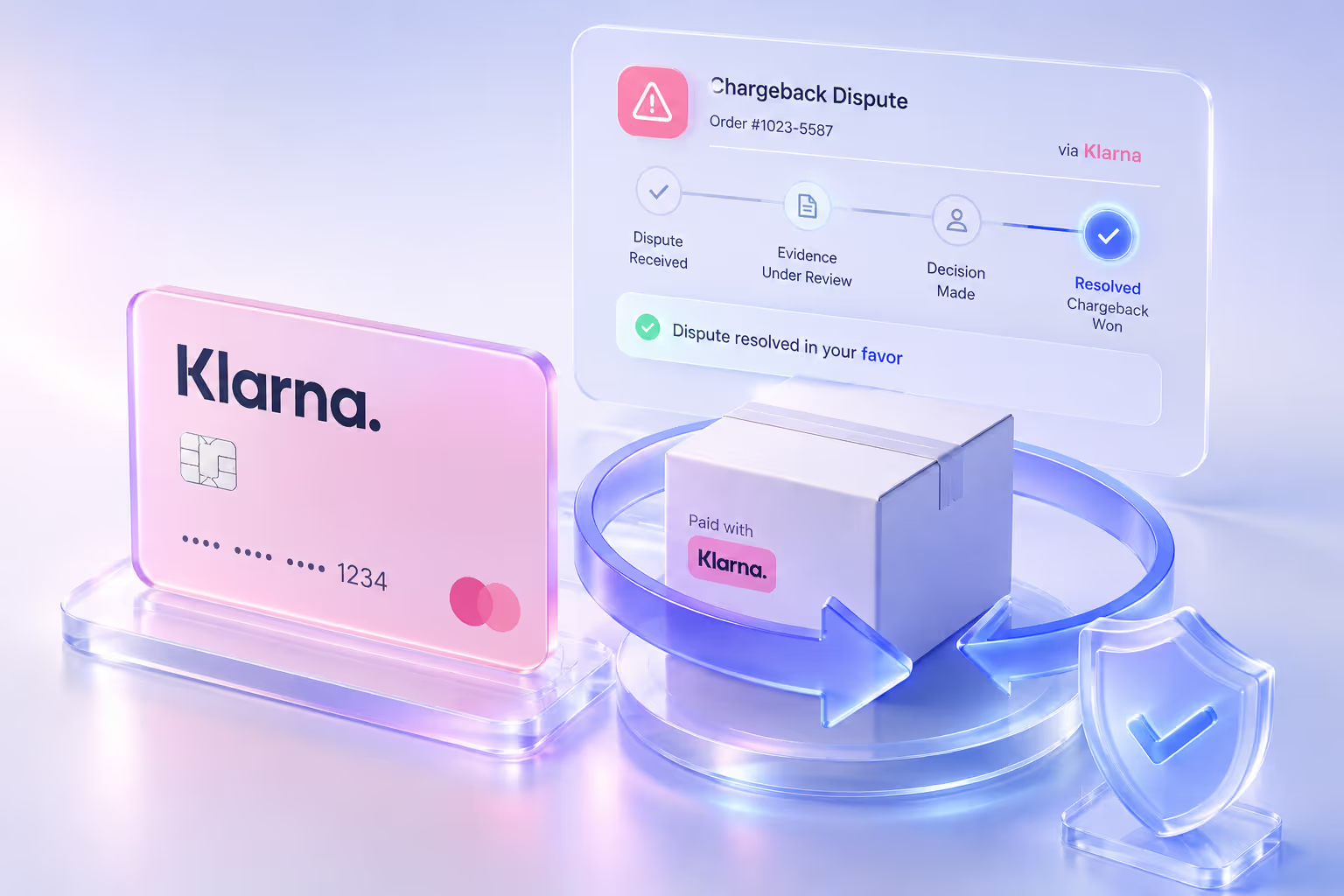
Chargebacks?
Dat is niet langer jouw probleem.
Recover 4x more chargebacks and prevent up to 90% of incoming ones, powered by AI and a global network of 20,000+ merchants.


 Meer dan 600 beoordelingen
TL;DR:
- Identify whether protection means prevention, response support, reimbursement, or insurance.
- Verify eligibility and exclusions for each transaction and account region.
- Calculate unreimbursed fees and operating costs as well as covered funds.
- Keep coverage claims separate from dispute responses and monitoring metrics.


Chargeback protection is an umbrella term for services that reduce dispute exposure, support recovery, or reimburse eligible losses. A protection offer may include fraud screening, early resolution, evidence submission, or contractual coverage, so its terms matter more than its label. For a side-by-side of Shopify, Stripe, and PayPal guarantees with costs and break-even math, see our chargeback protection types and costs guide.
{{cta}}
Separate the Protection Models
| Model | What It Provides | Wat moet je controleren? |
|---|---|---|
| Fraudecontrole | Risk assessment and payment or order decisions | Supported risks, review controls, and impact on legitimate customers |
| Early dispute resolution | Resolution of eligible events before chargebacks | Enrollment, issuer coverage, refund authority, and outcome reporting |
| Dispute response | Evidence preparation and submission | Supported processors, source records, deadlines, and exceptions |
| Contractual reimbursement | Payment for qualifying losses under specified terms | Eligible transactions, exclusions, caps, fees, and claim deadlines |
| Insurance policy | Coverage defined by an actual insurance contract | Insurer, policy terms, exclusions, deductibles, and claims process |
Do not assume a product described as a guarantee is an insurance policy. Do not assume recovery software promises reimbursement. Use the chargeback solution evaluation guide to compare operational services and chargeback prevention guide to identify the risk you need to reduce.
Check Eligibility at the Transaction Level
Coverage can depend on the transaction type, dispute reason, seller location, fulfillment evidence, and compliance with the program’s terms. An account being enrolled does not establish that every order qualifies.
For example, PayPal publishes specific eligibility and exclusion rules for its US Seller Protection program. Its US Seller Protection terms distinguish eligible unauthorized-transaction and item-not-received cases from excluded circumstances. Apply the terms for your account’s country and the transaction involved.
A practical coverage register should record:
Follow the current case and provider requirements
Verify coverage for the specific transaction
Provider and agreement
The protection provider and applicable agreement version.
Payment and fulfillment
The order and payment identifiers, processing country, and fulfillment model.
Transaction eligibility
Whether the transaction was marked eligible and what conditions applied.
Evidence and submission
The required evidence, submission channel, and deadline.
Reimbursable amount and exclusions
The amount reimbursable, excluded fees, and any deductible or cap.
Claim and remaining costs
The claim status, reimbursement reference, and remaining unrecovered cost.
Calculate the Cost That Remains With You
A reimbursed sale is not necessarily a fully reimbursed loss. Separate the disputed amount from processing fees, dispute fees, shipping, product cost, support time, and service charges. Count recovered inventory separately so the same value is not counted twice.
Use a transaction-level calculation: unrecovered disputed funds plus unreimbursed costs and service charges, less other recoveries. Adapt the calculation to your accounting method and avoid counting both lost revenue and lost margin as separate losses.
Protection should also be evaluated alongside refund handling. An early refund can resolve a valid complaint, but it still has a financial cost. A later reimbursement does not establish that the original dispute has disappeared from monitoring data.
Test the Workflow Before Relying on Coverage
Follow the current case and provider requirements
Test eligibility, claim handling and reconciliation
Representative transactions
Choose representative physical, digital, or subscription transactions from your business.
Eligibility checks
Ask the provider to show how eligibility is determined for each example.
Evidence and claim owner
Confirm who must supply the documents and submit the claim.
Exceptions and failed connections
Test how missing data and failed connections reach your team.
Financial reconciliation
Check the financial reconciliation and the reason given for a declined claim.
The evidence standardization guide helps you retain reusable source records. The chargeback process guide explains the separate dispute-response workflow that may continue while a coverage request is assessed.
Protect Operations as Well as Individual Transactions
Contractual reimbursement, prevention, and response automation solve different problems. Review early dispute alerts for eligible resolution events and fraud management responsibilities for operational ownership.
If you need evidence preparation and submission, explore Chargeflow’s automated chargeback recovery. Confirm supported connections and responsibilities before deciding how it fits your protection program.
Continue learning: Prevention and monitoring
Use Chargeback Prevention and Monitoring: A Merchant Learning Path to choose the next merchant task in this topic.
- Chargeback Prevention: The Definitive Guide: Cause-based chargeback prevention and measurement of interventions.
- Chargeback Alerts: What They Are and How to Implement Them [2026]: Early chargeback alerts, matching, refunds, and coverage considerations.
Sources and scope
Source notes updated: October 11, 2026. Provider protection programs. Eligibility is transaction-specific. The PayPal reference is for U.S. accounts; Shopify Protect has its own merchant and order requirements. Check the payment’s eligibility status and preserve the required delivery or authentication records.
For a live case, retain the governing document’s edition or effective date, the relevant provision, and the provider notice.
Veelgestelde vragen
Is chargeback protection the same as insurance?
Chargeback protection is not automatically insurance. It may describe operational software or a contractual reimbursement promise. Insurance coverage must be assessed under the actual policy.
Does chargeback protection cover every reason code?
Chargeback protection coverage depends on the provider’s terms and the transaction. Review reason-code exclusions and evidence requirements instead of assuming all disputes qualify.
Can a protected transaction still require evidence?
A protected transaction can still require evidence to establish coverage or respond to the dispute. Keep the relevant payment, fulfillment, and customer records.
Does reimbursement remove monitoring risk?
Reimbursement addresses the financial loss covered by the agreement. It does not automatically remove the original dispute from a provider or network monitoring calculation.

Chargebacks?
Dat is niet langer jouw probleem.
Haal 4x meer chargebacks terug en voorkom tot 90% van de inkomende betalingen, dankzij AI en een wereldwijd netwerk van 20.000 handelaren.