






Cómo IA la automatización están transformando por completo eCommerce

Contracargos?
Ya no es problema tuyo.
Recover 4x more chargebacks and prevent up to 90% of incoming ones, powered by AI and a global network of 20,000+ merchants.


 Más de 600 opiniones


En resumen:
- Market growth: the global AI in eCommerce market is projected to grow from $7.25 billion in 2024 to $64.03 billion by 2034, a 24% annual growth rate (Precedence Research).
- Where it helps: dynamic pricing, personalized recommendations, automated customer service, smart inventory forecasting, and fraud and dispute detection.
- Agentic shopping is emerging: AI agents already complete a meaningful share of online purchases, and McKinsey projects agentic channels could carry up to $5 trillion in global commerce by 2030.
- Fraud angle: AI systems now analyze thousands of signals per checkout to catch fraud early, but 78% of financial institutions still expect AI-linked fraud to spike in 2026, so merchants need evidence workflows for agent-initiated disputes too.
- Bottom line: automation cuts errors and manual work, so adopting it is now a competitive requirement, not an optional upgrade.
AI and automation are reshaping eCommerce by handling tasks like pricing, customer service, inventory, and fraud detection automatically instead of manually, cutting jobs that used to take hours down to minutes.
En lugar de intentar adivinar lo que los clientes podrían querer, eCommerce ahora pueden recomendar productos en tiempo real, ajustar los precios automáticamente y personalizar las ofertas en función del comportamiento real de compra.
And this shift isn’t slowing down. The global AI in eCommerce market is expected to grow from $7.25 billion in 2024 to $64.03 billion by 2034, according to Precedence Research. That’s a 24% annual growth rate, proof that AI is quickly becoming essential to staying competitive.
| Año | Global AI in eCommerce Market Size |
|---|---|
| 2024 | $7.25 billion |
| 2034 (projected) | $64.03 billion |
| Projected CAGR (2024–2034) | 24% |
Where AI Is Reshaping eCommerce Right Now
Five areas are moving fastest:
- Personalization: real-time product recommendations, dynamic pricing, and offers tailored to browsing and purchase history.
- Inventory and demand forecasting: AI predicts stock needs from sales velocity, seasonality, and supply chain signals.
- Customer service automation: chatbots and voice agents resolve routine questions instantly, freeing human agents for complex cases.
- Fraud and dispute automation: machine learning models score checkout risk in real time and help merchants build stronger chargeback evidence.
- Agentic shopping: AI agents now browse, compare, and complete purchases on a shopper’s behalf, a fast-growing channel with its own dispute and liability questions.
Si eres un eCommerce y quieres comprender cómo IA la automatización están transformando eCommerce, este artículo es para ti. Sigue leyendo hasta el final para descubrir cómo puedes aprovechar tú también la inteligencia artificial y adelantarte a tus competidores.
¿Qué es la automatización en eCommerce?
La automatización en eCommerce utilizar la tecnología para gestionar tareas como la atención al cliente, las actualizaciones de inventario y el seguimiento de pedidos sin intervención humana manual.
IA la automatización están transformando eCommerce hacer que estas tareas sean más rápidas, más precisas y mucho menos estresantes para los propietarios de las empresas. Al mismo tiempo, IA eCommerce haciendo que las experiencias de compra sean más personales y agradables para los compradores.
Teniendo en cuenta que se prevé que el tamaño eCommerce mundial IA eCommerce alcance los 64 030 millones de dólares en 2034, IA buena idea pasar por alto IA .
8 Ways AI and Automation Are Transforming eCommerce
A continuación se enumeran algunas formas destacadas en las que IA la automatización están transformando eCommerce:
1. Ajustes dinámicos de precios
IA la automatización están transformando eCommerce permitir a las empresas modificar los precios en tiempo real. En lugar de hacer conjeturas o mantener precios fijos, las tiendas pueden ajustarlos en función de la demanda, los precios de la competencia o el comportamiento de los clientes.
Esto permite que las tiendas sigan siendo competitivas sin necesidad de una supervisión humana constante. Para los compradores, la fijación dinámica de precios significa que a menudo encuentran mejores ofertas u ofertas por tiempo limitado que les animan a comprar o a añadir más artículos a sus pedidos.
On the other hand, retailers benefit by staying ahead, boosting sales volume and profit margins without heavy manual work. This is because dynamic pricing via AI creates a sense of urgency, pushing people to buy quickly before prices shift again.
2. Marketing y segmentación publicitaria IA
Antes, la publicidad era una cuestión de cifras. Si se lanzaba un anuncio a un número suficiente de personas, era probable que algunas compraran. Ahora, IA la automatización están transformando eCommerce ayudan a las marcas eCommerce mostrar anuncios únicamente a las personas con mayor probabilidad de estar interesadas. Es más inteligente, más barato y mucho más eficaz.
Rather than blasting emails and showing ads to random people, the marketers are now using tools that help them search email addresses of the appropriate audience before they shoot their next campaign. This makes the targeting more effective and yields better return on investment.
Por ejemplo, en lugar de malgastar dinero mostrando mochilas a alguien que está comprando utensilios de cocina, las empresas ahora pueden dirigirse al público adecuado en el momento oportuno. IA los hábitos de compra, los clics y los intereses para predecir qué quiere la gente y cuándo lo quiere. Esto aumenta las tasas de conversión de los anuncios y, al mismo tiempo, reduce el gasto innecesario en marketing.
Además, los usuarios valoran los anuncios relevantes y bien dirigidos. Esta estrategia puede ayudar a fortalecer la relación con los clientes, ya que les hace sentir que se les tiene en cuenta, que se les aprecia y que se les valora.
3. Servicio de atención al cliente automatizado
La atención al cliente es otro ámbito clave en el que IA la automatización están transformando eCommerce chatbots inteligentes.
Brands can also elevate their customer support experience by integrating realistic text-to-speech tools that deliver lifelike voice responses, improving clarity and engagement for users.
Las respuestas rápidas son fundamentales en las compras online. En lugar de esperar horas a que les atienda un agente, los clientes reciben asistencia inmediata las 24 horas del día, los 7 días de la semana, a través de diversos canales, incluida la atención al cliente por WhatsApp.
According to a 2024 survey by Statista, about 33% of eCommerce chatbot interactions relate to product advice, availability, and details, while another 20% involve order and shipping questions.
More recent data shows this trend accelerating. By 2026, 96% of brands using conversational AI deploy it for customer support, and shoppers who engage with an AI assistant convert at roughly 12.3%, compared to about 3.1% for those who don’t, according to NVIDIA and Rep AI research. Even so, 54% of customers say they still want a human for complicated order issues, according to Gorgias, which is why the strongest setups blend bots with real reps rather than replacing them outright.
Recurring ecommerce AI-chatbot interactions • 2024
Share of respondents. Original groups: product specifications (first five), order and shipping (next nine), and returns/exchange policies (last).
Los chatbots no solo agilizan los procesos. También mantienen a los clientes satisfechos sin que ello suponga un gran gasto.
While chatbots are a great first line of support, some user requests still require human assistance. In these cases, a solution like service desk software, which combines automation with human support, can help you manage thousands of chats at scale, route complex issues intelligently, and maintain a smooth customer experience.
La automatización de estas tareas te ayudará a ahorrar tiempo y a generar clientes potenciales de calidad mediante procesos específicos, ya que el software de centro de asistencia se encarga del resto.
Esto facilita mucho a las marcas la gestión de las temporadas de mayor actividad sin necesidad de contratar a más agentes de atención al cliente. Esto se traduce en menos consultas perdidas y mayores índices de satisfacción.
The proper use of AI for customer service means human agents are freed from answering basic questions and instead can focus on complicated problems that need a real person’s touch.
4. Recomendaciones personalizadas de productos
¿Conoces esas secciones de «Los clientes también vieron» que aparecen en eCommerce ? Eso esIA . Las experiencias de compra personalizadas son otro ámbito importante en el que IA la automatización están transformando eCommerce.
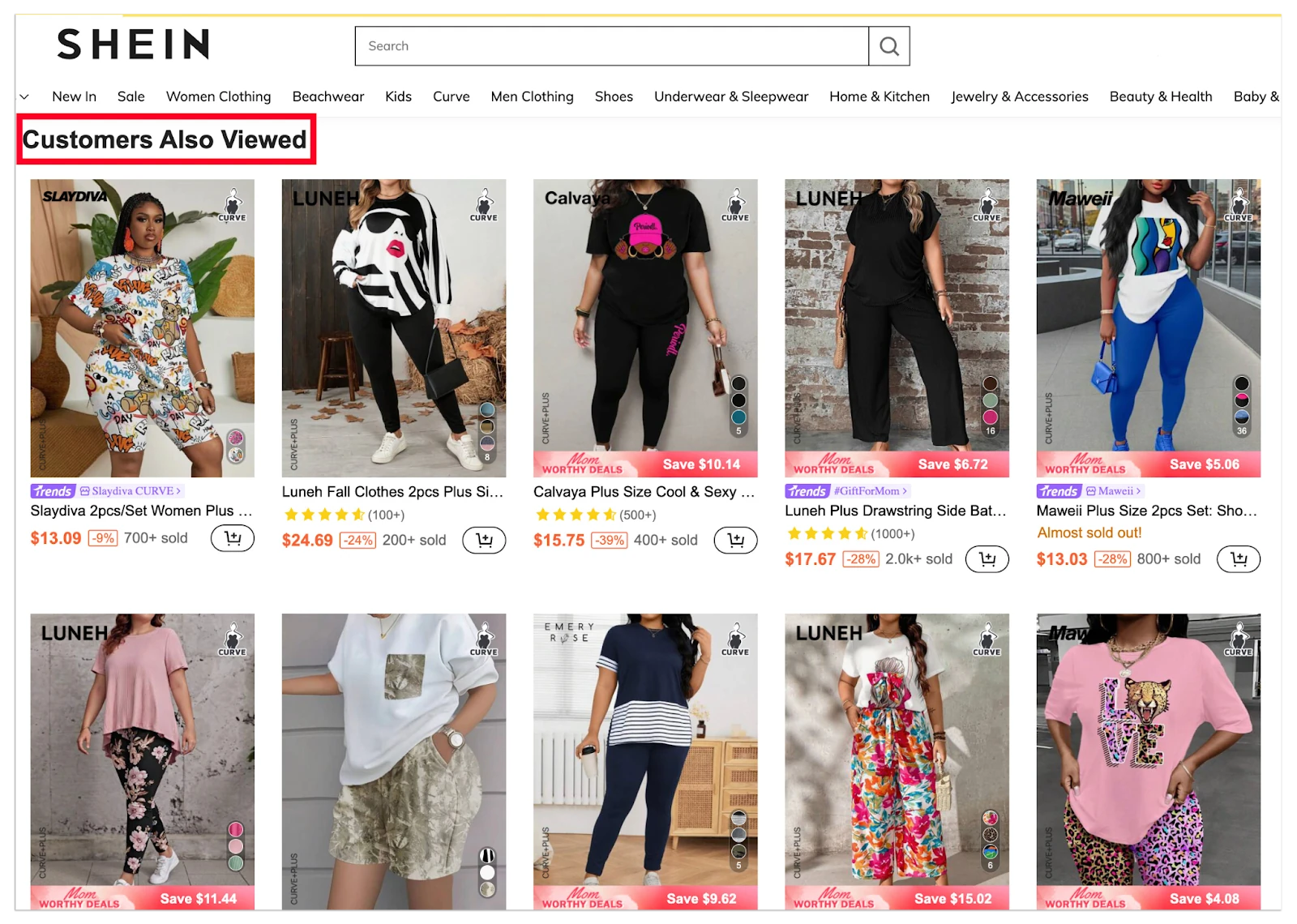
En lugar de hacer conjeturas al azar, las tiendas ahora pueden sugerir productos basándose en el historial de navegación y de compras del cliente, e incluso en el tiempo que ha dedicado a mirar un artículo.
For example, if a customer recently browsed luxury timepieces, the AI might recommend a Tissot watch, combining relevance with perceived value to increase the chance of a sale. This makes online shopping feel way more personal, almost like a helpful store assistant is right there with you.
The payoff shows up in the numbers: AI-generated product recommendations convert up to 4.4 times better than traditional search results, according to McKinsey, and merchants applying AI personalization well see a 5 to 15% revenue lift, with top performers reaching 25%.
Para las tiendas, supone un importante aumento de los ingresos. Las recomendaciones personalizadas fomentan el aumento del valor de la cesta de la compra y las compras recurrentes sin necesidad de recurrir a rebajas o descuentos llamativos. Es una forma inteligente de vender sin resultar agresivo.
5. Gestión inteligente del inventario
IA la automatización están transformando eCommerce agilizar la optimización y la gestión del inventario, tal y como se explica en la guía de Attrock. En lugar de recuentos manuales de existencias o puntos de reposición básicos, IA en tiempo real IA las ventas y IA los patrones de demanda de los clientes.
It also monitors seasonal trends and even supply chain delays to predict exactly how much inventory a business needs at any moment. According to 2026 retail research from NVIDIA, 64% of retailers already use AI for demand forecasting, nearly double the adoption rate of route optimization, and 91% say AI is measurably reducing their annual supply chain costs.
With the right eCommerce automation tools, businesses can maintain ideal stock levels without over-ordering or disappointing customers. It saves money, cuts waste, and keeps customers happy because what they want is usually available.
Better inventory management also helps brands scale their eCommerce startups faster. They can handle growth without overstretching budgets, giving them an edge over slower-moving competitors. At the same time, ensuring these systems perform reliably requires thorough eCommerce application testing. From validating checkout flows to stress-testing payment gateways, thorough testing helps prevent errors that could frustrate customers and disrupt sales.
6. Detección y prevención del fraude
Another way that AI and automation are transforming eCommerce is by spotting fraud before it causes problems. Juniper Research’s October 2024 model projects the global value of eCommerce fraud to exceed $100 billion by 2029 (the original projection is $107 billion). This is a forecast, not observed losses or a chargeback-only total; see the primary Juniper release. Merchants can evaluate AI tools against their own fraud losses, false declines and operating costs. For how the same models affect authorization and chargebacks, see how AI is changing online payments.
The fraud detection technology market reflects that urgency, growing from an estimated $43.4 billion in 2025 toward a projected $217.8 billion by 2035. Yet a lot of that potential is still untapped: only about 6% of US businesses have fully automated their fraud prevention, and many merchants still juggle five or more separate detection tools that don’t talk to each other.
Los algoritmos detectan patrones inusuales en un ámbito más amplio que otras soluciones.
Instead of relying on basic rules like "flag orders over $500" to stop friendly fraud, modern AI systems analyze thousands of signals at once. They look at things like how fast someone fills out checkout forms, whether their IP address matches their credit card country, or if they're using a suspicious device. Machine learning models built for this can reach up to 95% accuracy on card fraud while cutting false positives by 40% or more compared with static rule sets. Fraud scoring is one part of AI in payment processing, which now also covers routing, alerts, and dispute responses.
This keeps stores and customers safe without adding annoying steps like endless verification emails. By catching eCommerce fraud early, businesses avoid costly chargebacks, protect their reputation, and build trust with real customers. For a fuller breakdown of layered defenses, see our eCommerce fraud prevention guide, and pair AI detection with chargeback alerts so disputes can often be resolved before they turn into a formal chargeback.
7. Análisis predictivo para la previsión de la demanda
AI and automation are transforming eCommerce by making demand forecasting for dropshipping products more accurate and reliable. Instead of relying on rough estimates or last year’s numbers, businesses can now predict future demand.
Pueden utilizar datos de ventas en tiempo real, el comportamiento de los clientes, la estacionalidad e incluso factores externos, como las tendencias en las redes sociales o los próximos eventos.
Esto ayuda a las tiendas a planificar el inventario, la dotación de personal y las promociones de forma más inteligente. Así pueden evitar la falta de existencias y el exceso de stock, y mantener la rotación de productos sin malgastar dinero. Con unas previsiones más precisas, las empresas pueden lanzar ofertas en el momento ideal, promocionar los productos adecuados y satisfacer la demanda de los clientes incluso antes de que alcance su punto álgido.
8. AI Agents and Agentic Shopping
The newest shift is agentic commerce: AI agents that browse, compare, and check out on a shopper’s behalf instead of a person clicking through a site. Adobe Analytics recorded an 805% year-over-year jump in AI-driven traffic to US retail sites on Black Friday 2025, and Morgan Stanley found that 23% of Americans had already bought something through an AI agent in the past month. McKinsey projects agentic channels could carry up to $5 trillion in global commerce by 2030.
Merchants that plug into agentic commerce platforms early get a head start on this traffic, but the shift also raises new risk questions. When an AI agent completes a purchase, the usual dispute evidence, like device fingerprints or browsing history, may not exist in the same form, and 78% of financial institutions expect fraud tied to AI shopping agents to spike in 2026, according to Salesforce research.
This is a narrow but fast-growing slice of the broader eCommerce automation story. Merchants who want the full breakdown of who is liable when an agent's purchase gets disputed should read our dedicated guide on AI agent chargeback liability, and merchants building evidence workflows for agent-initiated orders can go deeper with our agentic commerce chargebacks evidence playbook.
AI Use Case by eCommerce Function
Here's how the eight trends above line up by adoption stage, impact, and the main risk to watch:
Open a section to compare the details.
Personalization and pricing
- Adoption Stage
- Mainstream
- Impacto
- 5 to 15% revenue lift, up to 25% for top performers (McKinsey)
- Risk Considerations
- Needs clean customer data; overly aggressive pricing can erode trust
Customer service automation
- Adoption Stage
- Mainstream
- Impacto
- 96% of brands deploy conversational AI for support; AI-engaged shoppers convert about 4x more often (NVIDIA, Rep AI)
- Risk Considerations
- 54% of customers still want a human for order problems, so escalation paths matter
Inventory and demand forecasting
- Adoption Stage
- Mainstream
- Impacto
- 64% of retailers use AI for demand forecasting; 91% report lower supply chain costs (NVIDIA)
- Risk Considerations
- Forecast errors compound quickly during demand spikes or supply shocks
Fraud and dispute automation
- Adoption Stage
- Growing
- Impacto
- ML detection reaches up to 95% accuracy and cuts false positives 40%+, though only about 6% of US businesses are fully automated (Opensend)
- Risk Considerations
- False positives can block good customers; most merchants still juggle five or more point solutions
Agentic shopping
- Adoption Stage
- Early
- Impacto
- Up to $5 trillion in agentic commerce volume projected globally by 2030 (McKinsey)
- Risk Considerations
- Dispute evidence and liability rules for agent-initiated purchases are still unsettled
Why Automation Is No Longer Optional
The eight points raised above are just a few of the many ways AI and automation are transforming the eCommerce industry. On top of reducing human errors, automation is speeding up tasks that used to take too much time. This positively impacts productivity and minimizes resource waste.
Tanto si acabas de iniciarte en eCommerce ya diriges un negocio consolidado, ya es hora de que te sumes a la automatización. Esto no solo es beneficioso para tus ingresos, sino que también te ayuda a mantenerte por delante de la competencia.
Preguntas frecuentes
Quick answers to the questions readers ask most about AI and automation in eCommerce.
What is automation in eCommerce?
Automation in eCommerce means using technology to handle tasks like customer service, inventory updates, and order tracking without manual human intervention. It makes these processes faster, more accurate, and less stressful for business owners.
How big is the global AI in eCommerce market expected to get?
According to Precedence Research, the global AI in eCommerce market is projected to grow from $7.25 billion in 2024 to $64.03 billion by 2034, a 24% annual growth rate.
What are the main ways AI and automation are transforming eCommerce?
The biggest areas include dynamic pricing adjustments, AI-driven marketing and ad targeting, automated customer service, personalized product recommendations, smart inventory management, fraud detection and prevention, predictive analytics for demand forecasting, and the rise of AI agents completing purchases through agentic shopping.
How does AI help detect and prevent eCommerce fraud?
Modern AI systems analyze thousands of signals at once, such as how fast someone fills out checkout forms, whether their IP address matches their credit card country, and whether they’re using a suspicious device, to flag fraud early. This helps businesses avoid costly chargebacks while sparing legitimate customers extra verification steps.
Are AI shopping agents changing how chargebacks work?
Yes. When an AI agent completes a purchase instead of a person clicking through checkout, the usual dispute evidence, like device fingerprints and browsing history, may not exist in the same form. Financial institutions expect fraud tied to AI shopping agents to increase in 2026, so merchants are starting to build evidence workflows specifically for agent-initiated orders rather than waiting for the rules to be settled for them.
How does predictive analytics improve demand forecasting for eCommerce businesses?
Instead of relying on rough estimates or last year’s numbers, AI uses real-time sales data, customer behavior, seasonality, and outside factors like social media trends to predict future demand. This helps businesses plan inventory, staffing, and promotions more accurately and avoid stockouts or overstock.
Why is adopting AI automation no longer optional for eCommerce businesses?
Automation reduces human errors and speeds up tasks that used to take much longer, which boosts productivity and cuts wasted resources. Businesses that embrace it protect their revenue and stay ahead of competitors who are slower to adopt these tools.
Contracargos?
Ya no es problema tuyo.
Recupera cuatro veces más Contracargos y prevención , hasta un 90 % de las entradas, gracias a IA y a una red global de 20 000 comercios.