%201.svg)




































How Ecommerce Merchants Can Recover Lost Sales

Chargebacks?
Dat is niet langer jouw probleem.
Haal 4x meer chargebacks terug en voorkom tot 90% van de inkomende betalingen, dankzij AI en een wereldwijd netwerk van 20.000 handelaren.


 Meer dan 600 beoordelingen


TL;DR:
- Separate abandoned carts, failed payments, refunds, and chargebacks.
- Fix the specific checkout or service problem before adding incentives.
- Measure incremental orders and retained margin, not attributed revenue alone.
- Use claim-specific evidence to recover supported disputed payments.
Lost-sales recovery is the process of identifying missed or reversed purchases and taking the appropriate action to recover value. For ecommerce merchants, abandoned carts, failed payments, canceled orders, and chargebacks are different problems. Separate them before deciding which message, checkout change, or dispute response to use.
Separate Missed Purchases From Reversed Revenue
An abandoned cart is purchase intent, not booked revenue or a guaranteed future sale. A failed payment may need a payment-status investigation. A chargeback concerns an existing payment and requires a case-specific decision. Combining all three into one “lost revenue” total can exaggerate both the opportunity and the result.
| Loss Category | What to Investigate | Useful Success Measure |
|---|---|---|
| Abandoned cart | Checkout friction, total price, availability, purchase intent | Incremental completed orders from eligible carts |
| Failed payment | Payment status, error category, customer action required | Successfully paid orders without duplicate charges |
| Canceled or refunded order | Stock, delivery promise, product expectations | Avoidable cancellations and retained contribution margin |
| Terugboeking | Claim, evidence, deadline, existing refund | Recovered disputed value after relevant costs |
Assign an owner to each category and use stable order and transaction identifiers. A customer may return through an email, retry a payment, and later request a refund. Count the final order once and preserve its later adjustments. Your cart-abandonment analysis should remain distinct from dispute reporting.
Use Benchmarks to Diagnose, Not Promise Recovery
Baymard Institute’s cart-abandonment research reports an average of 70.22% across 50 studies. This is a cross-study benchmark, not evidence that your store can recover that share of revenue. Some shoppers are browsing or comparing rather than ready to complete a purchase.
Start with your own funnel: product view, cart, checkout, payment attempt, and confirmed order. Compare like-for-like sessions and devices. Check whether tracking changes or missing events explain an apparent decline before launching a campaign. A measurement error can look like a commercial problem.
Remove Checkout Friction Before Adding Incentives
Make the total price, shipping options, expected delivery, and return terms visible before payment. Check mobile forms, guest checkout, validation errors, and the confirmation page. A discount cannot repair a broken payment button or make an unavailable product ready to ship.
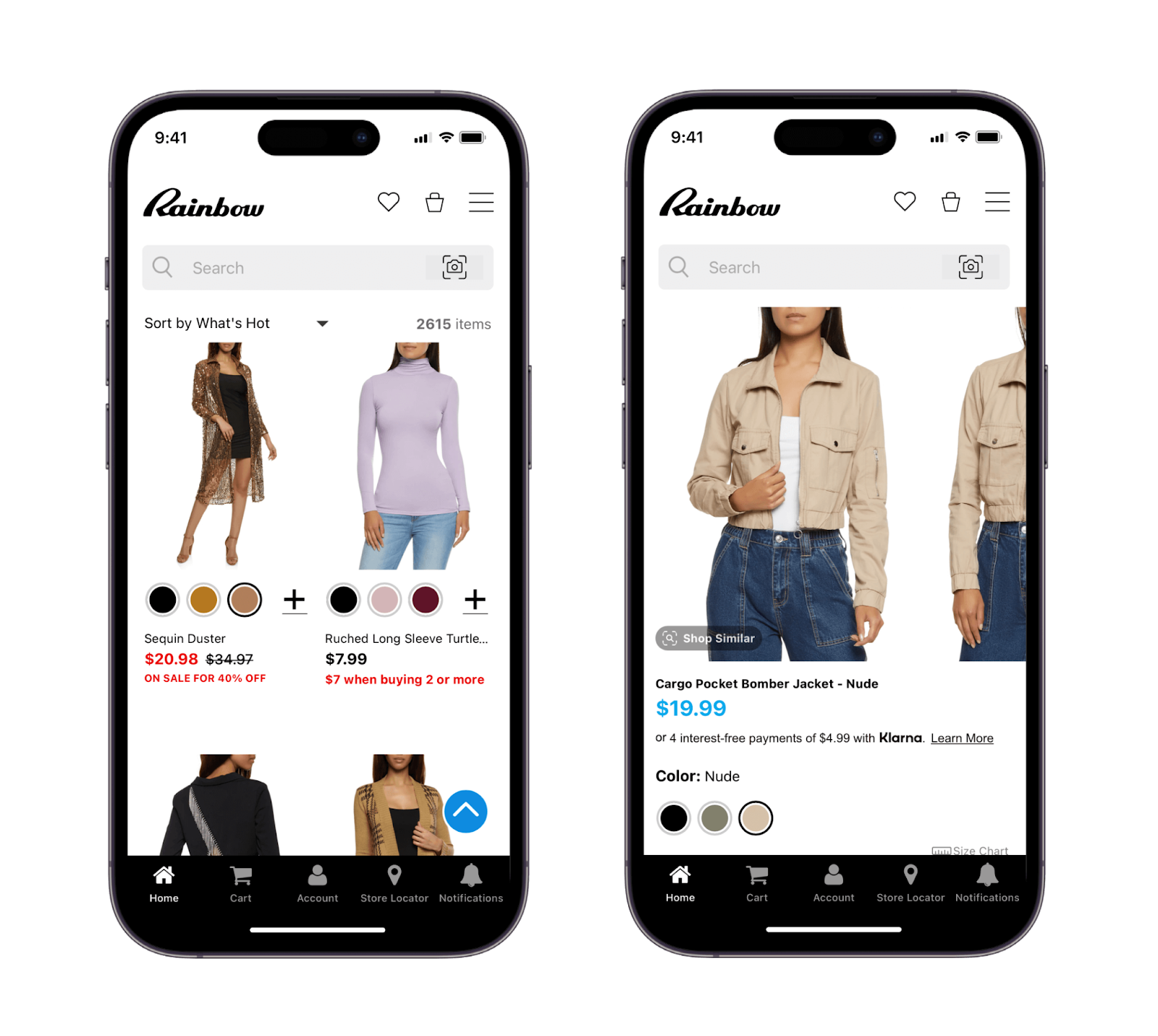
Mobile storefront example: review the complete path from product selection to confirmed payment, not only the appearance of the product page.
Use a checkout improvement checklist to test the actual purchase journey. Prioritize a specific failure that affects a meaningful group of customers. Record the change and compare outcomes before changing several other parts of the funnel.
Show truthful stock information. If an item is a preorder, explain its expected fulfillment timing and how changes will be communicated. The preorder non-delivery guide connects those promises to the evidence your team may need later.
Build Follow-Up Around the Customer’s Situation
Use your marketing platform’s consent, suppression, and unsubscribe controls when contacting shoppers. Stop cart reminders when the order completes, and avoid asking a customer with an unresolved payment or support issue to purchase again without checking the record.
- A browsing customer may need product information rather than a discount.
- A checkout customer may need the total cost or delivery date clarified.
- A customer with a failed payment may need an available alternative or a secure way to complete the required step.
- A customer awaiting support needs the original issue resolved before another sales message.

Popup example: an incentive should be clearly explained and economically justified. This illustration does not establish a recovery-rate benchmark.
Test an incentive against a suitable comparison group and include its cost. Avoid invented stock scarcity or an expiry that continually resets. Recovered orders are valuable when they produce additional margin, not simply when a dashboard attributes an existing purchase to the latest message.
Investigate Payment Failures Before Retrying
Check the payment record before asking the customer to pay again. An interrupted confirmation screen does not necessarily mean payment failed. Have the payments team distinguish a declined attempt, a pending authorization, a completed payment, and an actual duplicate.
For technical retries, follow your provider’s implementation guidance. For example, the official idempotent-request documentation explains how supported requests can be retried without accidentally repeating the same operation. Your engineering team should verify the correct implementation for your payment flow.
Our guide to payment reversals helps distinguish transaction outcomes. Keep customers informed through a secure support channel and avoid exposing payment details in public messages or ordinary marketing links.
Recover Disputed Revenue With Relevant Evidence
When a chargeback arrives, review the claim, deadline, fulfillment, and refund history. Challenge only when a response is available and the records support it. A legitimate refund or service complaint should be resolved appropriately, not described as fraud because it reduces revenue.
Use claim-specific evidence and investigate refund overlap before making another payment. Preventing duplicate credits is a reconciliation task; it does not replace giving a customer an owed remedy.
Chargeflow complements conversion work by helping manage supported dispute recovery. It does not replace cart-email or advertising tools. Keep each tool’s contribution separate when evaluating the combined impact on retained revenue.
Measure Incremental Value and Retained Margin
Define an attribution window and record the eligible audience. Compare completed orders with a suitable holdout where feasible, then account for discounts, acquisition costs, refunds, fulfillment costs, and later disputes. Do not add a recovered payment and its associated order value together as separate sales.
For dispute recovery, track submitted, resolved, and won cases separately. Pending cases are not recovered funds. The processing-cost guide helps include the work required to recover value. Reconcile the result with finance before reporting a return on investment.
Veelgestelde vragen
Can Merchants Recover Every Abandoned Cart?
No. Abandoned carts include browsing and comparison activity. Measure incremental purchases from your own eligible audience rather than treating the full cart value as recoverable revenue.
What Is the Fastest Way to Recover Lost Sales?
The best first action depends on the failure. Repair a broken checkout, clarify an unresolved payment, or resolve a delivery issue before applying a generic discount campaign. Test the result against a clear baseline.
Is Chargeback Recovery the Same as Cart Recovery?
No. Cart recovery aims to complete a purchase. Chargeback recovery responds to a dispute over an existing payment. Use different workflows and avoid counting the same order twice.
Explore Chargeflow’s automated chargeback recovery to organize evidence and manage supported responses.
Chargebacks?
Dat is niet langer jouw probleem.
Haal 4x meer chargebacks terug en voorkom tot 90% van de inkomende betalingen, dankzij AI en een wereldwijd netwerk van 20.000 handelaren.


.png)