





























%201.svg)




































Cómo elegir la eCommerce adecuada para el dropshipping

Contracargos?
Ya no es problema tuyo.
Recupera cuatro veces más Contracargos y prevención , hasta un 90 % de las entradas, gracias a IA y a una red global de 20 000 comercios.


 Más de 600 opiniones


En resumen:
Elegir la plataforma de « ecommerce » adecuada es la base de cualquier negocio de dropshipping, y el propio mercado del dropshipping va camino de alcanzar los 583.5 mil millones de dólares en 2026. Esto es lo que trata esta guía:
- Qué hay que evaluar en primer lugar: precios, comisiones por transacción, ecosistema de aplicaciones y riesgo de devoluciones, comparados de forma paralela entre las principales plataformas
- Plataformas principales para la escalabilidad: Shopify, WooCommerce y BigCommerce gestionan el volumen de forma diferente, con distintas ventajas e inconvenientes en cuanto a coste, control y dependencia de la integración.
- Infraestructura preparada para empresas: Magento y Agentforce Commerce (antes Salesforce Commerce Cloud) están diseñados para gestionar grandes volúmenes de operaciones entre múltiples proveedores y regiones.
- Herramientas de gestión de pedidos: Printify, Printful y Podbase se integran en tu plataforma principal y se encargan de la producción de impresión bajo demanda, pero ninguna de ellas elimina el riesgo de devoluciones.
- La carencia que presenta todas las plataformas: ninguna de las plataformas de esta lista gestiona disputas automática; para ello se necesita una solución independiente como Chargeflow.
La plataforma de ecommerce adecuada para el dropshipping es aquella que se adapta a tu volumen de pedidos, al número de proveedores y a tu fase de crecimiento, al tiempo que mantiene bajo control los costes de las aplicaciones, las comisiones por transacción y el riesgo de devoluciones. Si eliges la plataforma equivocada, todas las decisiones posteriores —desde qué aplicaciones de dropshipping puedes instalar hasta tu capacidad para hacer frente a una oleada de disputas — se volverán más difíciles.
El modelo de dropshipping en sí mismo está creciendo rápidamente: el mercado mundial del dropshipping se valoró en 464.4 mil millones de dólares en 2025 y se prevé que alcance los 583.5 mil millones de dólares en 2026; además, más del 27 % de los minoristas online lo utilizan actualmente como su principal método de gestión de pedidos. Ese crecimiento solo da sus frutos cuando la base sobre la que se sustenta, es decir, tu plataforma de comercio electrónico, es la adecuada.
Elegir una plataforma de comercio electrónico puede parecer una decisión rápida, como marcar una casilla, pero la cruda realidad es que no lo es. Y es que la plataforma que elijas determinará todo lo que venga después:
- La rapidez con la que lanzas y pruebas productos
- El dinero que gastas en integraciones y personalizaciones
- El ritmo al que creces (y cuánto te cuesta)
Si te equivocas en este punto, notarás las dificultades en cada una de las etapas posteriores. Pero si lo haces bien desde el principio, verás que el crecimiento se vuelve mucho más predecible.
En lugar de dejarlo al azar, aquí tienes lo que debes tener en cuenta antes de elegir una: una comparación detallada de las principales plataformas y un análisis de ocho plataformas y herramientas de gestión de pedidos seleccionadas, lo que cada una hace realmente bien y cuándo conviene elegir cada una de ellas.
Qué hay que tener en cuenta antes de elegir una plataforma
Antes de comparar plataformas concretas, conviene saber en qué aspectos las estás comparando realmente. Estos son los factores que más importan específicamente para una tienda de dropshipping, y no para cualquier tienda online:
- Precios y comisiones por transacción: la suscripción mensual más cualquier comisión por pedido que se cobre si no se utiliza el procesador de pagos propio de la plataforma.
- Ecosistema de aplicaciones de dropshipping: cuántas aplicaciones de sincronización con proveedores, gestión automatizada de pedidos e inventario hay disponibles para esa plataforma.
- Facilidad de configuración y mantenimiento: tanto si se trata de un producto alojado en SaaS como de una pila autohospedada que requiere un desarrollador para su funcionamiento.
- Escalabilidad: cómo gestiona la plataforma el aumento del número de referencias, los catálogos con múltiples proveedores y el volumen de pedidos sin toparse con límites estrictos.
- Flexibilidad del procesador de pagos: qué pasarelas se conectan de forma nativa, ya que es ahí donde también se recopilan las pruebas para hacer frente a una devolución.
- Riesgo de devoluciones y reclamaciones: ¿cuántas dependencias de terceros, aplicaciones, proveedores y socios de logística hay entre el proceso de pago y la entrega?, ya que cada uno de ellos es un posible punto de fallo que puede dar lugar a una reclamación.
Este último punto merece más importancia de la que le otorgan la mayoría de las guías de compra. Los pedidos de dropshipping pasan por más manos que una transacción minorista típica: los gestiona un proveedor, los envía un transportista externo y, a menudo, el comerciante es quien menos visibilidad tiene sobre dónde se producen los problemas. Los plazos de envío más largos y menos predecibles son un factor conocido que provoca que se den casos de «artículo no recibido» disputas, y esa es precisamente la razón por la que la elección de la plataforma y el riesgo de devoluciones deben tratarse en el mismo contexto.
Comparación de las principales plataformas de dropshipping
A continuación se muestra cómo se sitúan las principales plataformas en relación con los factores mencionados anteriormente:
| Plataforma | Precio de salida | Comisiones por transacción | Ecosistema de aplicaciones de dropshipping | Consideraciones sobre el riesgo de devoluciones y reclamaciones |
|---|---|---|---|---|
| Shopify | 39 $ al mes (Básico), 29 $ al mes con facturación anual | Del 2,9 % + 30 céntimos al 2,5 % + 30 céntimos en los niveles superiores si no realizas los pagos « Shopify ». | La mayor selección: más de 16 000 aplicaciones, incluidas aplicaciones específicas para el dropshipping como DSers, Zendrop y Spocket | La mayoría de las dependencias de aplicaciones de terceros de cualquier plataforma se encuentran aquí; hay más puntos de integración que pueden fallar y provocar un « disputas », aunque Shopify Payments centraliza las pruebas. |
| WooCommerce | Plugin gratuito; el alojamiento y las extensiones suelen costar entre 25 y 350 dólares al mes. | Ninguna comisión por parte de la plataforma; aproximadamente entre el 2,5 % y el 2,9 %, más 30 céntimos si utilizas WooPayments. | Moderado: existen plugins de dropshipping, pero el catálogo es más reducido que el de Shopify | Autohospedado, por lo que el comerciante es el responsable directo del tiempo de actividad y la seguridad; la calidad de las pruebas en caso de disputas depende íntegramente del complemento y la pila de procesamiento elegidos |
| BigCommerce | 39 $ al mes (Core), 29 $ al mes con facturación anual | 0 % a través de un proveedor de « INTEGRADA » como Stripe o PayPal; en caso contrario, se aplica una comisión del 2,0 % del proveedor de «Open Payment», que se reduce progresivamente hasta el 0,6 % en los niveles superiores. | Es más reducido que el catálogo de aplicaciones de Shopify, pero se integra con Printful, Spocket y otras herramientas similares. | Un menor número de complementos de terceros necesarios supone menos puntos de fallo, pero un conjunto de aplicaciones más reducido implica menos herramientas nativas para la resolución de disputas. |
| Magento (Adobe Commerce) | La edición de código abierto se puede alojar de forma gratuita; el nivel « SaaS » de Adobe Commerce se factura según presupuesto, y suele oscilar entre cinco y seis cifras al año. | La plataforma no impone ninguna; depende totalmente de la pasarela conectada | Hay pocas extensiones específicas para el dropshipping; en su lugar, están diseñadas para integraciones personalizadas con las API de los proveedores | Un mayor número de proveedores, opciones de pago y vías de gestión de pedidos implica más puntos de fallo; se necesita un equipo especializado para gestionar la documentación a gran escala. |
| Agentforce Commerce (Salesforce) | Presupuesto personalizado para empresas; requiere un socio de implementación | La plataforma no impone ninguna restricción; se realiza a través de pasarelas compatibles, como Stripe, PayPal y Adyen | Aplicaciones específicas para el dropshipping; diseñadas para operaciones empresariales con múltiples proveedores mediante integración personalizada | Los datos del CRM propio ayudan a reunir pruebas más sólidas en caso de litigio, pero la inversión inicial que supone su configuración es considerable. |
Las herramientas de impresión bajo demanda como Printify, Printful y Podbase no aparecen en esta tabla porque no son tiendas independientes, sino que se integran en una de las plataformas mencionadas anteriormente para gestionar la producción y la distribución. Más información al respecto a continuación.
Las principales eCommerce
Estas plataformas gestionan grandes volúmenes, admiten las integraciones que necesita una tienda en expansión y no se topan con obstáculos a medida que tu catálogo y el número de pedidos crecen. Si tu proyecto está pensado a largo plazo, empieza por aquí.
1. Shopify: La mejor plataforma de « eCommerce » para una rápida escalabilidad y automatización
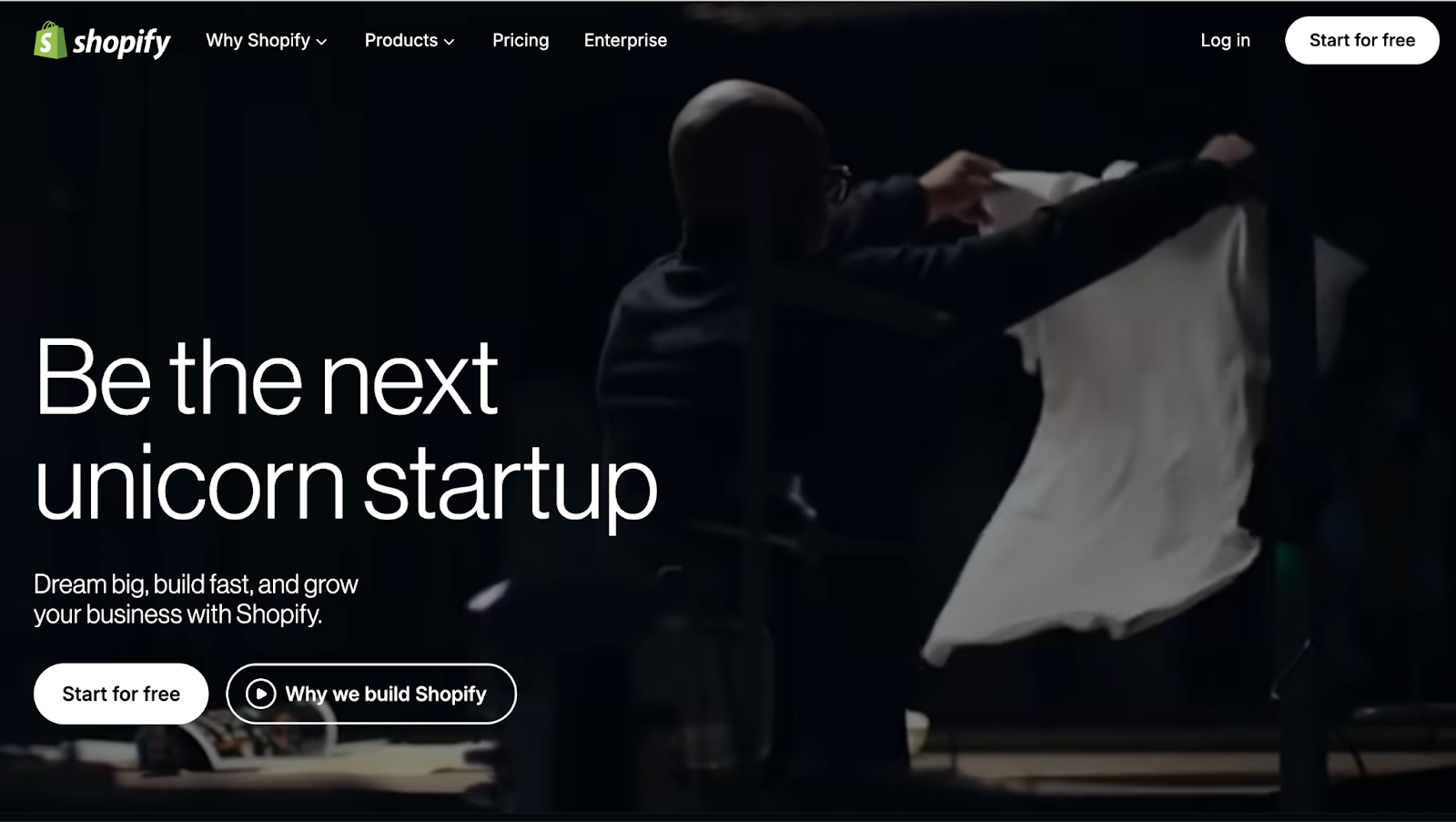
Shopify Es la plataforma dedicada al comercio electrónico más utilizada, que da servicio a cerca del 30 % de los un millón de sitios web de comercio electrónico más importantes y que gestionó un volumen bruto de mercancía de 378 000 millones de dólares en el ejercicio fiscal 2025. Hay una razón clara para ello: hace que ampliar tu negocio de dropshipping sea pan comido. A medida que los comerciantes van más allá de lo básico, muchos también recurren a socios de desarrollo de Shopify de marca blanca para crear funcionalidades personalizadas, optimizar las operaciones de la tienda y poner en marcha nuevos proyectos sin tener que ampliar sus recursos internos de desarrollo. Poner en marcha tu tienda online en Shopify es muy rápido. Te permite configurarla y ponerla en marcha en tan solo un día.
Y no olvidemos mencionar su enorme biblioteca de plugins. En ella encontrarás aplicaciones para la gestión de pedidos, el marketing, el análisis de datos y mucho más. Esto también te permite integrar rápidamente una amplia gama de funcionalidades en tu tienda online.
La contrapartida es que los costes se van acumulando. Si no utilizas los pagos de Shopify , tendrás que asumir las comisiones por transacción. La plataforma es fácil de ampliar, pero las aplicaciones pueden disparar tu presupuesto. Cuando tu negocio depende de múltiples herramientas de terceros, también surgirán problemas operativos. Un retraso en el envío, un problema de sincronización del inventario o un fallo en el proceso de pago pueden convertirse rápidamente en quejas de los clientes y Shopify Contracargos si las expectativas no se han establecido con claridad.
Ventajas del dropshipping con Shopify:
- Configura tu tienda y ponla en marcha rápidamente y sin complicaciones
- Un ecosistema con más de 16 000 aplicaciones para personalizar tu tienda
- Diseñado para adaptarse fácilmente
¿Para quién es más adecuado?
Para quienes quieren avanzar y crecer rápidamente.
2. WooCommerce: ideal para una personalización avanzada y una eficiencia a largo plazo
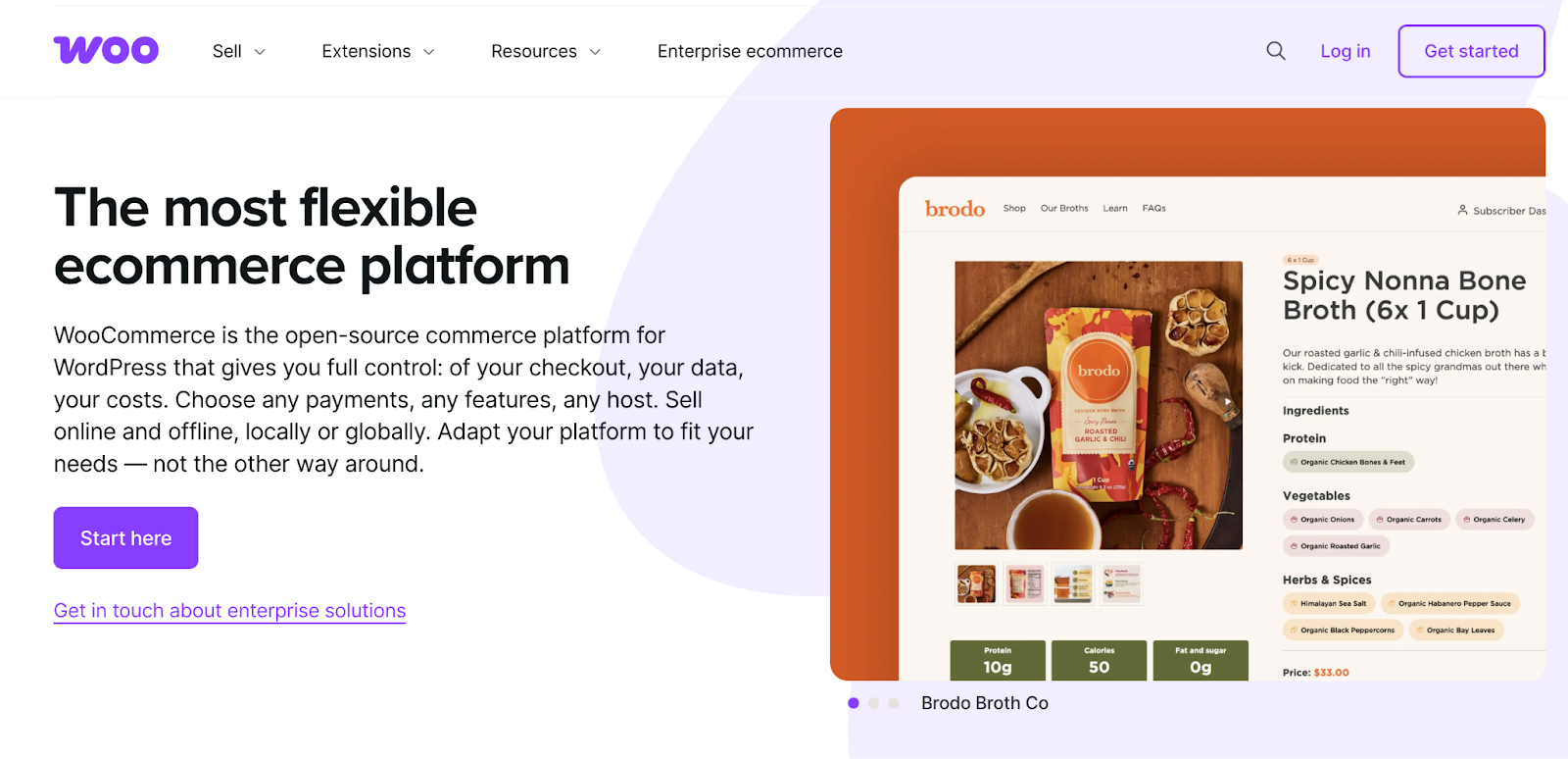
Si quieres crear una tienda según tus propias reglas y no quieres tener que lidiar con las limitaciones de otras plataformas de comercio electrónico, entonces WooCommerce debería ser tu elección. En combinación con uncreador de sitios web como IA ecommerce , puede ser tan fácil de configurar como Shopify, a la vez que te ofrece un control total sobre tu tienda, incluyendo el diseño, el proceso de pago y la lógica del backend.
La otra cara de la moneda es que tú mismo te encargas de todo el mantenimiento: alojamiento web, certificado SSL, actualizaciones de seguridad y compatibilidad de los plugins. Si no cuentas con un técnico en tu equipo, o con el presupuesto para contratar a uno, la cosa se complica.
En el dropshipping, esto es importante porque los malentendidos en la gestión de los pedidos o los fallos en la comunicación suelen traducirse más adelante en disputas.
Ventajas del dropshipping con WooCommerce:
- Consigue potentes funciones de SEO a través de WordPress
- No estás atado a la plataforma
- Si gestionas bien, podrás reducir los costes a largo plazo
¿Para quién es más adecuado?
Para quienes deseen crear su propia tienda online a medida y cuenten con un equipo que se encargue de su mantenimiento.
3. BigCommerce: la mejor plataforma de comercio electrónico con funciones integradas
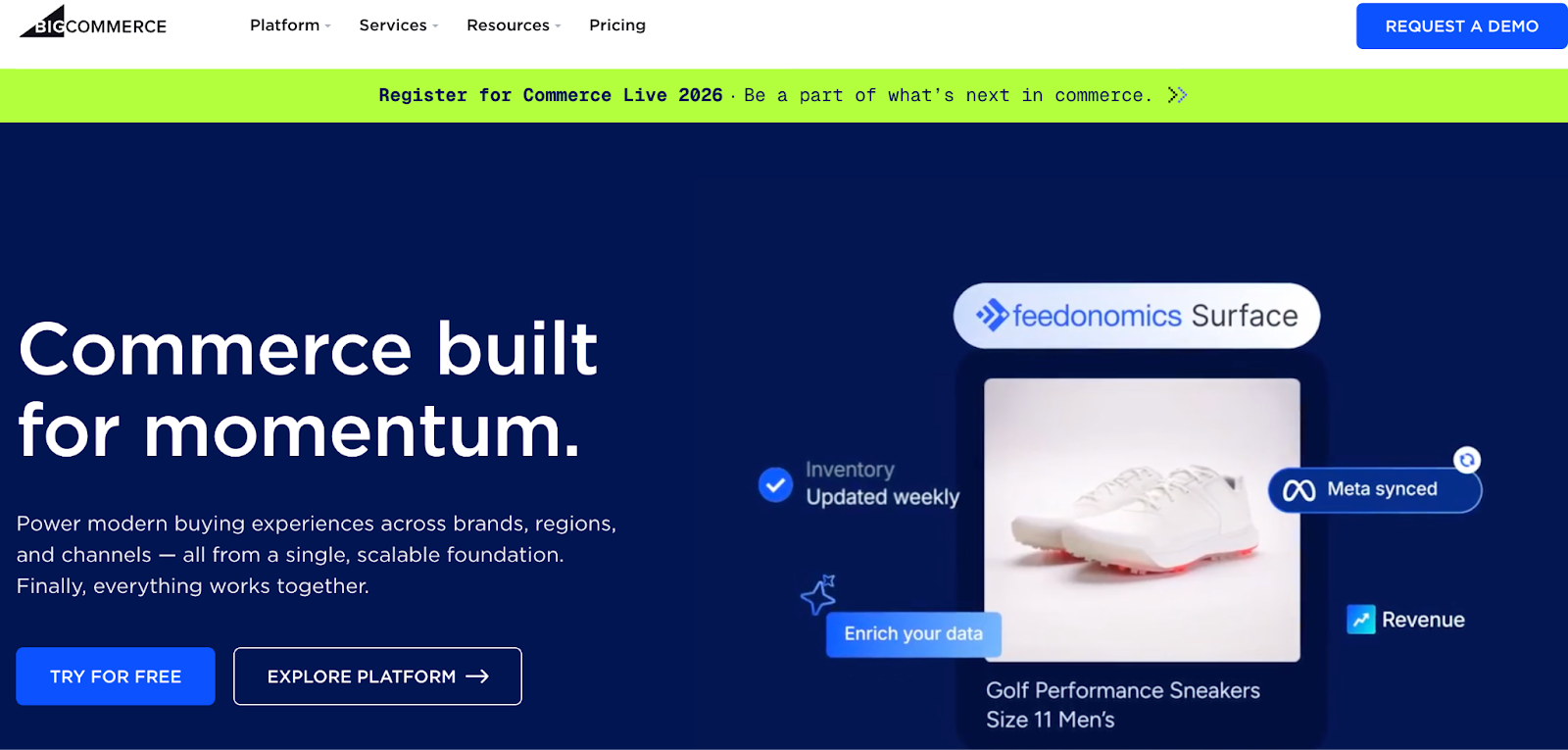
Shopify Cuenta con aplicaciones, y WooCommerce te permite desarrollar con código personalizado. Pero BigCommerce lo tiene todo integrado. Esto se traduce en menos integraciones, menos dependencias y menores costes. Además, es compatible con más de 55 proveedores de pago, lo que ofrece flexibilidad a los comerciantes sin imponerles penalizaciones adicionales por parte de la plataforma.
El ecosistema de aplicaciones es más reducido que el de Shopify, lo que puede suponer una limitación dependiendo de las integraciones que necesites. Además, la interfaz tiene una curva de aprendizaje más pronunciada para los principiantes.
En el caso del dropshipping a gran escala, la estructura de comisiones es la razón principal por la que los comerciantes prefieren esta plataforma: si se canalizan los pagos a través de un proveedor de INTEGRADA como Stripe o PayPal, BigCommerce no cobra ninguna comisión adicional, mientras que la comisión por pedido de Shopify se acumula rápidamente cuando se procesan cientos de pedidos a la semana.
Y dado que gran parte de la funcionalidad de BigCommerce es nativa, en lugar de depender de complementos, hay menos puntos de fallo de terceros. Esto es importante cuando intentas averiguar por qué un pedido no se ha tramitado correctamente o por qué se ha cobrado dos veces a un cliente.
Ventajas del dropshipping con BigCommerce:
- Al contar con más funciones integradas, se reduce la dependencia de integraciones de terceros
- No se aplica ninguna comisión adicional por transacción al utilizar un proveedor de pagos de « INTEGRADA », como Stripe o PayPal.
- Buenas capacidades de SEO y rendimiento
¿Para quién es más adecuado?
Para quienes buscan una plataforma de comercio electrónico completa que no dependa de integraciones.
4. Magento (Adobe Commerce): la mejor opción para la personalización y el control a nivel empresarial
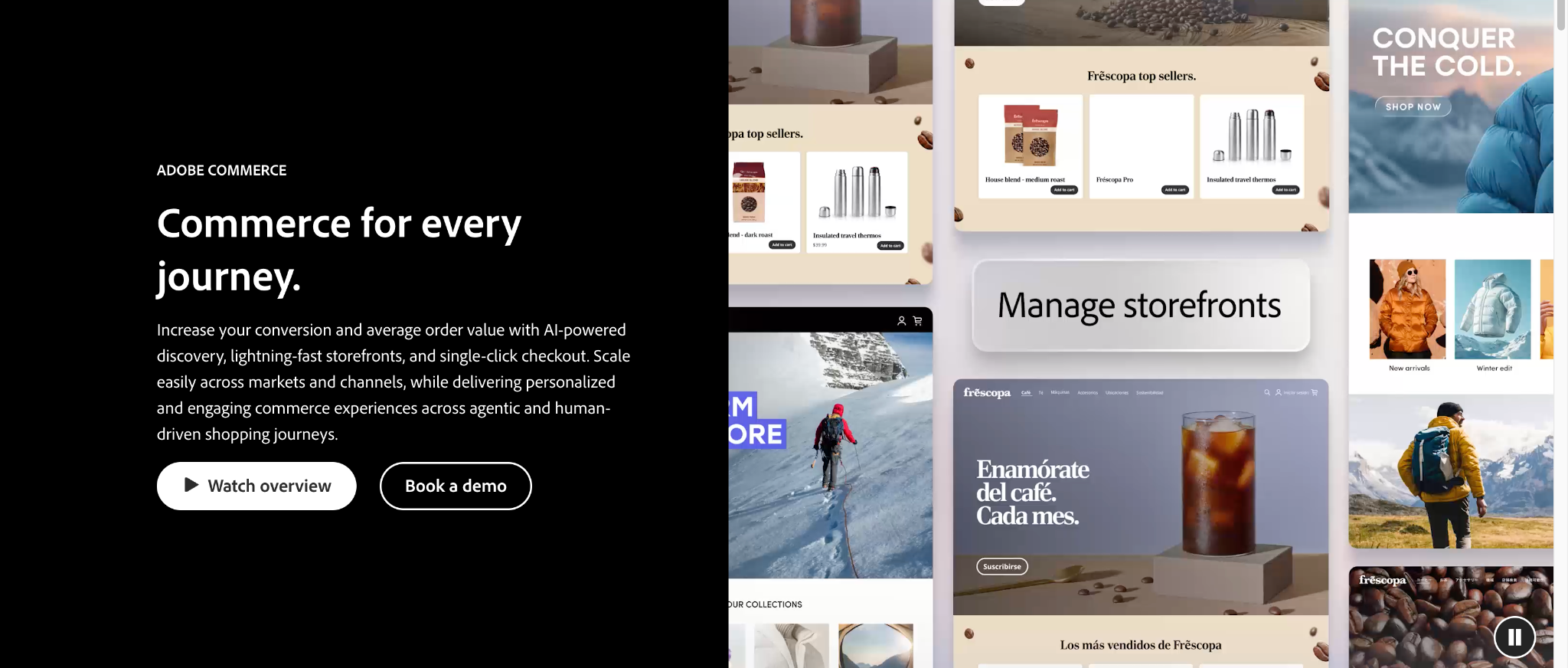
Para los comerciantes que han superado los límites de Shopify o WooCommerce, Magento —ahora Adobe Commerce— es la solución ideal para operaciones a gran escala. Te ofrece un control total sobre tu tienda online, la lógica del backend, los procesos de pago y la gestión de los envíos, sin las limitaciones que, con el tiempo, imponen las plataformas de SaaS .
Esa flexibilidad conlleva unos requisitos de infraestructura reales. Magento no es una plataforma que se pueda implementar por cuenta propia. Se necesita un equipo de desarrollo para crearla, mantenerla y ampliarla. Sin embargo, para las operaciones de dropshipping que gestionan un gran número de referencias (SKU) a través de múltiples proveedores y regiones, esa inversión resulta rentable de una forma que las plataformas más sencillas no pueden igualar. La gestión de múltiples tiendas, las reglas avanzadas de inventario y la segmentación detallada de clientes son funciones nativas, no complementos.
El riesgo de devoluciones en Magento suele estar relacionado con la complejidad. Cuantos más proveedores, variantes de pago y vías de gestión de pedidos se utilicen, más puntos de fallo existen. Una regla de envío mal configurada o una sincronización de pedidos defectuosa pueden provocar un aumento del número de disputas antes de que te des cuenta. A esa escala, contar con una gestión automatizada de las devoluciones conectada a través de tu proveedor de servicios de pago —ya sea Stripe, PayPal o Adyen — es menos opcional de lo que parece.
Ventajas del dropshipping con Magento:
- Control total sobre la interfaz de usuario, el proceso de pago y la lógica de fondo
- Diseñado para operaciones con múltiples tiendas y en múltiples regiones
- Sin comisiones por transacción impuestas por la plataforma ni dependencia de aplicaciones
- Se adapta al volumen de catálogo y pedidos sin encontrar obstáculos insuperables
¿Para quién es más adecuado?
Comerciantes que ya gestionan un volumen considerable y necesitan una infraestructura que crezca a su ritmo, así como un equipo que se encargue de su gestión.
5. Agentforce Commerce (antes Commerce Cloud): la mejor opción para operaciones de dropshipping a gran escala
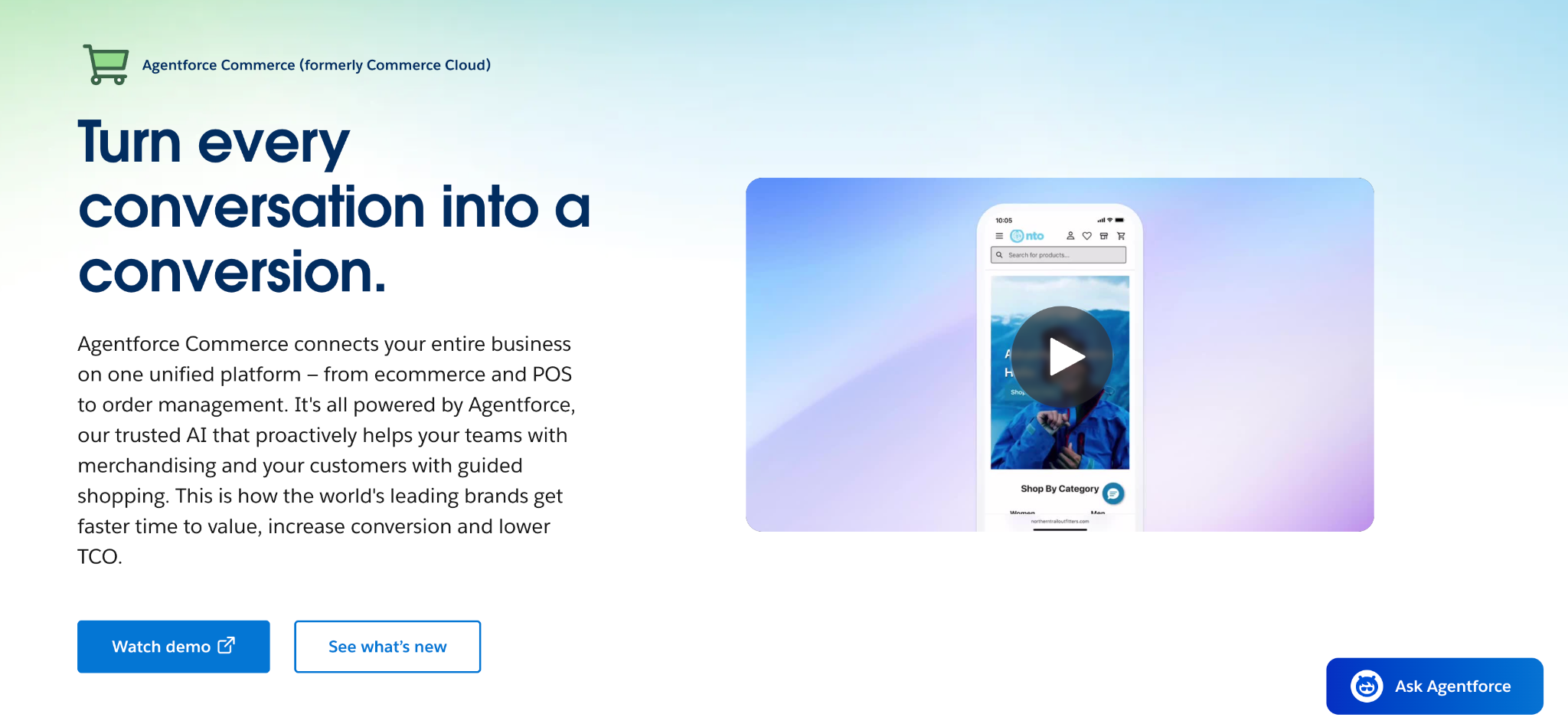
Salesforce Commerce Cloud, ahora rebautizada como Agentforce Commerce, no es el punto de partida. Es el punto al que se llega cuando la escalabilidad se convierte en la principal limitación. Utilizada por los principales minoristas que gestionan miles de referencias en mercados globales, ofrece gestión de pedidos de nivel empresarial, integración nativa con CRM y merchandising IA, todo ello en una única plataforma.
En el caso del dropshipping a esta escala, la integración con un CRM resulta especialmente valiosa. Cuando gestionas una amplia cartera de clientes repartidos entre múltiples proveedores y zonas geográficas, los patrones de las reclamaciones se convierten en datos, y Salesforce te ofrece la infraestructura necesaria para actuar en función de esos datos antes de que se conviertan en un problema de devoluciones. El historial del cliente, el comportamiento de los pedidos y el rendimiento del cumplimiento de los mismos se centralizan en un único lugar.
La contrapartida es el coste y el tiempo de implementación. Agentforce Commerce requiere una inversión inicial considerable y un socio de implementación. Está diseñado para operaciones en las que el coste de las limitaciones de la plataforma supera el coste de la infraestructura empresarial, lo cual es un cálculo real cuando se trata de grandes volúmenes. A medida que los agentes de « IA » asumen una mayor parte de la gestión de productos e incluso de la compra, los comerciantes que utilizan plataformas basadas en herramientas de « » también deben comprender cómo cambian los requisitos en materia de responsabilidad y pruebas; consulta esta guía de pruebas para el comercio de « » Contracargos para ver cómo se aplica esto en la práctica.
El procesamiento de pagos se realiza a través de pasarelas compatibles, como Stripe PayPal, lo que significa que las herramientas de gestión de devoluciones, como Chargeflow en la capa de pago sin necesidad de personalización a nivel de plataforma.
Ventajas del dropshipping con Agentforce Commerce:
- Sistema de gestión de pedidos para empresas diseñado para operaciones de gran volumen con múltiples proveedores
- Integración nativa con CRM para el seguimiento del comportamiento de los clientes y los patrones de reclamaciones
- Merchandising y personalización a gran escala IA
- Se integra con la gestión de devoluciones a través de los procesadores de pago compatibles
¿Para quién es más adecuado? Para negocios de dropshipping ya consolidados en los que la escala, la coherencia de la marca y la automatización de los procesos operativos son más importantes que la rapidez de lanzamiento.
Herramientas de gestión de pedidos
No se trata de plataformas de « ecommerce » en el mismo sentido que Shopify, WooCommerce o BigCommerce. Se utilizan como complemento de las plataformas principales. Sin embargo, para los comerciantes que se dedican al dropshipping con impresión bajo demanda, merece la pena probarlas.
6. Printify: la mejor plataforma de impresión bajo demanda por su variedad de catálogos
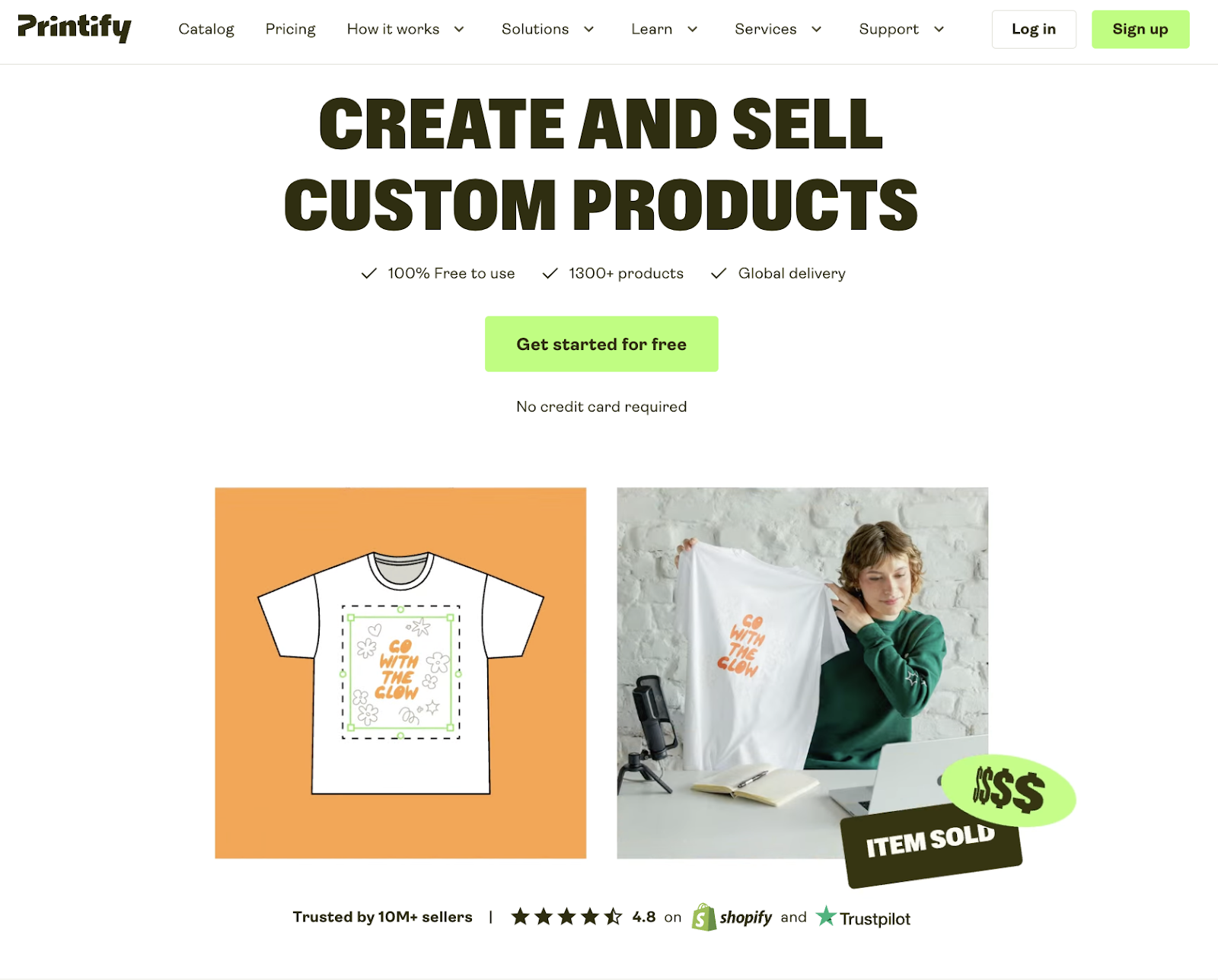
Printify es un excelente punto de partida para el dropshipping de impresión bajo demanda, con más de 1300 productos entre ropa, artículos para el hogar y accesorios que puedes enviar a más de 209 países y territorios. Además, cuenta con herramientas integradas para personalizar cada producto con tus diseños exclusivos e incluso te permite comparar proveedores de impresión por precio, ubicación y valoración. Esto te da margen para probar diferentes productos y márgenes de beneficio a medida que vas adquiriendo experiencia.
Tanto a los comerciantes principiantes como a los expertos que obtienen ingresos de seis cifras les encanta Printify por la flexibilidad que ofrece a los proveedores, lo que les permite fijar los precios base, los plazos de envío y los márgenes.
Cuando trabajas con una red de proveedores, tendrás que gestionar de forma activa los márgenes y los plazos de entrega de cada uno de ellos. Si te saltas los controles de calidad, los pedidos de muestra y la selección de proveedores, aumentas las probabilidades de que se produzcan discrepancias en los productos o problemas de entrega. Seleccionar desde el principio proveedores de dropshipping de confianza es una de las formas más rápidas de reducir ambos riesgos.
Ventajas del dropshipping con Printify:
- Gratis al principio, con planes de precios adaptables
- Herramientas prácticas como una calculadora de precios y un creador de productos con función de arrastrar y soltar
- Controla mejor tus márgenes en comparación con los modelos de impresión bajo demanda (POD) con un único proveedor
- Integrarse con plataformas como Shopify, BigCommerce, WooCommerce y otras plataformas
¿Para quién es más adecuado?
Aquellos que buscan una plataforma flexible para mejorar el diseño de las opciones, la fijación de precios y el control de los márgenes, y poder elegir entre innumerables proveedores a medida que crecen.
7. Printful: la mejor plataforma de impresión bajo demanda con herramientas para crecer
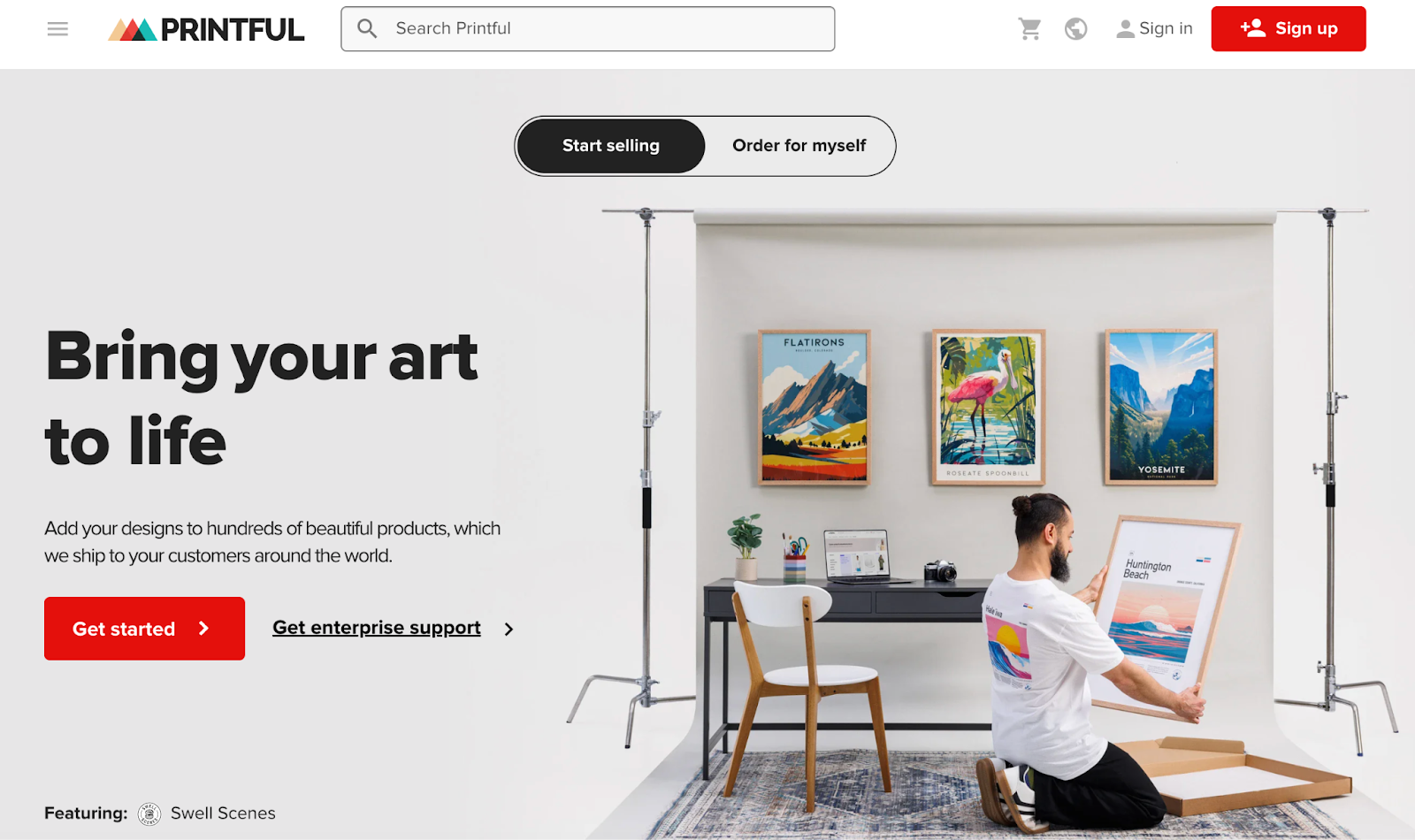
Printful es una opción muy interesante para el dropshipping con impresión bajo demanda, ya que ofrece una herramienta gratuita llamada Design Maker con la que puedes personalizar cualquier artículo de su catálogo, mientras que Printful se encarga de la producción, el embalaje y la gestión de los pedidos.
Printful cuenta con una tasa de aprobación de pedidos del 99,76 % porque, a diferencia de muchos otros proveedores de impresión bajo demanda que recurren a terceros, todos los productos de Printful se fabrican internamente. Los usuarios no tienen que comparar entre varios proveedores ni preocuparse por resultados irregulares. Por lo tanto, independientemente del artículo que elijas personalizar y vender, su calidad seguro que impresionará a tus clientes.
La clave aquí es la flexibilidad, o más bien la falta de ella. Se dispone de menos margen para comparar proveedores, precios y vías de producción que con una red de proveedores más amplia. Printful puede ayudar a reducir un problema habitual del dropshipping: la falta de uniformidad en los resultados entre los distintos proveedores. Cuando la gestión de los pedidos está más estandarizada, resulta más fácil establecer expectativas claras en cuanto a la calidad del producto, la entrega y el embalaje.
Pero eso no elimina el riesgo de devoluciones. Si los plazos de envío, las expectativas sobre el producto o la comunicación sobre la entrega no son satisfactorios, los clientes pueden seguir reclamando el pedido.
Ventajas del dropshipping con Printful:
- Crea una marca sólida con etiquetas interiores en el cuello y folletos en el embalaje
- Crea productos únicos con bordados en colores personalizados e impresión DTFlex
- Conéctate con las principales plataformas de comercio electrónico y mercados online
- Consigue tarifas de envío transparentes y descuentos por volumen
¿Para quién es más adecuado?
Aquellos que quieran centrarse en aprender a diseñar productos, fijar precios y promocionar su tienda sin tener que preocuparse por la parte de la producción.
8. Podbase: La mejor plataforma de impresión bajo demanda para accesorios tecnológicos y arte mural
Podbase es una sólida opción de impresión bajo demanda para vendedores que desean ir más allá de la ropa estándar y crear una tienda más especializada en accesorios tecnológicos personalizados, decoración de paredes y productos de estilo de vida. Su catálogo incluye más de 300 productos, entre los que se encuentran fundas para móviles, fundas para portátiles, alfombrillas de escritorio, pósters, tazas, fundas para MacBook y otros productos personalizados. Los vendedores pueden crear y probar diseños sin necesidad de comprar stock por adelantado, mientras que Podbase se encarga de la impresión, el embalaje, la gestión de pedidos y el envío internacional tras cada pedido.
Resulta especialmente útil para los comerciantes que buscan una forma de bajo riesgo de vender productos de mayor valor percibido en categorías que dependen menos de las camisetas y la ropa básicas. Podbase es gratuito al principio, no tiene cuotas mensuales y ofrece un servicio de gestión de pedidos las 24 horas del día, lo que lo convierte en una opción práctica para los creadores que desean mantener unas operaciones ágiles mientras prueban productos de nicho.
Podbase también se integra con las principales plataformas de venta online, como Shopify, Etsy y WooCommerce, de modo que los vendedores pueden añadir diseños, publicar productos y dejar que Podbase se encargue de la producción y el envío de los pedidos.
Ventajas del dropshipping con Podbase:
- Gratis al principio, sin cuotas mensuales
- Gran énfasis en los accesorios tecnológicos personalizados y la decoración mural
- Más de 300 productos personalizables impresos bajo demanda
- Gestión de pedidos en 24 horas y envíos a todo el mundo
- No es necesario gestionar el inventario ni los envíos
- Se integra con « Shopify », Etsy y WooCommerce
¿Para quién es más adecuado?
Aquellos que deseen crear una tienda de impresión bajo demanda más especializada en accesorios tecnológicos personalizados, decoración de paredes y productos de aspecto premium sin tener que gestionar ellos mismos el inventario, la producción ni los envíos.
Riesgos habituales del dropshipping
Los comerciantes que operan mediante dropshipping se enfrentan a índices de disputas más elevados que la mayoría de los modelos de comercio electrónico, independientemente de la plataforma en la que desarrollen su actividad. Esto se debe a que la propia estructura del negocio crea unas condiciones que los bancos y las redes de tarjetas consideran de mayor riesgo:
- Retrasos en los envíos: cuando un proveedor no cumple con el plazo de entrega y un cliente ya no reconoce un cargo de hace varias semanas, lo más probable es que se produzca una reclamación. Los pedidos con envío directo suelen recorrer una distancia mayor y pasar por más manos que los pedidos que se gestionan desde el propio almacén del comerciante, lo que alarga los plazos de entrega y aumenta la probabilidad de que se produzca una reclamación por «artículo no recibido».
- Discrepancias en el producto: si el artículo que recibe un cliente tiene un aspecto diferente al de la foto del producto, a menudo impugnará el cargo en lugar de solicitudes tramitar una devolución.
- Compras impulsivas: las tiendas que operan mediante dropshipping, sobre todo aquellas que llevan a cabo campañas agresivas de publicidad de pago en redes sociales, atraen a compradores impulsivos. Un porcentaje considerable de esos compradores se olvidará de la compra o se arrepentirá de ella y acudirá directamente a su banco en lugar de ponerse en contacto contigo.
- Fraude «amistoso»: algunos clientes impugnan cargos legítimos, sabiendo que los pequeños comerciantes a menudo no disponen de la documentación ni del tiempo necesarios para defenderse. No se trata de un problema marginal: el 72 % de los comerciantes informó de un aumento del fraude «amistoso» en 2024, y actualmente representa aproximadamente el 75 % de las disputas del comercio electrónico en general.
- Supplier and buyer scams: not every risk originates with card networks — fraudulent suppliers, fake reviews, and other dropshipping scams can quietly drain margins long before a chargeback is ever filed.
Las plataformas de las que hemos hablado no ofrecen ayuda directa con el proceso de respuesta a las disputas en sí, y ninguna de ellas detecta los « disputas » antes de que se agraven. Detectar un caso a tiempo mediante alertas de devoluciones, seguir un enfoque más amplio de prevención del fraude de tipo «ecommerce » y automatizar el proceso de recopilación de pruebas y respuesta son el tipo de medidas operativas que evitan que los ingresos recuperables se den por perdidos a medida que crece un negocio de dropshipping.
Cómo elegir la eCommerce adecuada para el dropshipping: preguntas frecuentes
¿Cuál es la mejor ecommerce para el dropshipping?
No hay una respuesta única que sirva para todos los casos; depende de tu volumen de negocio y de tus prioridades. Shopify es la mejor opción para los comerciantes que desean poner en marcha su negocio rápidamente y acceder al mayor ecosistema de aplicaciones. WooCommerce y BigCommerce son adecuados para los comerciantes que buscan un mayor control o comisiones por transacción más bajas. Magento y Agentforce Commerce están diseñados para operaciones de gran volumen con múltiples proveedores que han superado las capacidades de las plataformas de tipo « SaaS ».
Adobe Commerce (Magento) frente a Shopify para el dropshipping: ¿cuál debería elegir?
Shopify Es más rápido de poner en marcha y no requiere un equipo de desarrollo, lo que lo convierte en la mejor opción para la mayoría de las tiendas de dropshipping. Adobe Commerce (Magento) resulta una opción acertada cuando se gestiona un gran número de referencias (SKU) de múltiples proveedores y en distintas regiones, y se necesita una gestión nativa de múltiples tiendas, reglas de inventario avanzadas y segmentación de clientes que el modelo basado en aplicaciones de Shopify no puede igualar; sin embargo, requiere un equipo de desarrollo para su creación y mantenimiento.
¿Qué es una plataforma de «dropshipping en la nube»?
El término se refiere, en general, a cualquier software de dropshipping basado en la web y con modelo de suscripción, a plataformas de « ecommerce » como Shopify y BigCommerce, o a herramientas de gestión de pedidos como Printify y Printful, que funcionan íntegramente en el navegador sin necesidad de instalación local. Se trata de una descripción del modelo de prestación del servicio (alojado en la nube, accesible desde cualquier lugar) más que de un producto específico concreto.
¿Influye ecommerce de ecommerce que elija en mi riesgo de devolución?
Sí, de forma indirecta. La plataforma en sí misma no provoca Contracargos, pero determina el número de puntos de fallo que existen: las dependencias de aplicaciones de terceros, los problemas de sincronización en la gestión de pedidos y los fallos en el proceso de pago crean oportunidades para que surjan disputas. Ninguna de las plataformas de esta lista resuelve automáticamente Contracargos ti; para ello se necesita una capa independiente como Chargeflow.
¿Son las tiendas que operan con el modelo de dropshipping más propensas a sufrir un « Contracargos » que otras tiendas online?
En general, sí. El dropshipping añade etapas intermedias que no tiene un pedido minorista típico: un proveedor gestiona el pedido y un transportista distinto se encarga del envío, a menudo en un plazo más largo y menos predecible, lo que aumenta las probabilidades de que «no se reciba el artículo» o de que haya discrepancias en el producto disputas. Si a esto le sumamos un panorama de fraude en el que solo el «fraude amistoso» representa aproximadamente el 75 % del comercio electrónico disputas, queda claro por qué la elección de la plataforma y la estrategia de gestión de disputas deben formar parte de la misma decisión.
Adaptar la plataforma a tu situación actual
Ahora tienes 8 opciones para tu tienda de dropshipping, y elegir la adecuada depende de cómo tengas pensado gestionarla, no de qué plataforma tenga la lista de funciones más llamativa.
Shopify BigCommerce es ideal para los comerciantes que desean crecer con una base repleta de funciones. WooCommerce está pensado para aquellos que quieren un control total sobre cada aspecto de su tienda. Para las operaciones que ya gestionan grandes volúmenes, Magento y Agentforce Commerce proporcionan la infraestructura que exige el dropshipping a escala empresarial. Y para los comerciantes que se dedican a la impresión bajo demanda, Printify te ofrece flexibilidad en la elección de proveedores y control de los márgenes; Printful garantiza la consistencia y la calidad de la marca en la fase de cumplimiento de los pedidos; y Podbase ofrece una opción específica si deseas especializarte en accesorios tecnológicos y arte mural.
Pero la plataforma es solo una parte de la ecuación. Los retrasos en los envíos, los errores en los productos y las compras impulsivas aumentan el riesgo de devoluciones, y ninguna de las plataformas mencionadas resuelve ese problema por ti. Herramientas como Chargeflow esa carencia, automatizando la gestión de las disputas para que puedas recuperar los ingresos perdidos sin aumentar los gastos operativos.
La plataforma adecuada te ayuda a dar los primeros pasos. Los sistemas adecuados te permiten seguir creciendo.
Contracargos?
Ya no es problema tuyo.
Recupera cuatro veces más Contracargos y prevención , hasta un 90 % de las entradas, gracias a IA y a una red global de 20 000 comercios.


.png)
.webp)
.webp)
.webp)