In-Store Fraud and EMV Liability: Merchant Guides

rétrofacturation?
Ce n'est plus votre problème.
Recover 4x more chargebacks and prevent up to 90% of incoming ones, powered by AI and a global network of 20,000+ merchants.


 Plus de 600 avis
En bref :
An in-store fraud investigation starts with the actual allegation and the terminal’s payment records. This learning path connects card-present fraud, counterfeit-card evidence, and EMV liability guidance without assuming that every payment made in a store has the same defense.
- Read the allegation and match the disputed payment to the receipt, terminal, date, amount, and case reference.
- Review the recorded entry mode and processing result rather than treating physical card presence as proof of customer permission.
- Confirm transaction-specific liability conditions and permitted evidence with the processor or acquirer.


An in-store fraud investigation starts with the actual allegation and the terminal’s payment records. This learning path connects card-present fraud, counterfeit-card evidence, and EMV liability guidance without assuming that every payment made in a store has the same defense.
Start with these decisions
Choose a guide from the payment and case context
Match the case before assessing liability
Match the payment
Read the allegation and match the disputed payment to the receipt, terminal, date, amount, and case reference.
Read the entry mode
Review the recorded entry mode and processing result rather than treating physical card presence as proof of customer permission.
Confirm the conditions
Confirm transaction-specific liability conditions and permitted evidence with the processor or acquirer.
Choose a specialist guide
| Merchant task | Guide | What it covers |
|---|---|---|
| Investigate the store incident | Card-Present Fraud: Liability, Evidence, and Chargeback Response | Payment handling, terminal operations, relevant records, and the allegation. |
| Assess counterfeit-card evidence | Counterfeit Card Fraud: EMV Liability and Chargeback Evidence | Entry mode, fallback, and the available POS evidence. |
| Review EMV liability conditions | EMV Liability Shift: Who Pays When a Card-Present Transaction Is Disputed? | Transaction-specific scope, limitations, and evidence. |
Build a terminal-to-case record
| Record | Merchant question |
|---|---|
| Order and receipt references | Do these records identify the disputed purchase and amount? |
| Provider payment reference | Does the payment record match the receipt and case? |
| Terminal and transaction time | Which device processed the payment, and when? |
| Recorded entry mode and processing result | What does the provider record actually show? |
| Case allegation and reason | Is the complaint about unauthorized use, a counterfeit credential, goods, a credit, or another issue? |
| Customer and fulfillment records | Which records address this particular allegation? |
Keep fraud and fulfillment evidence separate
Physical card presence, a payment approval, and customer permission describe different facts. A terminal record may help establish how a payment was processed; it does not establish that a product matched its description or that a promised refund was completed. Start with the actual allegation and explain what each record supports.
For a delivery or product complaint, continue to nonreceipt evidence or description evidence. For a credit issue, use the billing and refund path. These routes keep a service complaint from being treated as a counterfeit-card case.
Confirm liability and submission conditions
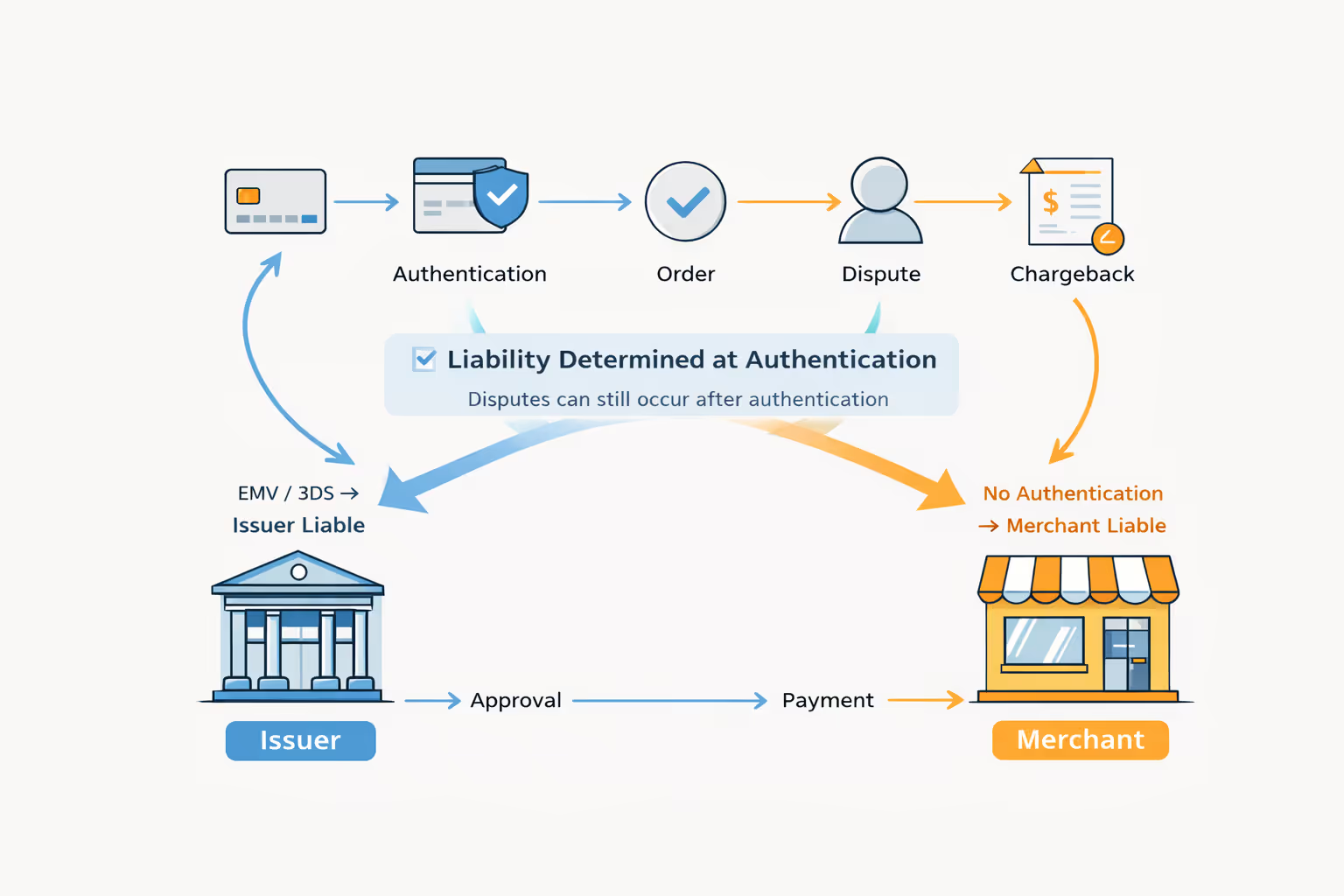
Use the EMV guide to prepare the questions for your processor or acquirer: which dispute condition applies, which transaction fields are relevant, what evidence is allowed, and what deadline controls this case? Preserve the provider’s answer with the payment record. Do not infer a universal liability shift from the presence of a chip or a terminal approval.
Use the representment guide to organize an eligible response. If the original purchase was online or used a transfer product, return to Online Payment Fraud: Choose a Merchant Investigation Guide to choose the relevant investigation.
Continue to another learning path
- Chargeback Basics and Rules: A Merchant Learning Path
- Billing Disputes and Refunds: A Merchant Learning Path
- Chargeback Evidence and Escalation: Choose Your Next Step
- Chargeback Prevention and Monitoring: A Merchant Learning Path
- Online Payment Fraud: Choose a Merchant Investigation Guide
- Payment Platform Disputes: Stripe, Shopify, and PayPal Guides
- Wallet and BNPL Disputes: Choose the Correct Payment Route
- Card Network and Bank Disputes: A Merchant Guide Directory
Sources and scope
Source notes updated: October 11, 2026. In-store card payments. EMVCo explains the technology; it does not decide a particular chargeback. Use the network’s applicable regional rules and the acquirer’s case instructions for liability, and preserve terminal entry-mode and fallback records.
- EMVCo: contact-chip technology
- Visa: current public rules and editions
- Mastercard: rules and chargeback documents
For a live case, retain the governing document’s edition or effective date, the relevant provision, and the provider notice.
rétrofacturation?
Ce n'est plus votre problème.
Récupérez 4 fois plus d'rétrofacturation s et PRÉVENTION jusqu'à 90 % des messages entrants, grâce à l'IA et à un réseau mondial de 20 000 commerçants.