%201.svg)




































Optimize the Ecommerce Funnel Without Increasing Fraud and Chargebacks

rétrofacturation?
Ce n'est plus votre problème.
Récupérez 4 fois plus d'rétrofacturation s et PRÉVENTION jusqu'à 90 % des messages entrants, grâce à l'IA et à un réseau mondial de 20 000 commerçants.


 Plus de 600 avis


En bref :
- Approval rate and dispute rate have to be optimized together, not conversion rate alone.
- Predictive checkout interventions cut cart abandonment by up to 18% when targeted at hesitation signals.
- AI-driven risk scoring reduces the false declines that cost 47% of merchants lost sales (PYMNTS Intelligence, 2026).
- Personalized recommendations drive 35% of Amazon’s total sales, per McKinsey.
- Retention segments built on purchase history alone can include serial disputers unless refund and chargeback history is weighted in.
Profitable conversion means increasing checkout completion without also increasing chargebacks, refund abuse, or false declines, and it is the only version of "conversion" worth optimizing for. A funnel that lifts approval rates by removing every friction point but doubles dispute volume six weeks later has not improved. It has moved the cost from the top of the funnel to the bottom, where it is more expensive and harder to see.
About 70% of online shopping carts are abandoned before checkout. Not because customers lose interest, but because small moments of friction break trust: a shipping cost that appears late, a payment field that errors out, a site that feels a little too slow. Merchants respond by stripping out friction wherever they find it. That works, until the same shortcuts that speed up legitimate buyers also speed up friendly-fraud claims, stolen-card testing, and return abuse.
This article treats prevention, deflection, evidence, liability, and recovery as the actual decision framework for funnel optimization, not a chargeback section bolted onto a growth playbook.
What Profitable Conversion Actually Means
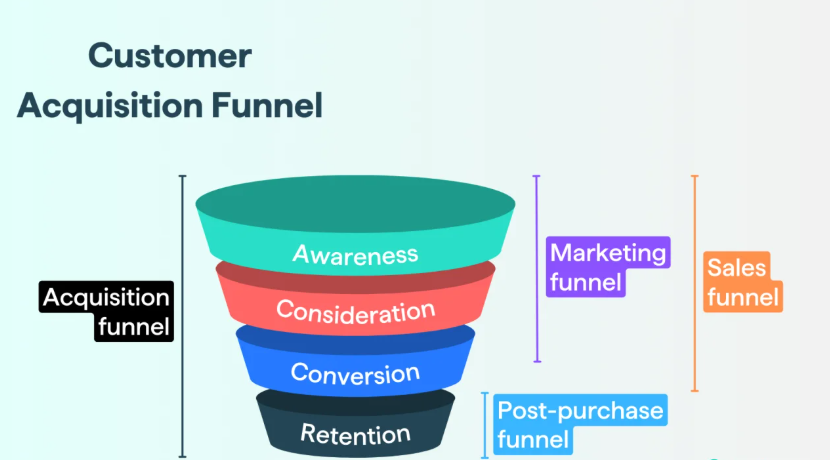
A conversion funnel is the step-by-step journey a potential customer takes, from first becoming aware of a brand to taking a desired action, typically a purchase, and eventually becoming a repeat customer. It has four stages, and each one carries a different kind of risk alongside its opportunity:
- Awareness: attracting the right audience, not just more traffic
- Consideration: building trust and reducing friction without removing the signals that catch abuse
- Conversion: overcoming doubts at checkout while keeping authorization and fraud review intact
- Retention: maintaining engagement and loyalty with customers who are actually profitable to keep
Raw conversion rate treats every completed checkout as a win. Profitable conversion asks what happens to that order 30, 60, and 90 days later, after refunds, chargebacks, and fraudulent transactions have had time to surface. A merchant that only tracks the first number is optimizing against a metric that lies to them for a full billing cycle.
Mapping Friction, Authentication, Authorization, and Data Capture
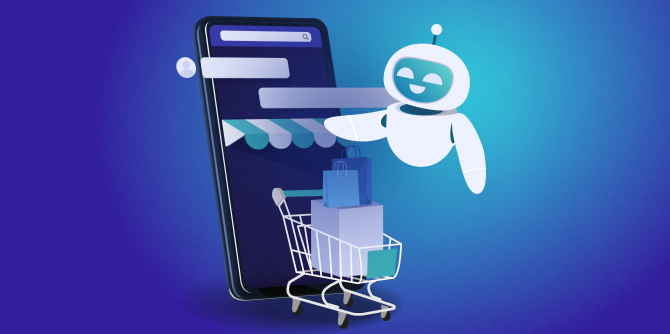
Before testing a single tactic, map four things across the funnel: where friction currently sits, what authentication is required and when, how authorization decisions get made, and what data is captured at each step. Most merchants can name their friction points. Far fewer can say, stage by stage, what data their checkout captures that would help them win a dispute later or catch a repeat abuser before they order again.
With AI layered onto that map, merchants can:
- Analyze customer data to find patterns in buying behavior, including patterns that precede a dispute.
- Use predictive analysis to flag which orders are likely to be disputed, not just which visitor is likely to buy.
- Detect fraudulent transactions before they are processed, using device, location, and behavioral signals.
- Send personalized offers that increase conversion without loosening the checks that keep out serial abusers.
No human team can track every customer interaction in real time, but AI can. For instance, when AI is built into customer support tools, customers get quick answers relevant to their specific situation, which keeps them moving through the funnel instead of getting frustrated and opening a dispute out of frustration rather than fraud.
The Funnel Stages, Measured for Approval and Dispute Outcomes
1. Awareness: Smarter Ad Targeting
With ads, reach matters, but with AI-powered ad targeting, precision matters more. Using AI-based segmentation, a national home and furniture retailer generated $6.1M in revenue and a 67% coupon redemption rate among on-the-fence shoppers, according to the vendor's published case study. Instead of casting a wide net, AI focuses spend where intent, not just interest, is highest.
2. Consideration: Personalized Recommendations
Once the right shopper is on the site, the job is to keep them there. AI can offer personalized product recommendations based on browsing behavior, past purchases, and real-time context. According to McKinsey, algorithmic recommendations drive 35% of Amazon’s total sales. StyleHub Boutique implemented an AI-powered personal styling assistant and reported a 160% increase in conversions and an 85% rise in customer satisfaction.
3. Conversion: Checkout Optimization and Authorization, Together
This is where most sales slip away, and where friction and fraud controls have to be tuned as one system instead of two competing teams. Research shows predictive checkout interventions, timely free shipping or a one-time discount offered at the moment a customer hesitates, can reduce abandonment by up to 18%. A fraud-detection tool built into an adaptive checkout helped ticket marketplace TickPick evaluate order risk in real time and recover $3 million in revenue from transactions that older, static fraud rules would have declined outright.
That second example is the more important one for profitable conversion, because it targets the other side of the same coin: false declines. Static fraud rules block suspicious-looking orders, but they also block legitimate customers, and that costs real sales. Nearly half of merchants estimate up to 5% of legitimate orders are wrongly declined as fraudulent, an estimated $50 billion in lost revenue industry-wide, and 47% of merchants say false declines cost them sales, according to PYMNTS Intelligence's 2026 Payments Orchestration Tracker. AI-driven risk scoring, using location data, device fingerprinting, and behavioral cues, approves more legitimate transactions than static rules while still catching fraud, which protects both the conversion number and the dispute number at the same time.
4. Retention: Predictive Analytics That Know Who's Actually Profitable
Acquiring a new customer costs far more than keeping one, but not every returning customer is worth keeping the same way. AI can identify high-value customers, predict churn, and automate outreach before interest fades, and it can pinpoint the best time to send offers or loyalty rewards. A global coffee brand used AI-powered predictive analytics to segment its audience and reward top-tier customers with early product access, reporting a 15% to 20% campaign lift. The catch: a segmentation model built purely on order volume and recency will happily reward a customer who orders often and disputes often. Retention scoring needs refund rate and dispute history as inputs, not just purchase history, or "loyalty" ends up subsidizing abuse.
Segmenting Journeys by Risk
Not every checkout deserves the same treatment. Segmenting traffic into risk tiers lets merchants apply friction, authentication, and manual review selectively instead of uniformly, which is how approval rates go up without dispute rates following them.
| Risk Tier | Typical Signal | Checkout Treatment | Evidence to Capture |
|---|---|---|---|
| Faible risque | Repeat customer, verified device, consistent shipping and billing address | Minimal friction, one-click or saved payment | Standard order and delivery confirmation |
| Risque moyen | New customer, mismatched billing and shipping, or high order value for the account | Light step-up, such as address confirmation or a one-time code | Device fingerprint, IP and geolocation match, customer communication log |
| Haut risque | Prior chargebacks, known abuse network signals, digital-good or easily resold item | Manual review or step-up authentication before authorization | Full identity verification trail, explicit policy acceptance, delivery signature |
These tiers are a qualitative decision framework, not a fixed percentage split. The right thresholds depend on a merchant's own chargeback ratio, average order value, and processor rules, which is why the next step is testing, not assuming.
Testing Recovery Tactics and Step-Up Controls
Once journeys are segmented, treat each tier as a testable hypothesis, not a permanent rule. Recovery tactics for medium and high risk segments should be tested against two outcomes at once: does the intervention preserve authorization, and does it reduce eventual dispute volume for that segment. A step-up control that recovers checkout completion but does nothing to the dispute rate three months later has not solved the problem, only postponed it. This is also where a balancing friction and fraud protection mindset matters more than a rulebook: the goal is the least friction that still produces clean evidence, not the least friction possible.
Guardrails for Approval Lift and False Positives
Every tactic in this article can be misapplied. Loosen authentication too far and approval climbs while chargeback ratio climbs with it. Tighten fraud rules too far and false declines quietly erase revenue that never shows up as a complaint, just as a customer who does not come back. Set guardrails before testing, not after:
- Define an acceptable false-positive rate for automated declines before turning on a new model, and monitor it weekly, not quarterly.
- Cap approval-rate experiments at a dispute-rate ceiling tied to card network thresholds, so a short-term lift can't quietly push the account toward a monitoring program.
- Route borderline authorization decisions through Chargeflow Prevent rather than a binary approve or decline, so post-authorization signals can still catch what pre-authorization rules missed.
- Review declined orders and won or lost disputes together, monthly, as one dataset, not two separate reports owned by two separate teams.
Generic ecommerce fraud prevention advice treats every merchant's risk tolerance as identical. It isn't. A subscription business and a marketplace selling easily resold electronics need different guardrails even if their conversion goals look the same on a dashboard.
Measuring the Cohort After Refunds and Disputes Mature
A conversion number measured on the day of purchase is incomplete. Chargebacks typically take weeks to file and longer to resolve, and refund abuse often shows up only after a return window closes. Measure funnel changes against a cohort that has had time to mature, not the raw completion count from launch day. In practice, that means holding a test's "final" conversion read for at least one full dispute and return cycle before declaring a friction change a win.
This is also where prevention, deflection, evidence, and recovery function as one feedback loop rather than four separate tools. A chargeback alert service deflects disputes before they post, Chargeflow Insights shows which funnel changes are quietly raising the dispute rate weeks after launch, and automated evidence submission recovers what still gets disputed. Looking further out, as more purchases get initiated by shopping agents instead of a person clicking through a checkout page, AI agent chargeback liability and the evidence requirements around agentic commerce chargebacks will become part of this same funnel math, not a separate problem to solve later.
Profitable Conversion Is a Funnel Metric, Not a Checkout Metric
The checkout page gets the credit or the blame for conversion, but profitable conversion is decided across the whole funnel: which audience gets targeted at the top, which authorization logic runs in the middle, and which retention model gets built on data that includes disputes, not just purchases. Merchants who treat payment service provider settings, checkout UX, and dispute outcomes as three unrelated dashboards will keep re-solving the same problem every quarter. Checkout fixes only hold if the operations behind them do too. For the process side of that, from order handoffs to evidence retention, see how to streamline ecommerce operations end to end.
FAQ sur l'entonnoir de conversion basé sur l'IA
Does reducing checkout friction increase chargebacks?
It can, but only if the friction removed was doing real verification work. Friction that exists purely out of habit, like an unnecessary account-creation step, can be removed with no dispute impact. Friction that verifies identity or intent, like address confirmation on a high-value first order, tends to reduce disputes when it's present and increase them when it's removed. The fix is segmenting which friction gets cut, not cutting friction uniformly.
Comment l'IA transforme-t-elle le marketing de sensibilisation dans le commerce électronique ?
AI improves awareness-stage marketing mainly through smarter ad targeting, using behavioral and intent signals to focus ad spend on shoppers most likely to convert instead of casting a wide, generic net. That precision is what let one AI-segmented ad campaign generate $6.1M in revenue and a 67% coupon redemption rate among on-the-fence shoppers, per the vendor's case study.
Les outils d'IA peuvent-ils contribuer à réduire le taux d'abandon des visiteurs sur un site de commerce électronique ?
Yes. AI can detect the behavioral signals of imminent cart abandonment, hesitating on the payment step or repeated back-and-forth between cart and product pages, and intervene in real time with a personalized incentive like free shipping. Research on predictive checkout interventions shows this can cut abandonment rates by up to 18%.
How can AI-powered trust infrastructure reduce chargebacks without hurting conversion?
Traditional fraud rules block suspicious-looking orders outright, which also blocks legitimate customers and costs real sales, the false-decline problem PYMNTS Intelligence puts at roughly $50 billion in lost revenue industry-wide. AI-driven risk scoring instead evaluates location data, device fingerprinting, and behavioral cues in real time, approving more legitimate transactions while still catching fraud, and platforms like Chargeflow extend that same intelligence after the sale to win the disputes that still happen.
What's the difference between optimizing for conversion rate and optimizing for profitable conversion?
Conversion rate counts every completed checkout as a success on the day it happens. Profitable conversion waits for refunds, chargebacks, and fraud losses to mature, typically several weeks, before counting a cohort as a win. A change that raises conversion rate but also raises the dispute rate for that same cohort is not a profitable-conversion win, even though the top-line dashboard looks better.
Quelles sont les meilleures stratégies basées sur l'IA pour optimiser le processus de paiement dans le commerce électronique ?
The two highest-impact tactics are predictive abandonment intervention, detecting hesitation and offering a timely incentive before checkout is abandoned, and real-time fraud scoring, approving more legitimate orders instead of relying on blunt fraud rules that generate false declines. Both work best when tested against dispute-rate outcomes, not just completion-rate outcomes.
Chargeflow automates chargeback management and post-purchase fraud detection so funnel gains at checkout don't turn into dispute losses later. Get started to see it on your own data.
rétrofacturation?
Ce n'est plus votre problème.
Récupérez 4 fois plus d'rétrofacturation s et PRÉVENTION jusqu'à 90 % des messages entrants, grâce à l'IA et à un réseau mondial de 20 000 commerçants.


.png)
.jpg)