





























%201.svg)




































How AI Is Changing Payment Authorization, Fraud, and Chargeback Operations

Chargebacks?
Não é mais problema seu.
Recupere 4 vezes mais chargebacks e PREVENÇÃO — até 90% dos e-mails recebidos —, com tecnologia de IA e uma rede global Rede de 20.000 Lojistas.


 Mais de 600 avaliações


Resumo:
- Quick answer: AI in payments breaks down into five concrete decisions: routing and authorization, fraud review, dispute alerting, evidence assembly, and performance analysis.
- Online payment fraud is projected to cost merchants more than $362 billion cumulatively between 2023 and 2028, per Juniper Research.
- False declines cost e-commerce businesses upward of $443 billion globally, according to Aite-Novarica data, while cart abandonment runs past 70% industry-wide per Baymard Institute benchmarking.
- AI-driven alerts can flag a dispute before it is formally filed, and evidence-assembly automation is where most of the improvement in chargeback win rates actually comes from.
- AI changes how fast a merchant can act inside existing card-network liability rules; it does not change the rules themselves.
AI in payments is not one feature, it is five separate operational decisions getting faster and more accurate at once: which route authorizes a transaction, which flagged order actually needs review, which merchant needs an alert before a dispute lands, what evidence gets assembled for a chargeback response, and which disputes are even worth fighting.
Online payment fraud is projected to cost merchants more than $443 billion globally, according to Aite-Novarica research, while checkout friction pushes cart abandonment past 70% industry-wide, per Baymard Institute benchmarking. Machine learning models attack both problems from the same data:
- Machine learning models detect fraud patterns invisible to static, rule-based systems.
- Predictive analytics help merchants prevent chargebacks before they happen.
- A personalização baseada em IA elimina os obstáculos no processo de finalização da compra, mantendo a segurança.
This is a bigger shift than "better fraud detection." AI restructures how a payment moves from authorization to settlement to, when something goes wrong, dispute resolution.
Routing and Authorization Decisions
Every transaction still has to pick a path: which network it clears through, which acquiring bank processes it, and whether it gets approved, challenged, or declined. Rule-based systems made that call with a fixed checklist. If a transaction crossed a preset threshold, it got blocked, whether or not the customer was legitimate.
Machine learning models weigh purchase history, browsing behavior, device fingerprint, location, and transaction velocity together, then adjust as fraud tactics shift. A $2,000 purchase can be ordinary for one customer and a red flag for another, and the model tells the difference instead of applying one rule to both.
Smart routing extends the same logic to network and acquirer selection: which route has the highest approval rate for a given customer profile, and which payment service provider offers the best terms for that transaction type. Currency conversion timing gets the same treatment, with models predicting favorable moments to convert rather than converting on a fixed schedule.
A newer version of this same routing decision is showing up in agentic commerce: an AI shopping agent initiating a purchase on a customer's behalf. Merchants need to know who is accountable when that transaction goes wrong; see Chargeflow's breakdown of AI agent chargeback liability and the wider agentic commerce chargebacks evidence playbook for how routing and authorization decisions change when the buyer isn't a person typing in a checkout field.
Fraud Review Decisions
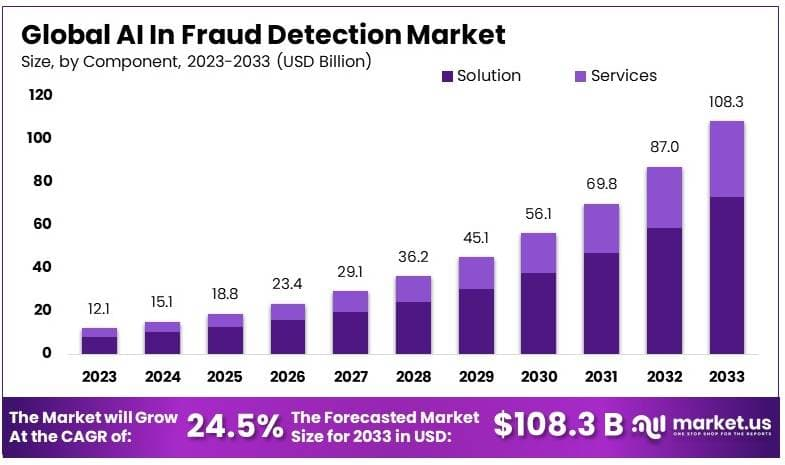
Fraudsters test stolen cards with small purchases, run bots to create fake accounts, and rotate tactics faster than a manual review team can keep pace with. According to Juniper Research, merchant losses from online payment fraud are projected to exceed $362 billion cumulatively between 2023 and 2028, money that a static rules engine cannot fully stop on its own.
Neural networks trained on large transaction datasets catch fraud patterns a human reviewer would miss entirely: synthetic identities built from a mix of real and fabricated data, account takeovers that show up as subtle behavior changes, and card-testing bots making dozens of small purchase attempts in seconds. The review decision that matters most is not "block or allow," it's distinguishing unusual-but-legitimate from actually suspicious, since every wrongly declined order is a real customer lost. That review sits inside a broader ecommerce fraud prevention program, not as a replacement for it.
Alerting and Prevention Decisions
Chargebacks are expensive long before they finish: you lose the sale, pay a fee, and put your merchant account at risk if your ratio climbs too high under programs like the Visa Acquirer Monitoring Program or Mastercard's excessive chargeback thresholds. The decision AI improves here is timing: catching a risky pattern early enough to act before a dispute is filed, not after.

AI-driven chargeback alerts flag a transaction the moment a cardholder contacts their issuer, before a formal dispute even hits the merchant, buying time to refund or provide information proactively. Machine learning also separates criminal fraud from friendly fraud, customers who dispute a legitimate purchase, by weighing a customer's dispute history, whether they interacted with the product, and how their behavior compares to known patterns:
- Esse cliente tem histórico de chargebacks?
- Eles interagiram com o produto?
- Como o comportamento deles se compara aos casos conhecidos de fraude por conivência?
Getting that call right decides whether the next step is prevention, deflection, or a documented dispute response, and it keeps your chargeback ratio under network thresholds before enforcement kicks in.
Evidence Assembly Decisions
Third, once a dispute is unavoidable, AI automates dispute management: gathering evidence, preparing a response, and submitting documentation without a human assembling it manually. That is the difference between spending hours on a single dispute and letting the system handle the busywork while a person makes the judgment calls.
A tool like Chargeflow learns which disputes are worth fighting aggressively and which to write off, tracks which evidence formats actually convince issuers, and refines its approach as outcomes come in. That's the operational answer to a common question: can AI improve chargeback dispute win rates? Evidence assembly speed and format-matching are where most of that improvement actually comes from, not the initial fraud call.
Performance Analysis Decisions
The last decision AI improves is the one merchants track least consistently: which customers become repeat buyers, which products carry higher lifetime value, and which payment methods your best customers actually prefer. Machine learning surfaces those patterns from data you already have, turning guesswork about retention and dispute trends into a measurable, ongoing signal instead of a quarterly guess.
The same analysis applies to the chargeback process itself: which reason codes recur, which product lines drive the most disputes, and whether your response deadlines are being met consistently enough to matter.
AI's Reach Beyond Fraud and Chargebacks
AI's operational footprint extends past the transaction itself. On the credit side, models evaluate alternative data (rent history, utility payments, employment stability) to approve creditworthy customers that a thin credit file would otherwise screen out, and the same logic is reshaping business lending: business credit cards with EIN only now use AI to evaluate company financials and EIN data instead of personal credit scores, giving new businesses access to capital without personal guarantees.
Cross-border payments get the same treatment: AI-driven KYC and AML checks run instantly rather than manually, and anomaly detection learns normal purchasing patterns per country so a legitimate cross-border order isn't treated the same as an obvious mismatch. Remote-work payments benefit too, since traditional payroll systems were never built for contractors spread across dozens of countries, and AI-driven platforms now handle currency conversion, tax withholding, and payout timing automatically instead of through manual, multi-platform transfers.
AI Changes What You Automate, Not What You're Liable For
None of this changes the underlying liability rules. A card network still decides whether a fraud dispute shifts to the issuer or stays with the merchant, and a chargeback ratio threshold still triggers monitoring regardless of how the transaction was reviewed. What AI changes is how fast a merchant can act inside those rules: faster authorization decisions, earlier fraud catches, earlier dispute alerts, faster evidence assembly, and clearer performance data on what's actually working. Merchants who treat AI as a replacement for understanding what a chargeback actually is will still lose disputes they should have won; merchants who use it to operate faster inside the existing rules are the ones who see the ratio improve. For a broader look at where these shifts are headed next, see Chargeflow's payment security trends and predictions.
Perguntas frequentes
Can AI actually reduce chargebacks, or does it just detect fraud faster?
Both. Faster, more accurate fraud detection prevents some chargebacks from ever occurring, while AI-driven alerting and evidence automation reduce how many of the remaining disputes a merchant actually loses. The reduction in chargeback rate comes from combining prevention with better dispute response, not from either one alone.
Does using AI fraud detection change who is liable for a dispute?
No. Liability rules are set by card networks and issuers, not by the fraud detection technology a merchant uses. AI can reduce how often a merchant is exposed to a liability-shifting scenario, but it does not change the underlying rule itself.
How does AI improve chargeback evidence for disputes?
AI systems gather relevant data automatically (delivery confirmation, device and IP data, prior communication, authentication results) and match it to the evidence format a specific issuer or reason code expects, which is typically the slowest part of a manual dispute response.
Can AI predict which chargebacks are worth fighting?
Yes, by learning from historical outcomes: which evidence types won past disputes with a given issuer or reason code, and which cases were unlikely to succeed regardless of the evidence submitted. That lets a merchant prioritize effort instead of contesting every dispute equally.
Is AI-based fraud detection different from the rule-based systems merchants already use?
Yes. Rule-based systems apply fixed thresholds (a purchase over a certain amount from a new device gets blocked, for example) regardless of context. AI models weigh many signals together and adjust as fraud patterns change, which is why they catch fraud a static rule would miss while also approving legitimate orders a static rule would have blocked.
See how Chargeflow's automated dispute resolution puts these five decisions on autopilot across authorization, fraud, and chargeback operations.
Chargebacks?
Não é mais problema seu.
Recupere 4 vezes mais chargebacks e PREVENÇÃO — até 90% dos e-mails recebidos —, com tecnologia de IA e uma rede global Rede de 20.000 Lojistas.


.png)
.webp)
.webp)
.webp)