



























%201.svg)


































How AI Detects Fake Accounts on eCommerce Platforms

Chargebacks?
No longer your problem.
Recover 4x more chargebacks and prevent up to 90% of incoming ones, powered by AI and a global network of 20,000 merchants.


 600+ reviews
As fake accounts grow more sophisticated, understanding how AI detects fake accounts on ecommerce platforms becomes essential. By leveraging behavioral analysis, transaction monitoring, and network insights, AI offers powerful tools to identify and block fraudulent activity. This not only safeguards ecommerce businesses but also ensures marketers can rely on accurate data and authentic customer feedback.
Fake accounts on ecommerce platforms take advantage of discounts, post fake reviews, or inflate user numbers. This negatively affects online shops, which is why learning how AI detects fake accounts on ecommerce platforms is necessary.
The damage caused by fake accounts goes far beyond fake clicks. It is a form of fraud, leading to coupon abuse, refund scams, and misleading reviews that deter genuine shoppers.
For marketers, it also corrupts campaign data, wastes ad spend, and makes tracking performance unreliable. In this article, I’ll explain how AI detects fake accounts on ecommerce platforms.
10 Ways AI Detects Fake Accounts on Ecommerce Platforms
Keeping ecommerce platforms safe requires detecting fake accounts early. Below are ten effective ways AI detects fake accounts on ecommerce platforms.
1. Analyzing User Behavior
One of the most effective ways AI detects fake accounts on ecommerce platforms is by analyzing user behavior. Genuine customers tend to browse products naturally. They spend time on different pages and show clear intent before checkout.
Fake accounts, on the other hand, often exhibit repetitive or rushed activity. This includes bulk adding items or posting multiple reviews within a very short timeframe.
How AI detects fake accounts on ecommerce platforms is that it builds a baseline of what normal engagement looks like. Then, it immediately flags actions that don’t fit the pattern. This gives you early warnings that an account may not be legitimate.
2. Device and Network Fingerprinting
Device and network fingerprinting look at the technical details of how someone connects to a platform. Almost every browsing device leaves behind clues. This includes the operating system, browser version, and IP address.
Fraudsters controlling fake accounts often reuse the same devices or rely on proxies and VPNs.
How AI detects fake accounts on ecommerce platforms is by comparing digital fingerprints to identify multiple accounts linked to the same source. This helps stop fraud rings operating with hundreds of fake profiles.
3. Pattern Recognition in Transactions
Another way AI detects fake accounts on ecommerce platforms is through pattern recognition in transaction activity. These patterns are difficult for humans to catch quickly, especially at scale
For instance, fake accounts often repeat the same actions, like testing stolen credit cards on low-cost purchases. AI systems can detect fraudulent transaction patterns in real-time and take action before they result in larger financial losses.
4. Natural Language Processing (NLP) for Reviews and Profiles
Another way AI detects fake accounts on ecommerce platforms is through natural language processing. It reads and analyzes the text found in reviews, comments, or account profiles to detect AI writing.
Fake accounts often rely on repetitive wording, generic praise, or poorly written descriptions that lack authenticity. Here’s an example of an account spamming Amazon products with fake generic reviews.

AI can quickly identify such fake reviews and filter them out. By ensuring that only authentic feedback is displayed, it plays a crucial role in maintaining product credibility and buyer trust.
5. Cross-Account Correlation
Artificial intelligence can connect the dots between accounts by analyzing shared data points. This is a key part of how AI detects fake accounts on ecommerce platforms, as it allows systems to group suspicious profiles and flag coordinated behavior.
These fake accounts often employ tactics such as using multiple shipping addresses, phone numbers, or payment details to appear legitimate.
For ecommerce owners, identifying these patterns reduces the risk of being misled by inflated activity, allowing them to focus on improving their services through feature prioritization.
6. Image and Media Analysis
Profile pictures are a big giveaway for fake accounts. The people behind them usually upload stolen or recycled images to appear real.
One of the ways to detect fake accounts on eCommerce platforms is by using AI face search that analyzes profile pictures and other media for authenticity. It can detect duplicates across different accounts, identify the use of stock photos, and even catch signs of editing.
You can even check shared authenticity certificates using online tools to check their validation. Genuine brands and individuals always display the correct certificates to the audience to prove their authenticity, but it is essential to cross-check the authenticity before making any decision.
This makes it much harder for fake accounts to pass as genuine shoppers. In turn, this enables ecommerce platforms to protect their brand’s trustworthiness.
7. Anomaly Detection in Login Activity
Real online shoppers usually log in from consistent devices, locations, and at predictable days and times. In contrast, fake accounts often switch between different countries, log in at unusual hours, or attempt multiple failed sign-ins.
AI can detect these anomalies almost instantly and flag them as suspicious. This protects the platform from being overrun by fake accounts, making it safer for both the shop and genuine shoppers.
8. Payment and Checkout Validation
Fake profiles often use mismatched billing information, stolen card details, or attempt rapid retries after failed payments.
How AI detects fake accounts on ecommerce platforms involves comparing these suspicious actions against legitimate purchase behavior to identify inconsistencies. This effectively blocks fraudulent checkouts before they’re processed.
Additionally, it prevents costly chargebacks and maintains customer trust by ensuring only genuine transactions proceed. AI also saves time and resources that would otherwise be spent on fraud management.
9. Bot Behavior Detection
As of 2024, bots accounted for 51% of internet interactions, largely due to the increased adoption of AI.
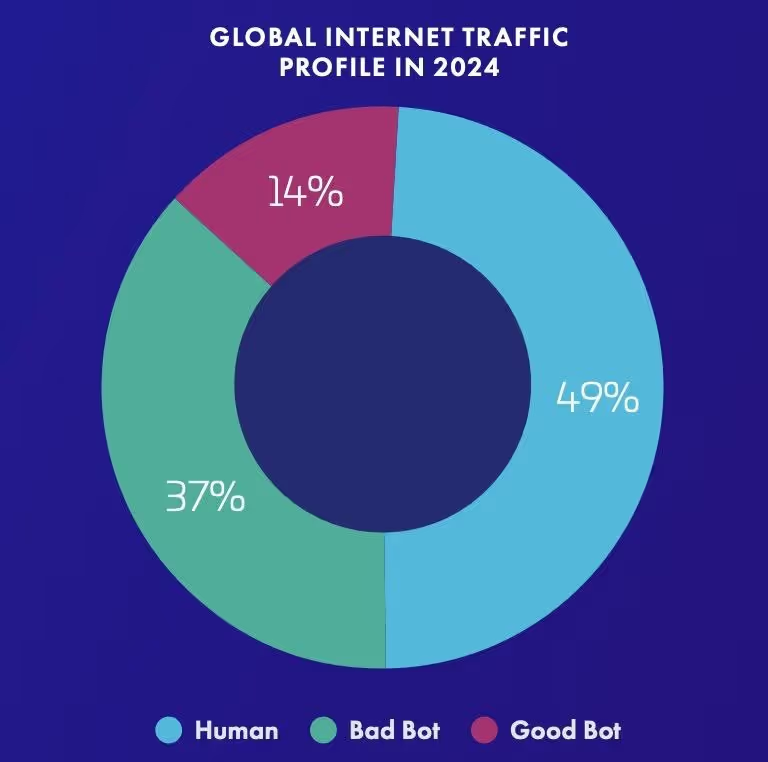
Unfortunately for ecommerce platforms, bots have become a common way for fraudsters to run fake accounts at scale. They can perform actions like adding items to carts, posting reviews, or clicking through pages at speeds no human could match.
AI can detect this by analyzing movement patterns, timing, and repetition that reveal non-human behavior. Once flagged, these accounts can be removed before they cause disruption.
This is critical because it ensures analytics, engagement reports, and customer insights are based on real users, not automated fake activity.
10. Social Graph and Network Analysis
AI can map how accounts interact with one another, revealing suspicious connections. Fake accounts often cluster together, leaving reviews for the same products or interacting only within a closed group.
Social graph analysis highlights these unusual link patterns that real customers typically don’t show. This method makes it more difficult for fraudsters to establish fake review networks.
This provides a conducive space for online stores to engage in authentic interactions that help them develop better marketing strategies.
Choosing the Right AI Tool for Detecting Fake Accounts
Understanding how AI detects fake accounts on ecommerce platforms is only the first step. Selecting the right AI solutions is crucial to effectively protect your business. Here are some factors to consider when choosing an AI tool:
- Accuracy of Detection: The tool must detect fake accounts without losing real customers or blocking them. Examine its track record in identifying fraud signals before adopting it. High detection accuracy means fewer false positives and more reliable data for your campaigns.
- Real-Time Monitoring: Fake accounts evolve quickly, especially bots. An effective AI tool should identify threats in real-time rather than after the damage is done. This enables ecommerce platforms to halt fraudulent actions immediately.
- Scalability: As your platform grows, so does the risk of fraud. The AI tool should be able to handle large volumes of traffic without slowing down. A scalable system enables you to monitor millions of interactions while still accurately detecting fake accounts.
- Integration Capabilities: The AI solution should integrate smoothly with payment systems, SaaS email marketing tools, and analytics tools. This ensures that fraud detection works seamlessly with other processes, rather than creating gaps.
- Transparency and Reporting: A good AI tool provides clear reports that break down suspicious behavior. This makes it easier to explain actions to teams, adjust campaigns, and maintain customer trust.
- Adaptability to New Fraud Tactics: Fraudsters constantly change their tactics. The AI tool should be able to learn from new data and adjust detection models over time. This flexibility ensures fake accounts don’t find new ways to bypass your system.
- Cost Versus Risk: While protecting the platform is essential, you should also weigh costs against the risks of fraud. The right AI tool strikes a balance between budget and protection, ensuring that fraudulent activity doesn’t drain revenue.
Final Word
As fake accounts grow more sophisticated, understanding how AI detects fake accounts on ecommerce platforms becomes essential.
By leveraging behavioral analysis, transaction monitoring, and network insights, AI offers powerful tools to identify and block fraudulent activity.
This not only safeguards ecommerce businesses but also ensures marketers can rely on accurate data and authentic customer feedback.
Chargebacks?
No longer your problem.
Recover 4x more chargebacks and prevent up to 90% of incoming ones, powered by AI and a global network of 20,000 merchants.


.png)
.webp)
.webp)
.avif)