Package Protection vs. Chargeback Coverage: A Merchant Guide

Chargebacks?
Não é mais problema seu.
Recover 4x more chargebacks and prevent up to 90% of incoming ones, powered by AI and a global network of 20,000+ merchants.


 Mais de 600 avaliações


Resumo:
- Package protection pays for lost, stolen or damaged parcels; it does not pay chargebacks unless the contract says so.
- Protection claim windows can be as short as 7 days, while a Visa item-not-received dispute can come up to 120 days after expected delivery.
- Give the customer remedy, the protection claim and the payment dispute each a named owner and deadline.
- A paid claim or reorder is useful chargeback evidence, but a pending claim is not recovered revenue.
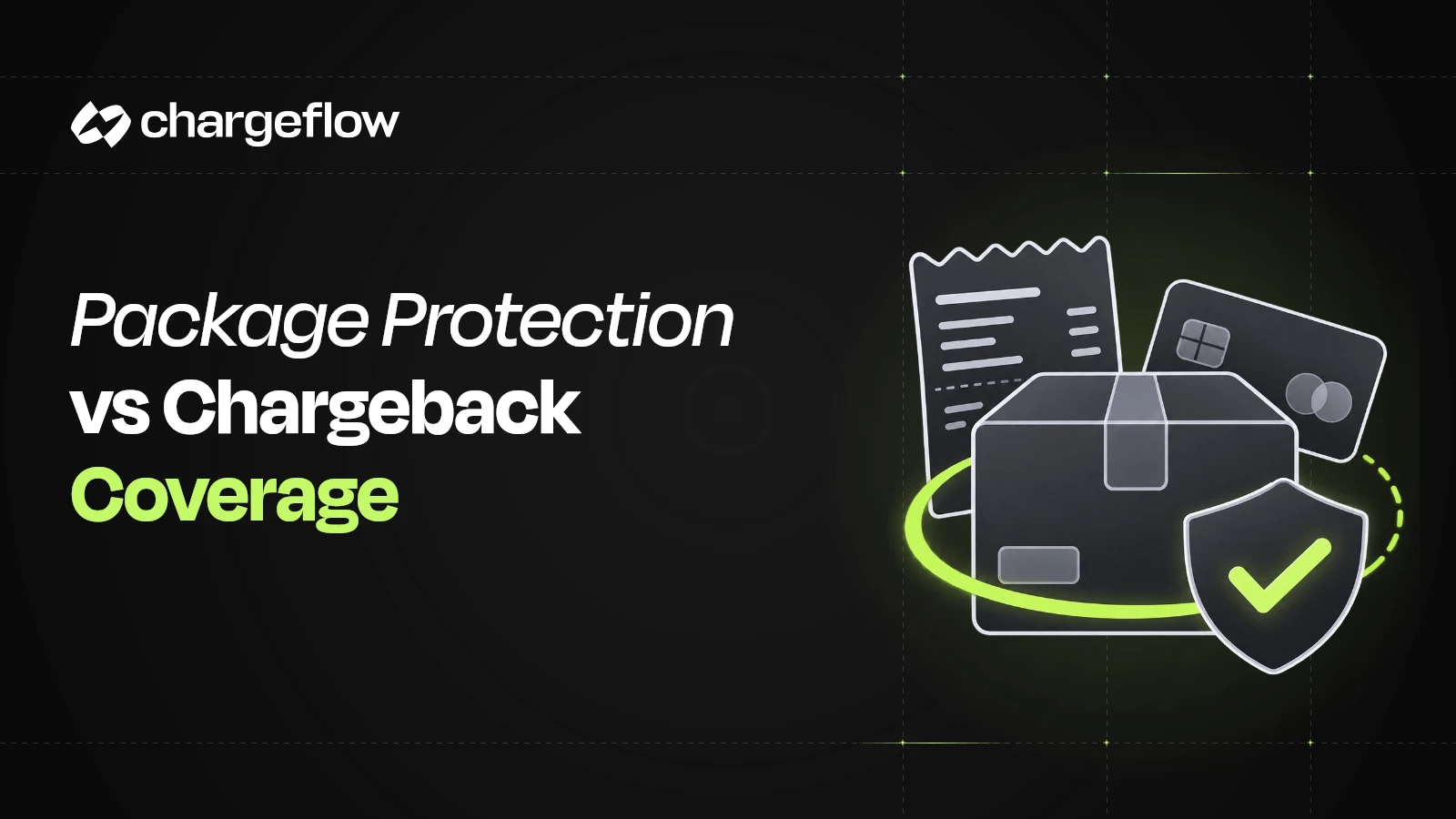
Package protection is a checkout add-on that replaces or pays for parcels that are lost, stolen or damaged in transit. Chargeback coverage is a different job: it answers the card dispute your customer files with their bank. One rarely covers the other.
- Package protection deals with the parcel.
- Chargeback handling deals with the payment.
- Each one has its own owner, clock and proof.
A replacement can fix the delivery problem while a chargeback stays open. A paid claim can cover a lost parcel while the sale is still at risk. This guide shows how to keep both on track, with real claim windows, a dispute timeline and a worked loss example. It also explains how package protection differs from chargeback protection.
{{cta}}
What Does Package Protection Actually Cover?
Package protection covers shipping losses: lost parcels, stolen parcels and damaged items. The exact rules depend on the provider. Some products are insurance. Others are not.
UPS distinguishes Package Shield from shipping insurance. It says Package Shield is not insurance and covers loss, damage and delivery theft on eligible UPS.com shipments. InsureShield is its separate insurance product. Do not assume every checkout protection app works the same way.
Here is what four providers say on their own pages. None of these pages say the product pays for a chargeback.
Exclusions matter as much as coverage. Route's shopper policy excludes these cases:
- A wrong address typed by the customer at checkout.
- Parcels held in customs.
- Items with manufacturing defects.
- Carrier delays on expedited shipping.
- Returns and quality complaints.
Those gaps are where chargebacks often land. A parcel stuck at the border is a common example, covered in our guide to customs refusal disputes. A wrong address can also point to shipping address fraud.
Does Package Protection Cover Chargebacks?
No, not unless the contract says so in writing. Package protection pays for a parcel problem. A chargeback is a payment reversal that the bank decides. The same order can trigger both, but they ask different questions.
The dispute follows your payment provider's process. Shopify's chargeback guidance lists tracking, proof of delivery, address checks and carrier messages as useful proof for physical goods. Shopify also notes that you usually have 7 to 21 days to respond.
If you sell on Shopify, it also helps to know how Shopify Protect compares with chargeback apps. Shopify Protect covers eligible fraud chargebacks on Shop Pay orders, not parcel loss.
Claim Clocks vs. Dispute Clocks: Why the Chargeback Arrives Late
Protection claims run on short clocks. Chargebacks can arrive months later. That gap is the main reason a protected order can still turn into a lost dispute.
Read the table from the merchant side. A shopper can miss a 7-day theft window and still have months to dispute with their bank. When that happens, the protection route is closed and the chargeback is your only path. Our guide to Visa reason code 13.1 covers that dispute type in detail.
Track each deadline in its own field. An open insurance claim does not pause the dispute clock. Plan your evidence work back from whichever deadline comes first.
Assign Three Owners Before a Parcel Goes Missing
Set up the handoffs while orders are still routine. One person can hold several roles in a small store. Each role still needs a clear "done" check.
Link all three records with the order number, but keep each system's own ID. A carrier claim number is not a dispute ID. A replacement order is not a refund. A warehouse note marked "resolved" is not a bank decision.
If a warehouse ships for you, agree on who pulls carrier proof and how fast. The 3PL evidence handoff guide gives a request template. If you run chargeback operations across multiple stores, use the same three owners in every store.
Work Through a Delivered-but-Not-Received Complaint
Start with what the delivery record really shows. A "delivered" scan helps, but a wrong address, a split order or a bad handoff can explain the complaint. Do not call the customer a fraudster just because tracking says delivered.
- Match the parcel to the items. Link the payment, order lines and every tracking number. Check if the complaint is about one parcel or the whole order.
- Save the carrier proof. Keep the delivery record, address, photo or signature and carrier messages. Save copies, since tracking links can expire. See how to use delivery confirmation to fight chargebacks.
- Check the protection route. Find the policy, the claim window and who is allowed to file. Note any missing documents.
- Decide the customer remedy. Choose a replacement, a refund or more research based on the facts. Tell the customer when they will hear from you next.
- Check for a payment case before sending money. If a dispute is already open, act inside that case. The double refund guide explains how to avoid paying twice.
Each step should leave a dated record. "Customer contacted" should point to the message. "Replacement shipped" should point to the new tracking number. Some shoppers claim an order was not delivered when it was, and dated records are what separate those cases from real losses.
How to Use a Protection Claim in Your Chargeback Response
A paid protection claim is useful evidence. It shows the customer was made whole for the parcel. The bank still decides, but the record often changes the story.
Some providers pay the shopper directly. Seel, for example, pays approved claims by direct deposit, PayPal or Venmo. That payout will not show up as a refund in your payment processor. Unless you add the provider's payout record, the bank only sees a sale and a missing parcel.
Use these rules to pick your next step:
For the last case, chargeback alerts can warn you before a dispute becomes a chargeback, so you can refund first. For the rest, see the item not received chargeback guide for the evidence banks expect.
A Worked Example: A Pending Claim Is Not Recovered Revenue
This is a made-up example, not a customer result or a quote. A merchant sends a replacement after a delivery complaint. It files a protection claim. Later, the customer files a chargeback anyway.
$160 Original sale | $44 Replacement cost | $40 Claim pending | $160 Chargeback debit |
Do not count the pending $40 as paid. Do not count a chargeback win as a new sale. If the provider later pays $40, the replacement's net cost drops to $4 ($44 minus $40). That number leaves out the original goods, shipping, fees and the open $160 dispute, so it is not order profit.
Check how the contract treats overlapping recoveries. A supplier credit, a claim payout and a dispute win can refer to different losses. Keep each entry visible until finance closes the order.
Use a Claim-to-Case Worksheet
Keep one row per money event, linked back to the order. A useful record holds:
- Payment reference, amount, currency and processor account.
- Disputed items, parcel numbers and delivery records.
- Protection policy, claim number and claim status.
- Customer remedy, with the refund ID or replacement order.
- Dispute reason, response deadline, submission proof and outcome.
- Actual payouts, fees and settlement entries, with posted dates.
Keep requested, approved and paid amounts apart. An approved claim can still be unpaid. An accepted return can still lack a refund. This is the same habit used in chargeback reconciliation.
{{cta}}
When Does Package Protection Make Sense for a Merchant?
Package protection makes sense when parcel losses cost you real money and the claim process is simple for your team. Compare the policy with your actual parcel values, carriers, destinations and complaint types.
- It fits well when: you ship many low-cost parcels, porch theft is common in your markets, and shoppers pay the fee at checkout.
- Check carefully when: you ship high-value items, cross borders often or sell items that customs may hold.
- It will not help when: the problem is stolen cards, friendly fraud or "not as described" claims.
Test it before rollout. Can your team find the protection record, pull the documents and reconcile one sample claim? A high payout limit means little if fulfillment cannot find the proof. Package protection is also no substitute for ecommerce fraud prevention, and it works best inside a wider ecommerce chargeback management plan.
Peak season stresses every handoff, so review the BFCM payments and disputes checklist before November volume hits. Parcels that arrive empty are a separate claim type, covered in our guide to empty box chargebacks.
For a small store, named owners and a shared sheet may be enough. If disputes span several accounts or need records from many systems, Chargeflow Automation gathers the evidence and submits responses for supported processors. You pay only on recovered chargebacks. It does not replace your shipping policy or your support team's choices.
Package Protection FAQs
What does package protection mean?
Package protection is an add-on that pays for or replaces orders that are lost, stolen or damaged in transit. The provider's policy sets which events count, how fast a claim must be filed and what is paid. The label alone does not tell you whether it is insurance or whether it covers chargebacks.
Is package protection worth paying for?
Package protection is worth it when lost, stolen or damaged parcels are a real cost for your store and the claim process is easy for your team and customers. Compare the fee, the claim windows and the exclusions with your actual loss rate. Count the staff time to file and reconcile claims, not just the fee.
Is package protection the same as shipping insurance?
Package protection is not always shipping insurance. UPS, for example, says its Package Shield product is not insurance and sells InsureShield as a separate insurance product. Check the legal product type and the contract before you compare coverage.
Does package protection cover chargebacks?
Package protection does not cover chargebacks unless the contract says so in writing. The Route, Corso, Seel and UPS pages reviewed for this guide describe lost, stolen or damaged parcels, not card disputes. A chargeback still needs its own response by the processor's deadline.
Can a customer file a chargeback after a package protection claim?
Yes, a customer can still file a chargeback after a package protection claim or a replacement. The bank does not check the protection provider's records for you. Save the claim record, the payout or reorder proof and the new tracking, then use them in your chargeback response.
Does a delivered scan guarantee that the merchant wins?
A delivered scan does not guarantee a chargeback win. It helps most when it matches the checkout address and the disputed parcel, ideally with a photo or signature. The bank still weighs the customer's claim and any other evidence before it decides.
Sources reviewed November 3, 2026: provider help pages for Route, Corso, Seel and UPS, USPS domestic claims rules, Shopify chargeback guidance and Visa dispute rule language. Policies change, so check the current terms before you act. The worked example is hypothetical.
Turn Shipping Records Into Won Disputes
Chargeflow Automation gathers order, delivery and refund records for every dispute and submits the response for you.

Chargebacks?
Não é mais problema seu.
Recupere 4 vezes mais chargebacks e PREVENÇÃO — até 90% dos e-mails recebidos —, com tecnologia de IA e uma rede global Rede de 20.000 Lojistas.