













Chargeflow Joins the AEP Consortium as a Founding Member


rétrofacturation?
Ce n'est plus votre problème.
Recover 4x more chargebacks and prevent up to 90% of incoming ones, powered by AI and a global network of 20,000+ merchants.


 Plus de 600 avis


En bref :
- Chargeflow is a founding member of the consortium helping shape the A-Comm Evidence Protocol.
- AEP aims to link customer intent, agent permissions and the purchase in a record you can verify.
- AEP remains a draft standard. It does not decide liability or promise a chargeback win.
- Check who holds each record, how you can access it and whether it answers the disputed claim.
Chargeflow has joined the A-Comm Evidence Protocol (AEP) consortium as a founding member. The group aims to set an open standard for proof of agent purchases. For your business, the key question is simple: can you link what the customer approved to what the agent bought?
Why Chargeflow Is Helping Shape Agentic Commerce Evidence
When an AI agent places an order, a bank approval leaves questions open. Did the customer allow that purchase? Did the agent follow the price cap? What happened after checkout? You need records that link those events.
Chargeflow joined the consortium to help address that evidence gap. The October 28, 2026 founding announcement names Chargeflow alongside Basis Theory, Crossmint, Skyfire and other companies across payments and identity.
Ariel Chen, Chargeflow's Co-Founder and CEO, explained the purpose in that announcement:
“We need verifiable evidence of what the consumer authorized, what the agent was authorized to do, and what actually happened.”
The consortium reported 22 member companies on November 9, 2026. Each company holds one vote. A-Comm Technologies authored the protocol, and the consortium stewards its development in the open.
AEP consortium at a glance
An Open Group With Equal Votes
- 22
Member companies
Reported on November 9, 2026
- 1 vote
Per member company
The consortium stewards the draft in the open
- Oct 28, 2026
Founding announcement
Names Chargeflow as a founding member
- v1.0.3-rc.2
Current public draft
Second comment round opened November 2
Consortium members
The 22 Companies Shaping AEP
What the A-Comm Evidence Protocol Records
AEP defines a shared way to record and verify the steps in an agent purchase. It links records of how the buyer found the item, what they asked for and what they let the agent do. The cart, payment, shipping and refund records help complete the trail.
What AEP links
One Linked Record for Every Step of an Agent Purchase
Intent and authority
- DiscoveryHow the buyer found the item
- RequestWhat the buyer asked for
- PermissionsWhat the agent may do
Linked to the same order
Checkout and after
- CartFinal items and total
- PaymentAuthorization result
- ShippingFulfillment record
- RefundPromise and result
The design helps show if a linked record has changed. It works alongside protocols such as AP2, ACP and UCP. Each serves part of the purchase flow. AEP aims to keep proof of the flow used for that sale.
As checked on November 17, 2026, the public repository lists draft v1.0.3-rc.2. The second public comment round opened on November 2. Use the draft and review log when checking current scope.
Protocol facts
AEP in Six Facts
- Full name
- A-Comm Evidence Protocol (AEP)
- Objectif
- Record and verify the steps of an agent purchase
- Author
- A-Comm Technologies
- Governance
- 22-company consortium, one vote each
- License
- Open source, Apache 2.0
- Status (Nov 17, 2026)
- Draft v1.0.3-rc.2, in public comment
Sources: AEP repository and comment-round log. AEP records what happened; it does not decide liability.
Three Questions to Ask About an Agent Purchase
Use these questions when you review a disputed order. This is a sample decision aid. It is not the full AEP schema or a test of whether a network will accept a case.
Dispute review checklist
Three Questions for Any Disputed Agent Order
- 1
Who acted?
Name the agent and the person it acted for. Identity is not consent.
- 2
What did the customer approve?
Match the request to the final cart: total, currency, items, count and limits.
- 3
What happened after approval?
Link payment to the order, then check delivery, cancellation or refund.
Who Acted?
Name the agent and the person it acted for. An agent identity check helps show where a request came from. You still need the buyer's consent for the purchase.
What Did the Customer Approve?
Compare the buyer's request with the final cart. Check the total, currency, items, count and any time or shipping limits. Keep later approval or changes with the same order.
What Happened After Approval?
Link the payment to the order. Then check if goods arrived, an order was cancelled or a refund was sent. Proof of purchase consent does not settle a claim that a promised refund is missing.
A Valid Record Can Reveal an Order That Needs a Refund
Consider a hypothetical order. A customer lets an agent buy one item for up to $200, including delivery. The agent submits a $230 order. The bank approves payment, and the merchant ships.
Hypothetical scenarios
Same Record, Two Claims
A: Price mismatch
- Customer approved
- Up to $200
- Agent submitted
- $230
- Banque
- Approved
- Commerçant
- Shipped
The record shows a $30 gap over the cap. Bank approval alone does not explain it.
B: Missing refund
- Customer approved
- $230
- Promised refund
- Never arrived
- Consent record
- Does not answer it
- Records to pull
- Refund promise and result
Same consent record, different claim. Answer a refund claim with refund proof.
Illustrative example, not observed case data or an outcome prediction.
A record of those events could show both the trail and the price mismatch. Bank approval alone would not explain the gap. Check the buyer's request, any later approval and the actual claim. Then choose your response.
Change the facts: the customer approved $230, but a promised refund never arrived. The useful records now include the refund promise and processing result. The same consent record cannot answer both claims on its own.
Test Evidence Access Before a Dispute Arrives
You need both a sound record and the right to access it. A-Comm's vault example shows how a party with access rights can fetch a saved chain. Ask each provider how your own setup will work.
Before the first agent dispute
Rehearse Evidence Access in Four Steps
- 1
Name the record holder
Identify who keeps the customer instruction, agent permission, final cart, payment and fulfillment records.
- 2
Request one sample export
Check that the records point to the same order and include useful dates and amounts.
- 3
Check what you may retrieve
Confirm access rights, permitted personal data and which party can verify the record.
- 4
Rehearse the response
Retrieve the sample within your case-response window and check that it answers a specific claim.
What This Could Mean for Chargeflow's Merchant Workflows
For Chargeflow, shared proof could help in three parts of a merchant's work. Each use depends on the data that partners share and the tools in place.
Possible uses, not announced products
Where Shared Proof Could Help Merchants
- Possible use
Récupération des montants litigieux
Access to agent permission and order records could help explain a disputed purchase.
- Possible use
Order review
A mismatch between the customer's limits and the submitted order could prompt review before shipment.
- Possible use
Platform infrastructure
A common record format could help platforms pass relevant evidence through a dispute workflow.
These are possible uses. Chargeflow has joined the work on the standard as a founding member. This news does not set a launch date for new tools. It does not announce a shipped AEP link to Chargeflow products.
AEP Questions for Merchants
What Is the A-Comm Evidence Protocol (AEP)?
AEP is an open draft standard for recording and verifying the steps of an agent purchase. It links the buyer's request, the agent's permissions, the cart, payment, shipping and refund records. A-Comm Technologies authored it, and a consortium stewards it in the open.
Who Are the AEP Consortium Members?
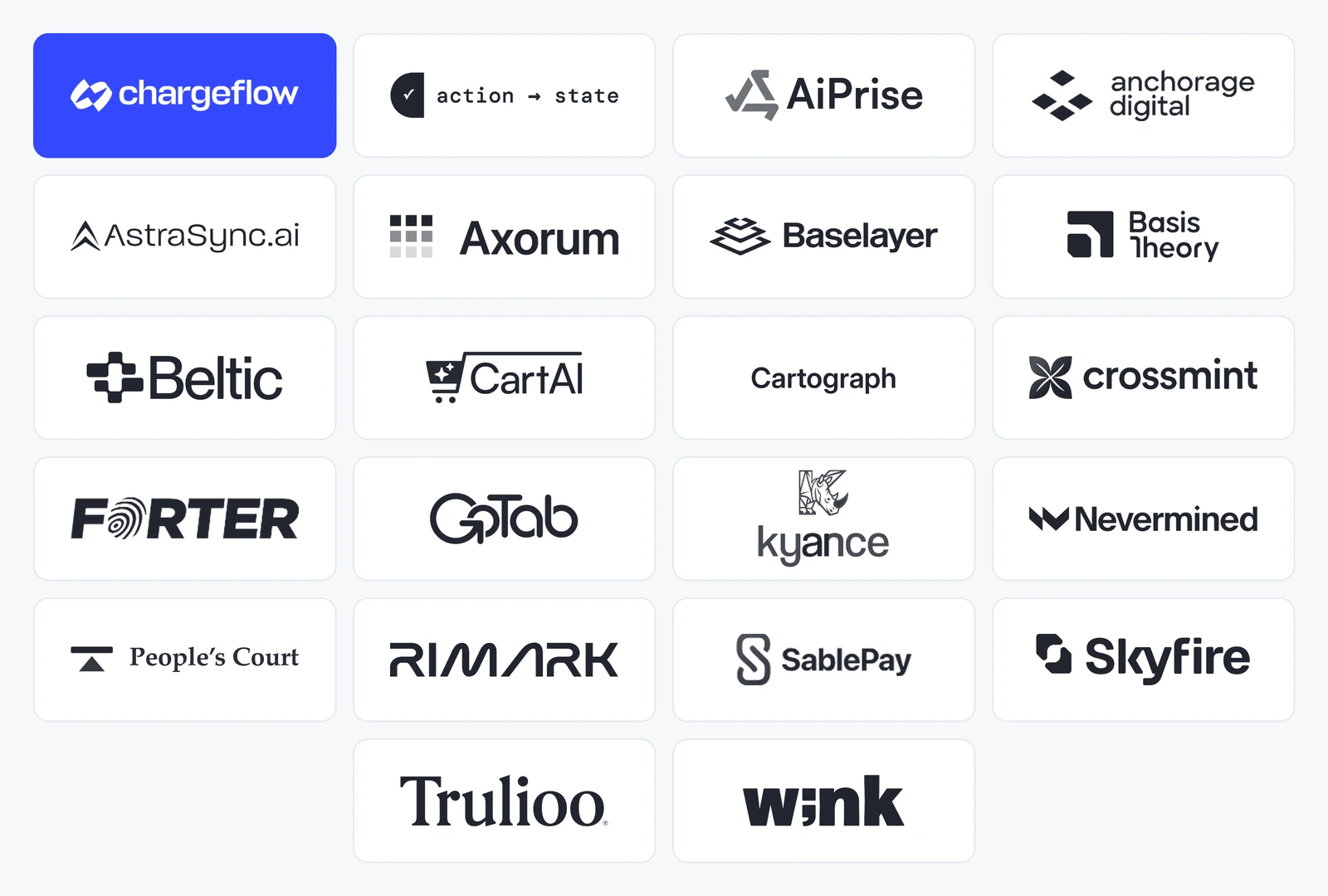
The consortium reported 22 member companies on November 9, 2026, and each holds one vote. Chargeflow is a founding member alongside companies such as Basis Theory, Crossmint and Skyfire. The members are Action State Group, AiPrise, Anchorage Digital, AstraSync, Axorum, Baselayer, Basis Theory, Beltic, CartAI, Cartograph, Chargeflow, Crossmint, Forter, GoTab, Kyance Inc., Nevermined, People's Court, Rimark, SablePay, Skyfire, Trulioo, Wink.
Does AEP Decide Who Pays for an Agent's Mistake?
No. AEP records what happened. It does not decide who pays or who wins a case. Match your response to the actual claim and your provider's case notice. For more on who bears the loss, read Chargeflow's AI agent chargeback liability guide.
Can a Verified Agent Identity Prove Customer Consent?
An agent identity record alone does not prove that the buyer approved the final purchase. Compare the agent's powers with the order and any later approval. Chargeflow's consent guide explains why setup consent and consent to an exact order are separate.
Build an Evidence Workflow You Can Use
Chargeflow is helping shape the standard as an AEP consortium founding member. Start by testing how your team links and fetches purchase records. Use Chargeflow's agentic commerce evidence playbook for the full record checklist and response guide.
rétrofacturation?
Ce n'est plus votre problème.
Récupérez 4 fois plus d'rétrofacturation s et PRÉVENTION jusqu'à 90 % des messages entrants, grâce à l'IA et à un réseau mondial de 20 000 commerçants.