





























%201.svg)




































Choosing the Right eCommerce Platform for Dropshipping

Chargebacks?
No longer your problem.
Recover 4x more chargebacks and prevent up to 90% of incoming ones, powered by AI and a global network of 20,000 merchants.


 600+ reviews


TL;DR:
Choosing the right ecommerce platform is the foundation of any dropshipping business, and the dropshipping market itself is on track to hit $583.5 billion in 2026. Here's what this guide covers:
- What to evaluate first: pricing, transaction fees, app ecosystem, and chargeback exposure, compared side by side across the major platforms
- Core platforms for scaling: Shopify, WooCommerce, and BigCommerce each handle volume differently, with distinct tradeoffs on cost, control, and integration dependency
- Enterprise-ready infrastructure: Magento and Agentforce Commerce (formerly Salesforce Commerce Cloud) are built for operations processing at serious volume across multiple suppliers and regions
- Fulfillment tools: Printify, Printful, and Podbase sit on top of your core platform and handle print-on-demand production, but none removes chargeback risk
- The gap every platform leaves: No platform on this list handles disputes for you automatically, that requires a separate layer like Chargeflow
The right ecommerce platform for dropshipping is the one that matches your order volume, supplier count, and growth stage while keeping app costs, transaction fees, and chargeback exposure under control. Choose the wrong one, and every later decision, from which dropshipping apps you can install to how well you can fight a wave of disputes, gets harder.
The dropshipping model itself is growing fast: the global dropshipping market was valued at $464.4 billion in 2025 and is projected to reach $583.5 billion in 2026, and over 27% of online retailers now use it as their primary fulfillment method. That growth only pays off when the foundation underneath it, your e-commerce platform, is right.
Picking an e-commerce platform feels like a quick checkbox decision, but the hard truth is, it’s not. Because the platform you choose will shape everything that follows:
- The speed at which you launch and test products
- Money you spend on integrations and customizations
- The pace at which you scale (and how much it costs you)
Get this part wrong, and you’ll feel the friction at every stage that follows. But get it right in the beginning, and you’ll see that growth becomes a lot more predictable.
Instead of leaving it to guesswork, here is what to weigh before you pick one, a side-by-side comparison of the major platforms, and a breakdown of 8 platform and fulfillment tool picks, what each does really well, and when it makes sense to choose each one.
What to Evaluate Before You Choose a Platform
Before comparing individual platforms, it helps to know what you're actually comparing them on. These are the factors that matter most for a dropshipping store specifically, not just any online store:
- Pricing and transaction fees: the monthly subscription plus any per-order fee charged if you don't use the platform's own payment processor.
- Dropshipping app ecosystem: how many supplier-sync, automated fulfillment, and inventory apps are available for that platform.
- Ease of setup and maintenance: whether it's a hosted SaaS product or a self-hosted stack that needs a developer to run.
- Scalability: how the platform handles rising SKU counts, multi-supplier catalogs, and order volume without hitting hard ceilings.
- Payment processor flexibility: which gateways connect natively, since that's also where the evidence for fighting a chargeback gets collected.
- Chargeback and dispute exposure: how many third-party dependencies, apps, suppliers, fulfillment partners, sit between checkout and delivery, since each one is a potential failure point that ends in a dispute.
That last point deserves more weight than most buying guides give it. Dropshipping orders travel through more hands than a typical retail transaction: a supplier fulfills it, a third-party carrier ships it, and the merchant often has the least visibility into where things go wrong. Longer, less predictable shipping windows are a known driver of "item not received" disputes, which is exactly why platform choice and chargeback exposure belong in the same conversation.
Comparing the Major Dropshipping Platforms
Here's how the core platforms stack up on the factors above:
| Platform | Starting Price | Transaction Fees | Dropshipping App Ecosystem | Chargeback/Dispute Risk Considerations |
|---|---|---|---|---|
| Shopify | $39/mo (Basic), $29/mo billed yearly | 2.9% + 30 cents down to 2.5% + 30 cents on higher tiers if you skip Shopify Payments | Largest: 16,000+ apps, including dedicated dropshipping apps like DSers, Zendrop, and Spocket | Most third-party app dependencies of any platform here; more integration points that can misfire into disputes, though Shopify Payments centralizes evidence |
| WooCommerce | Free plugin; hosting and extensions typically run $25 to $350/mo | None from the platform; roughly 2.5% to 2.9% + 30 cents if you use WooPayments | Moderate: dropshipping plugins exist but the catalog is smaller than Shopify's | Self-hosted, so the merchant owns uptime and security directly; dispute-evidence quality depends entirely on the plugin and processor stack chosen |
| BigCommerce | $39/mo (Core), $29/mo billed yearly | 0% through an embedded provider like Stripe or PayPal; otherwise a 2.0% Open Payment Provider fee, tapering to 0.6% on higher tiers | Smaller than Shopify's app catalog, but connects to Printful, Spocket, and similar tools | Fewer required third-party plugins means fewer failure points, but the smaller app pool means less native dispute-evidence tooling |
| Magento (Adobe Commerce) | Open Source edition is free to self-host; the Adobe Commerce SaaS tier is quote-based, typically five to six figures a year | None imposed by the platform; depends entirely on the connected gateway | Few dropshipping-specific extensions; built for custom supplier API integrations instead | More suppliers, checkout variations, and fulfillment paths mean more failure points; needs a dedicated team to manage evidence at scale |
| Agentforce Commerce (Salesforce) | Custom enterprise quote; requires an implementation partner | None imposed by the platform; connects via supported gateways including Stripe, PayPal, and Adyen | Minimal dropshipping-specific apps; built for enterprise, multi-supplier operations via custom integration | Native CRM data helps build stronger dispute evidence, but the setup investment is significant |
Print-on-demand tools like Printify, Printful, and Podbase aren't in this table because they aren't standalone storefronts, they plug into one of the platforms above to handle production and fulfillment. More on those below.
The Core eCommerce Platforms
These platforms handle volume, support the integrations a growing store needs, and don't hit hard walls as your catalog and order count expand. If you're building for the long term, start here.
1. Shopify: Best eCommerce Platform For Fast Scaling And Automation
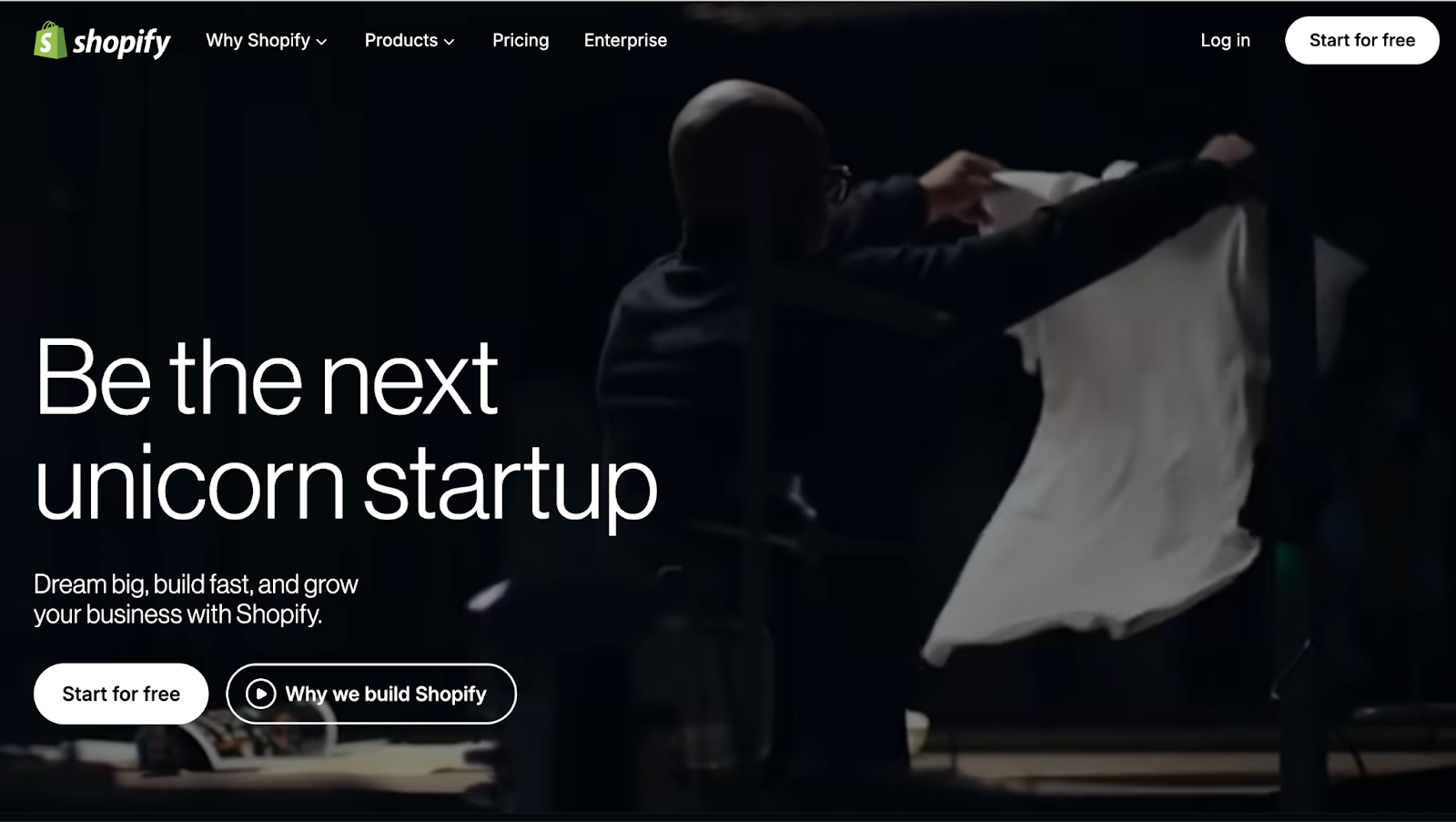
Shopify is the most widely used dedicated e-commerce platform, powering close to 30% of the top one million e-commerce sites and processing $378 billion in gross merchandise volume in fiscal 2025. There's a clear reason for it, it makes scaling your dropshipping business a breeze. As merchants grow beyond the basics, many also rely on white-label Shopify development partners to build custom functionality, streamline store operations, and launch new projects without expanding their internal development resources. Getting started with your online store on Shopify is quick. It lets you set up and go live within a day.
And let’s not forget to mention its massive library of plugins. You can find apps for fulfillment, marketing, analytics, and more. This also makes it quick to embed a wide range of functionality in your online store.
The tradeoff is the costs adding up. You must bear transaction fees if you don’t use Shopify Payments. The platform is easy to expand, but apps can inflate your budget. When your business depends on multiple third-party tools, there are going to be operational issues as well. A shipping delay, an inventory sync issue, or a checkout glitch can quickly turn into customer complaints and Shopify chargebacks if expectations are not set clearly.
Pros of dropshipping with Shopify:
- Set up your store and go live quickly with ease
- An ecosystem of over 16K apps to customize your store
- Built for scaling with ease
Who is it best for?
For those who want to move and grow fast.
2. WooCommerce: Best For Deep Customization And Long-Term Efficiency
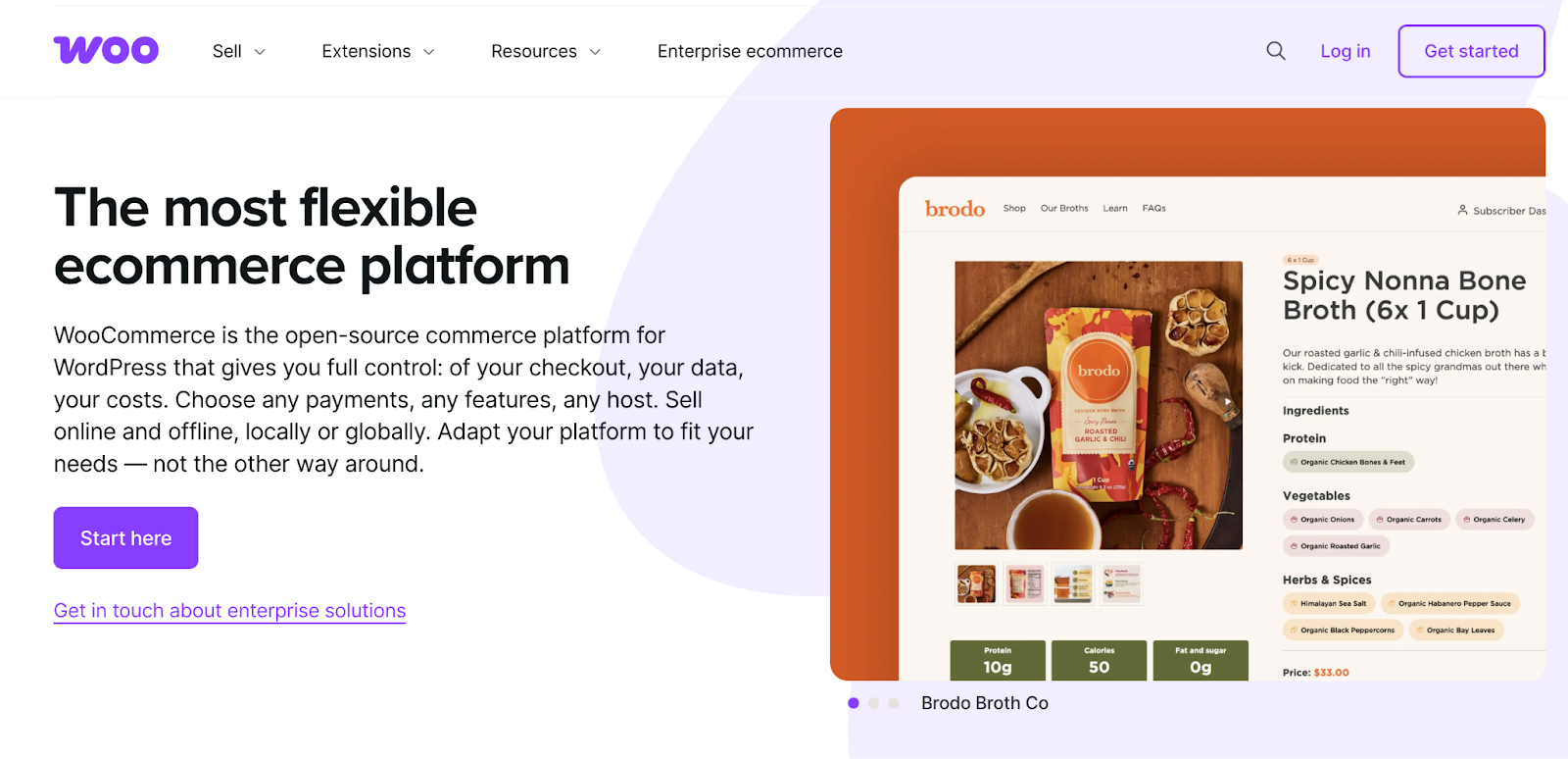
If you want to build a store according to your rules and don't want to deal with the platform limitations of other e-commerce platforms, then WooCommerce should be your choice. Combined with an AI ecommerce website builder, it can be as easy to set up as Shopify, while still giving you complete control over your store, including design, checkout process, and backend logic.
The flip side is that you carry all the maintenance yourself: hosting, SSL, security updates, plugin compatibility. Without someone technical on your team, or the budget to hire one, it gets unwieldy.
In dropshipping, that matters because fulfillment confusion or broken communication flows often show up later as disputes.
Pros of dropshipping with WooCommerce:
- Get strong SEO capabilities via WordPress
- You’re not locked in with the platform
- You can minimize costs over the long term if you manage well
Who is it best for?
For those who want to custom-create their online storefront and have a team to maintain it.
3. BigCommerce: Best E-Commerce Platform With Built-In Features
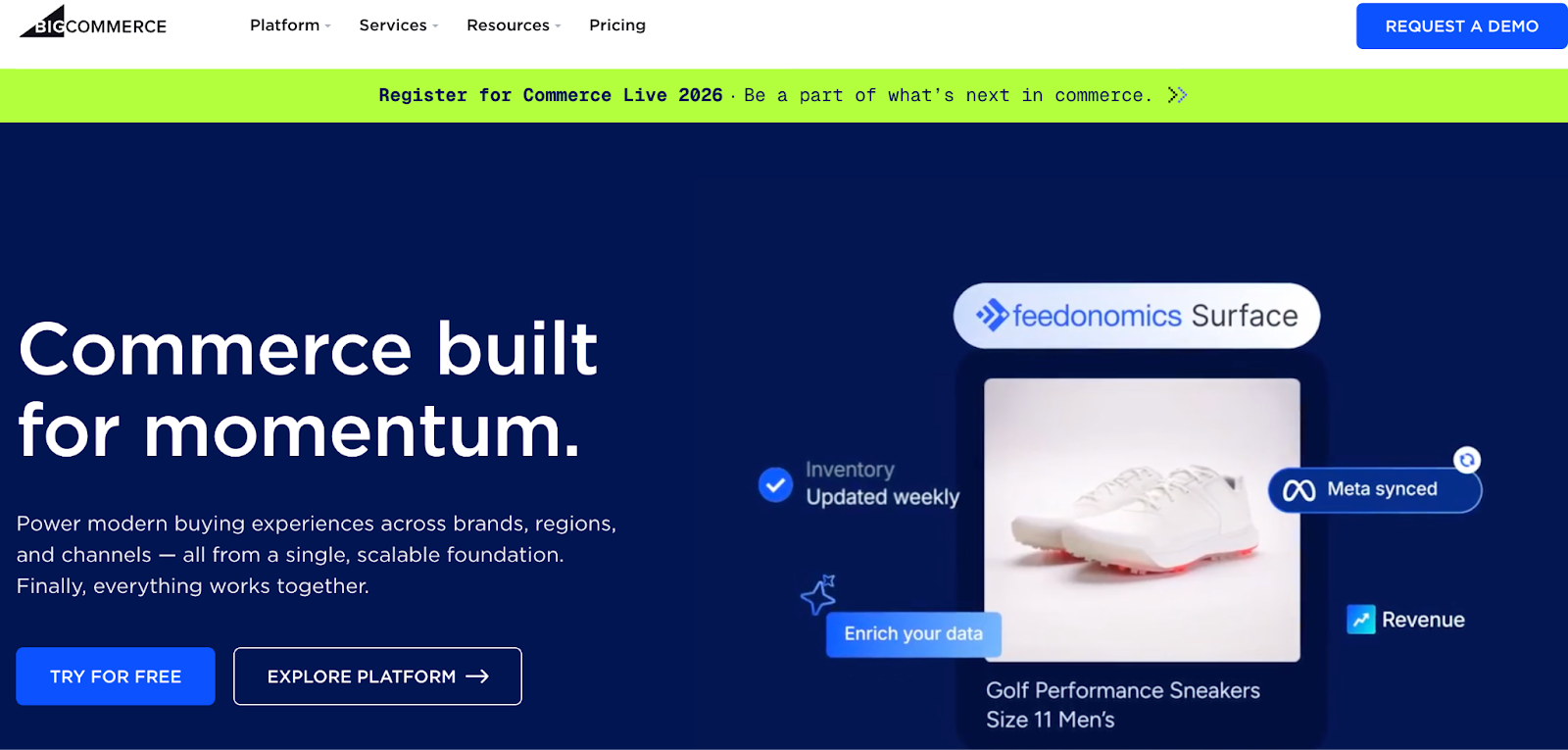
Shopify has apps, and WooCommerce lets you build with custom code. But BigCommerce has it all, built in. This means fewer integrations, dependencies, and lower incurred costs. It also supports more than 55 payment providers, which gives merchants flexibility without forcing extra platform penalties.
The app ecosystem is smaller than Shopify's, which can be a constraint depending on which integrations you need. The interface also has a steeper learning curve for newcomers.
For dropshipping at volume, the fee structure is the main reason merchants prefer this platform: route payments through an embedded provider like Stripe or PayPal and BigCommerce charges no extra fee at all, whereas Shopify's per-order fee adds up fast once you're processing hundreds of orders a week.
And because more of BigCommerce's functionality is native rather than plugin-dependent, there are fewer third-party failure points. It matters when you're trying to figure out why an order didn't route correctly or why a customer got double-charged.
Pros of dropshipping with BigCommerce:
- With more built-in features, there is less reliance on third-party integrations
- No added transaction fee when you use an embedded payment provider like Stripe or PayPal
- Fairly good SEO and performance capabilities
Who is it best for?
For those who want an all-encompassing e-commerce platform without reliance on integrations.
4. Magento (Adobe Commerce): Best for Enterprise-Level Customization and Control
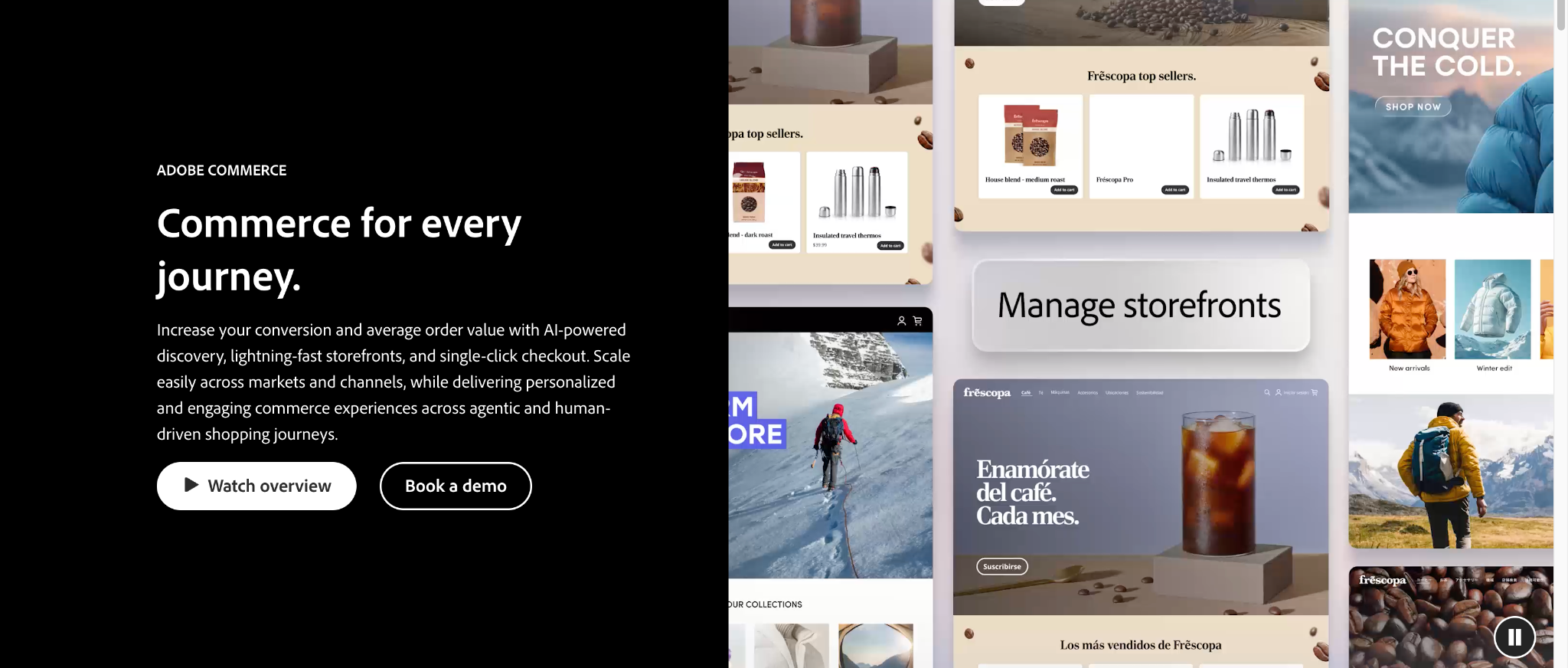
For merchants who have outgrown the guardrails of Shopify or WooCommerce, Magento, now Adobe Commerce, is where serious operations land. It gives you complete control over your storefront, backend logic, checkout flows, and fulfillment routing, without the ceiling that SaaS platforms eventually impose.
That flexibility comes with real infrastructure requirements. Magento is not a platform you deploy alone. You need a development team to build it, maintain it, and extend it. But for dropshipping operations running high SKU counts across multiple suppliers and regions, that investment pays off in ways simpler platforms can't match. Multi-store management, advanced inventory rules, and granular customer segmentation are all native, not add-ons.
The chargeback risk on Magento tends to concentrate around complexity. The more suppliers, checkout variations, and fulfillment paths you run, the more failure points exist. A misconfigured shipping rule or a broken order sync can trigger dispute volume before you catch it. At that scale, having automated chargeback management connected via your payment service provider, whether Stripe, PayPal, or Adyen, is less optional than it sounds.
Pros of dropshipping with Magento:
- Complete control over storefront, checkout, and backend logic
- Built for multi-store and multi-region operations
- No platform-imposed transaction fees or app dependencies
- Scales with catalog and order volume without hitting hard walls
Who is it best for?
Merchants already processing significant volume who need infrastructure that grows with them and a team to run it.
5. Agentforce Commerce (formerly Commerce Cloud): Best For Large-Scale Dropshipping Operations
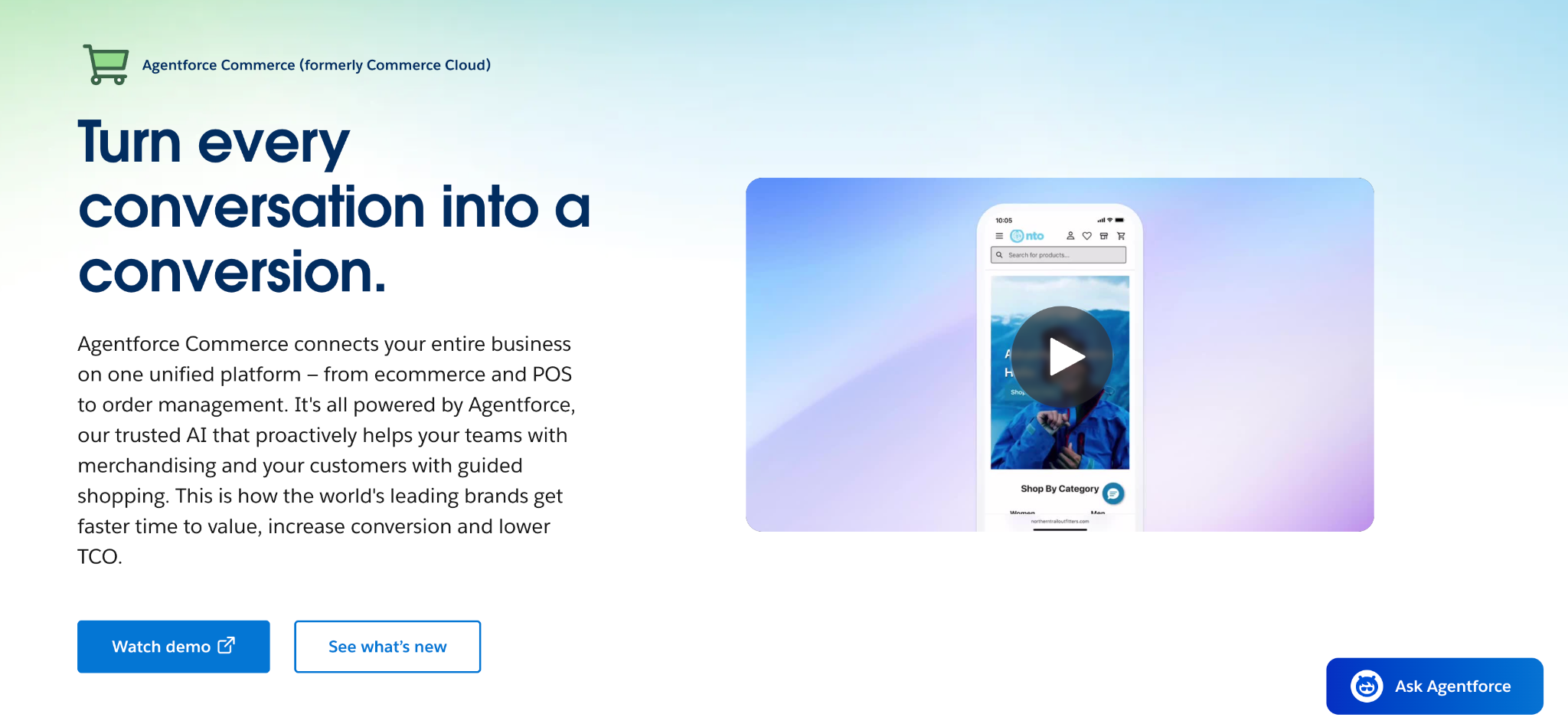
Salesforce Commerce Cloud, now rebranded Agentforce Commerce, is not where you start. It is where you end up when scale becomes the primary constraint. Used by major retailers managing thousands of SKUs across global markets, it brings enterprise-grade order management, native CRM integration, and AI-driven merchandising into a single platform.
For dropshipping at this level, the CRM integration is particularly valuable. When you're managing a large customer base across multiple suppliers and geographies, dispute patterns become data, and Salesforce gives you the infrastructure to act on that data before it becomes a chargeback problem. Customer history, order behavior, and fulfillment performance all live in one place.
The tradeoff is cost and implementation time. Agentforce Commerce requires significant upfront investment and an implementation partner. It is built for operations where the cost of platform limitations exceeds the cost of enterprise infrastructure, which is a real calculation at volume. As AI agents take on more of the merchandising and even the buying side of commerce, merchants on platforms built around agentic tooling should also understand how liability and evidence requirements shift; see this evidence playbook for agentic commerce chargebacks for what that looks like in practice.
Payment processing connects through supported gateways including Stripe and PayPal, which means chargeback management tools like Chargeflow integrate at the payment layer without requiring platform-level customization.
Pros of dropshipping with Agentforce Commerce:
- Enterprise order management built for high-volume, multi-supplier operations
- Native CRM integration for tracking customer behavior and dispute patterns
- AI-driven merchandising and personalization at scale
- Connects to chargeback management via supported payment processors
Who is it best for? Established dropshipping operations where scale, brand consistency, and operational automation are the priority over speed to launch.
Fulfilment Tools
These are not ecommerce platforms in the same sense as Shopify, WooCommerce, or BigCommerce. You'd use them alongside the core platforms. But for merchants doing print-on-demand dropshipping, they're worth trying.
6. Printify: Best Print-On-Demand Platform For Catalog Variety
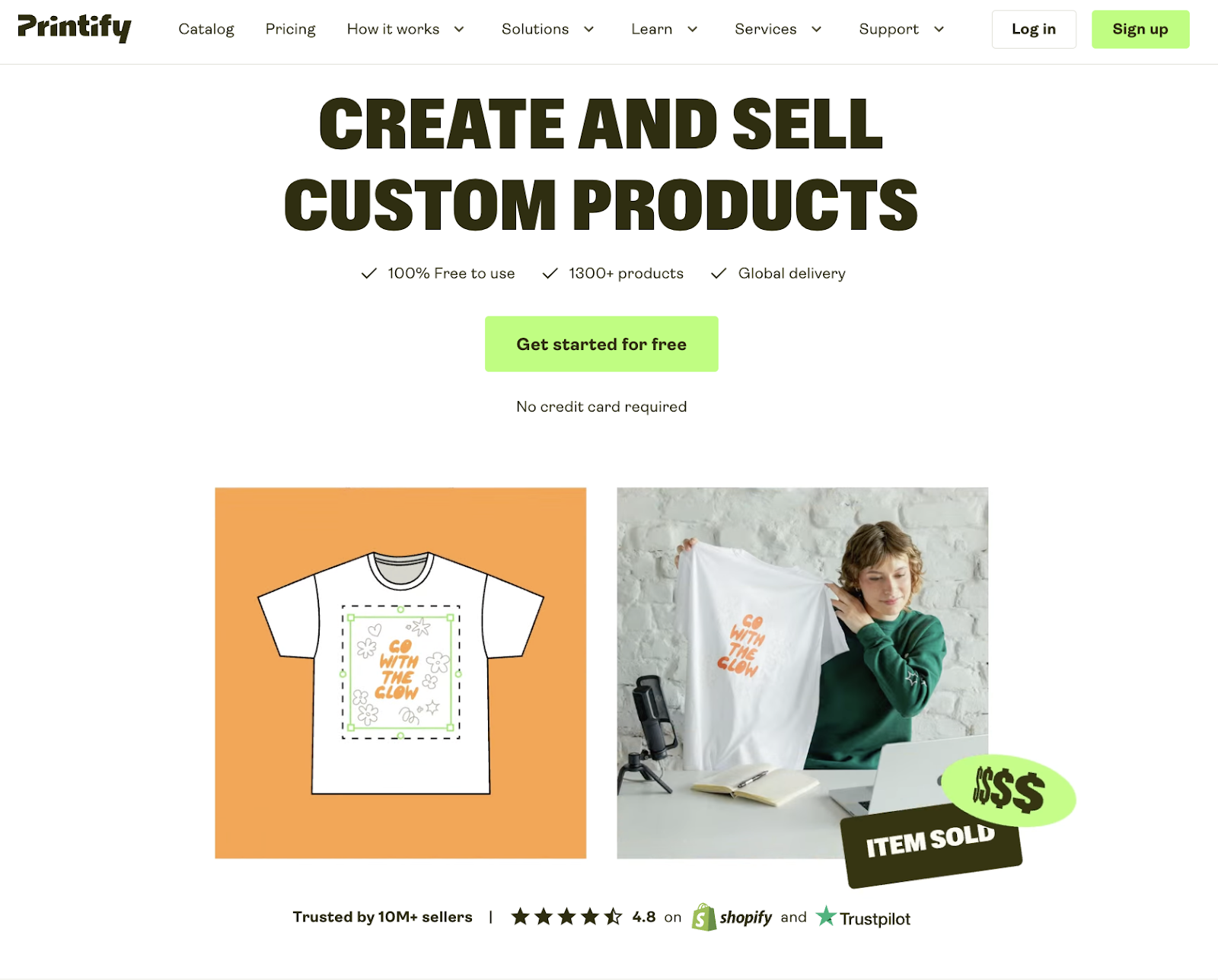
Printify is a strong starting point for print-on-demand dropshipping, with 1300+ products across apparel, home goods, and accessories that you can ship to over 209 countries and territories. It also has built-in tools to customize each product with your unique designs and even lets you compare print providers by price, location, and rating. This gives you room to test different products and profit margins as you learn.
Beginners to expert merchants making six-figure incomes love Printify for its supplier flexibility, which allows them to cap base prices, shipping times, and margins.
When you work across a network of providers, you'll need to actively manage margins and delivery times across vendors. If you skip quality checks, sample orders, and provider selection, you increase the odds of product mismatches or delivery issues. Vetting reputable dropshipping suppliers up front is one of the fastest ways to cut both.
Pros of dropshipping with Printify:
- Free to start with scalable pricing plans
- Handy tools like a Price Calculator and drag-and-drop Product Creator
- Control your margins better as opposed to single-supplier POD models
- Integrate with platforms like Shopify, BigCommerce, WooCommerce, and other platforms
Who is it best for?
Those who want a flexible platform to better design options, pricing, and margin control, and choose from countless suppliers as they scale.
7. Printful: Best Print-On-Demand Platform With Tools To Scale
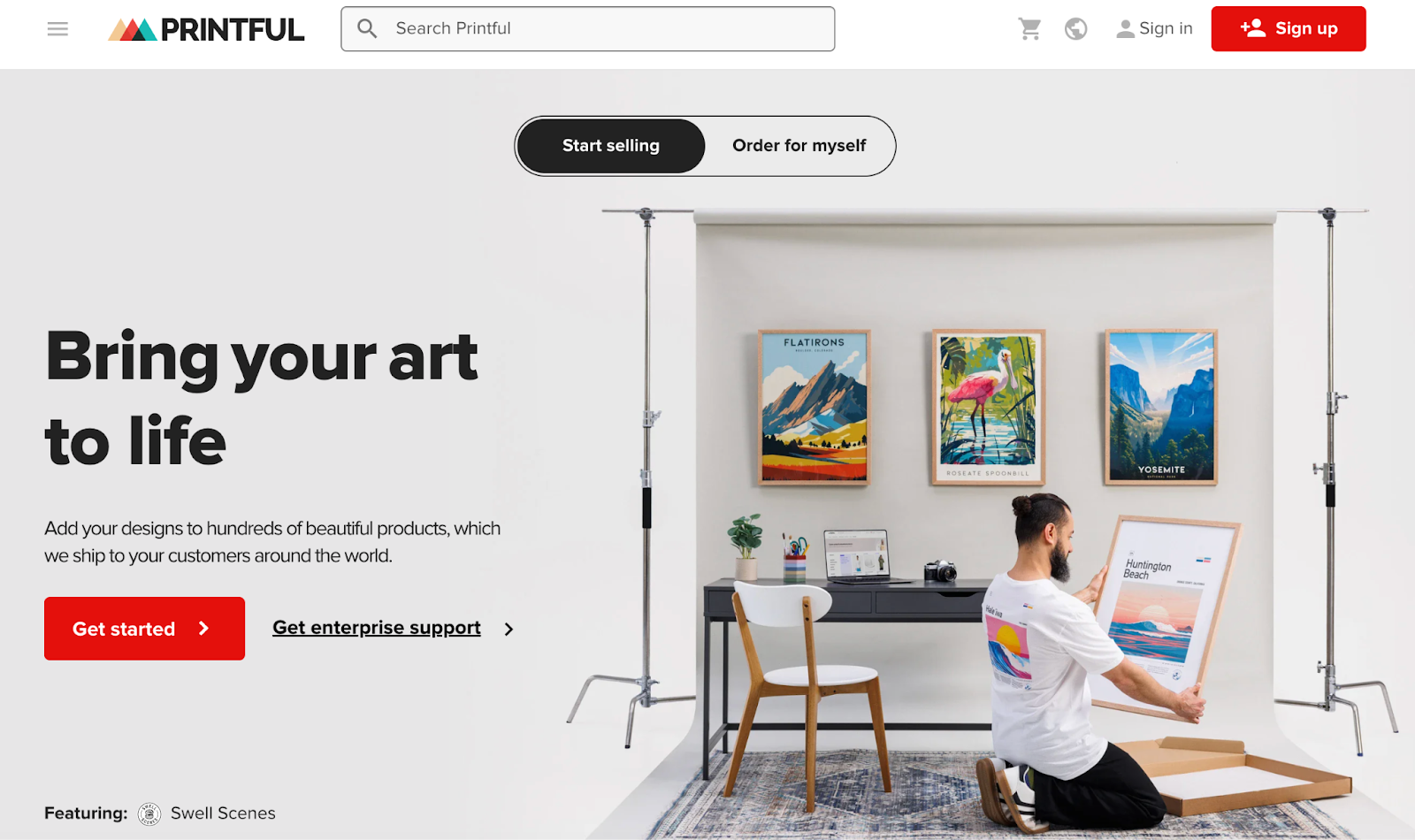
Printful is a compelling option for print-on-demand dropshipping, offering a free Design Maker where you can customize any item in its catalog, with Printful handling production, packaging, and fulfillment.
Printful boasts 99.76% order approval rate because, unlike many other print-on-demand providers that rely on third-party suppliers, all Printful products are made in-house. Users don’t need to compare multiple suppliers or worry about inconsistent results. So, no matter which item you choose to customize and sell, it's sure to impress your clients with its quality.
The catch here is flexibility, or lack of it. You get less room to compare suppliers, pricing, and production routes than you do with a broader supplier network. Printful can help reduce one common dropshipping problem and that is inconsistent output across suppliers. When fulfillment is more standardized, it becomes easier to set expectations around product quality, delivery, and packaging.
But it does not remove chargeback risk. If shipping times, product expectations, or delivery communication are weak, customers can still dispute the order.
Pros of dropshipping with Printful:
- Build a strong brand with inside neck labels and packaging inserts
- Create unique products with custom color embroidery and DTFlex printing
- Connect with major e-commerce platforms and marketplaces
- Get transparent shipping costs and bulk discounts
Who is it best for?
Those who want to focus on learning how to design products, set prices, and promote their store without worrying about the production side.
8. Podbase: Best Print-On-Demand Platform For Tech Accessories And Wall Art
Podbase is a strong print-on-demand option for sellers who want to move beyond standard apparel and build a more focused store around custom tech accessories, wall art, and lifestyle products. Its catalog includes 300+ products, including phone cases, laptop sleeves, desk mats, posters, mugs, MacBook covers, and other custom products. Sellers can create and test designs without buying inventory upfront, while Podbase handles printing, packing, fulfillment, and global shipping after each order.
It is especially useful for merchants who want a low-risk way to sell higher-perceived-value products in categories that are less dependent on basic T-shirts and apparel. Podbase is free to start, has no monthly fees, and offers 24-hour fulfillment, making it a practical option for creators who want to keep operations lean while testing niche products.
Podbase also connects with major store platforms like Shopify, Etsy, and WooCommerce, so sellers can add designs, publish products, and let Podbase manage the production and shipping side of the order.
Pros of dropshipping with Podbase:
- Free to start with no monthly fees
- Strong focus on custom tech accessories and wall art
- 300+ customizable print-on-demand products
- 24-hour fulfillment and global shipping
- No inventory or fulfillment management required
- Connects with Shopify, Etsy, and WooCommerce
Who is it best for?
Those who want to build a more niche print-on-demand store around custom tech accessories, wall art, and premium-looking products without managing inventory, production, or shipping themselves.
Common Dropshipping Risks
Dropshipping merchants face higher dispute rates than most e-commerce models, no matter which platform they build on. That's because the structure of the business itself creates conditions that banks and card networks treat as higher risk:
- Shipping delays: when a supplier misses a delivery window and a customer no longer recognizes a charge from weeks ago, a dispute is the likely outcome. Dropshipped orders typically travel further and through more handoffs than orders fulfilled from a merchant's own warehouse, which stretches delivery windows and the odds of an "item not received" claim.
- Product mismatches: if the item a customer receives looks different from the product photo, they'll often dispute the charge rather than request a return.
- Impulse purchases: dropshipping stores, particularly those running aggressive paid social, attract impulse buyers. A meaningful percentage of those buyers will forget the purchase or regret it and go straight to their bank instead of contacting you.
- Friendly fraud: some customers dispute legitimate charges, knowing that smaller merchants often don't have the documentation or time to fight back. This isn't a fringe issue: 72% of merchants reported a rise in friendly fraud in 2024, and it now accounts for an estimated 75% of e-commerce disputes overall.
- Supplier and buyer scams: not every risk originates with card networks — fraudulent suppliers, fake reviews, and other dropshipping scams can quietly drain margins long before a chargeback is ever filed.
The platforms we've discussed don't provide direct help with the dispute response process itself, and none of them monitor for disputes before they escalate. Catching a case early through chargeback alerts, following a broader ecommerce fraud prevention approach, and automating the evidence-gathering and response process are the kind of operational layer that prevents recoverable revenue from being written off as a dropshipping business scales.
Choosing the Right eCommerce Platform for Dropshipping: FAQs
What is the best ecommerce platform for dropshipping?
There isn't one universal answer, it depends on your scale and priorities. Shopify is the strongest choice for merchants who want to launch quickly and access the largest app ecosystem. WooCommerce and BigCommerce fit merchants who want more control or lower transaction fees. Magento and Agentforce Commerce are built for high-volume, multi-supplier operations that have outgrown SaaS platforms.
Adobe Commerce (Magento) vs Shopify for dropshipping: which should I choose?
Shopify is faster to launch and requires no development team, making it the better fit for most dropshipping stores. Adobe Commerce (Magento) makes sense once you're running high SKU counts across multiple suppliers and regions and need native multi-store management, advanced inventory rules, and customer segmentation that Shopify's app-based model can't match, but it requires a development team to build and maintain.
What is a "dropshipping cloud" platform?
The term generally refers to any web-based, subscription-model dropshipping software, ecommerce platforms like Shopify and BigCommerce, or fulfillment tools like Printify and Printful, that runs entirely in the browser with no local installation. It's a description of the delivery model (cloud-hosted, accessible from anywhere) rather than a single specific product.
Does my choice of ecommerce platform affect my chargeback risk?
Yes, indirectly. The platform itself doesn't cause chargebacks, but it shapes how many failure points exist: third-party app dependencies, fulfillment sync issues, and checkout glitches all create openings for disputes. No platform on this list automatically resolves chargebacks for you; that requires a separate layer like Chargeflow.
Are dropshipping stores more likely to face chargebacks than other online stores?
Generally yes. Dropshipping adds handoffs a typical retail order doesn't have, a supplier fulfills the order and a separate carrier ships it, often over a longer and less predictable timeline, which raises the odds of "item not received" and product-mismatch disputes. Layer on top of that a fraud landscape where friendly fraud alone drives an estimated 75% of e-commerce disputes, and it's clear why platform choice and dispute-handling strategy need to be part of the same decision.
Matching the Platform to Where You Are Now
You now have 8 options for your dropshipping store, and picking the right one comes down to how you plan to operate, not which platform has the flashiest feature list.
Shopify and BigCommerce suit merchants who want to scale with a feature-rich foundation. WooCommerce is for those who want complete control over every layer of their store. For operations already processing at volume, Magento and Agentforce Commerce provide the infrastructure that enterprise-scale dropshipping demands. And for merchants running print-on-demand, Printify gives you supplier flexibility and margin control, Printful delivers consistency and brand quality at the fulfillment level, and Podbase offers a focused option if you want to specialize in tech accessories and wall art.
But the platform is only part of the equation. Shipping delays, product mismatches, and impulse purchases all drive chargeback risk, and none of the platforms above solve that for you. Tools like Chargeflow fill that gap, automating dispute handling so you recover lost revenue without adding operational overhead.
The right platform gets you started. The right systems keep you scaling.
Chargebacks?
No longer your problem.
Recover 4x more chargebacks and prevent up to 90% of incoming ones, powered by AI and a global network of 20,000 merchants.


.png)
.webp)
.webp)
.webp)