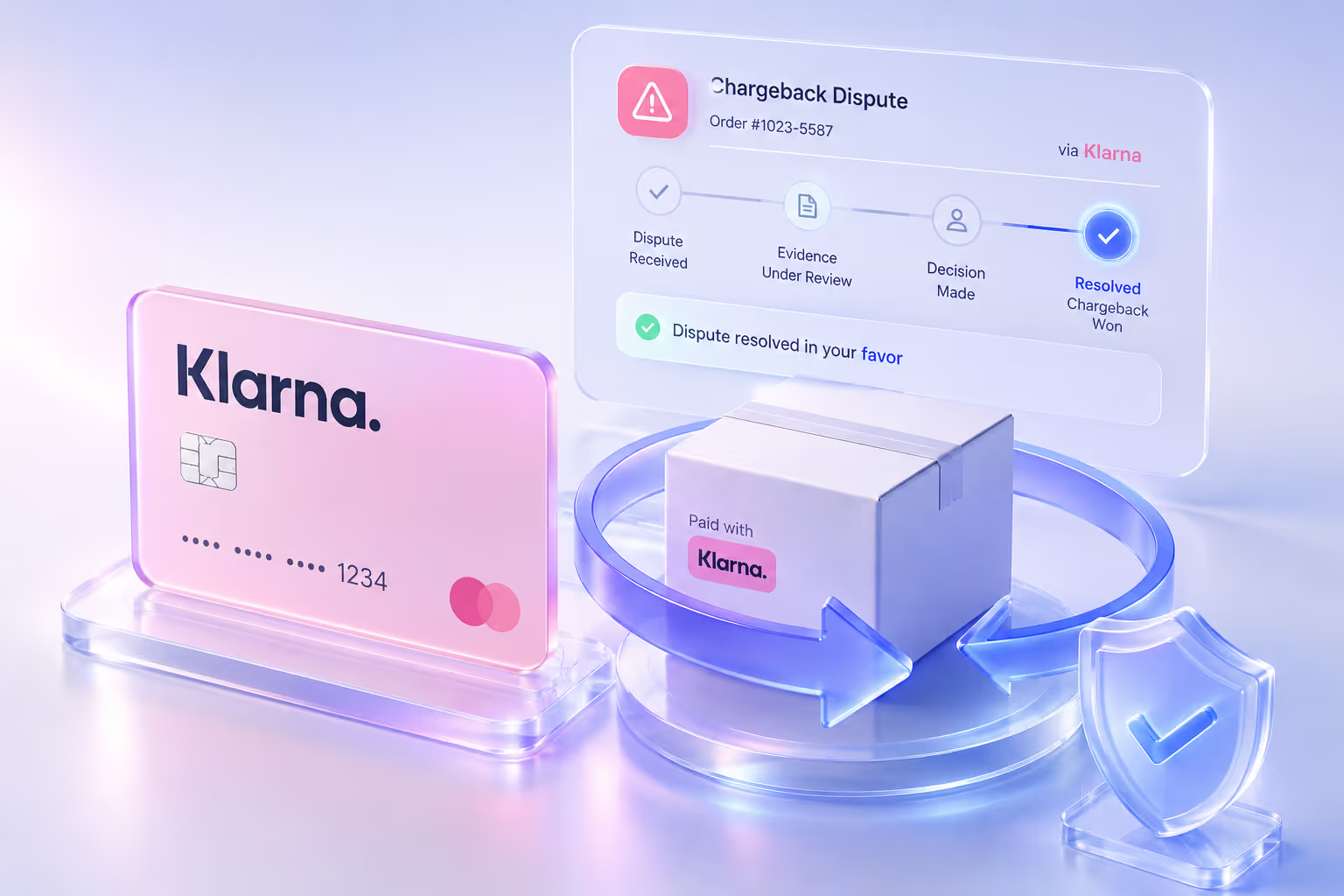
%201.svg)




































Billing Disputes: What They Are and How to Resolve Them (Insider Secrets for Merchants)
Chargebacks?
No longer your problem.
Recover 4x more chargebacks and prevent up to 90% of incoming ones, powered by AI and a global network of 20,000 merchants.


 600+ reviews
TL;DR:
- Identify the billing issue and current dispute stage first.
- Reconcile authorization, capture, cancellation, and refund records.
- Use service-specific early resolution only for eligible events.
- Correct recurring billing failures without assuming every complaint is fraud.


A billing dispute is a disagreement about a charge, such as an incorrect amount, duplicate payment, canceled subscription, or missing credit. It may be handled through customer support, an issuer inquiry, an early resolution service, or a formal chargeback, depending on the current stage.
Classify the Billing Issue Before Taking Action
A billing complaint is not proof of fraud. Begin by comparing the customer’s statement with the actual authorization, capture, invoice, cancellation, and refund records. A temporary authorization hold can look like an extra charge even when there is only one completed payment.
| Complaint | First Record to Check | Useful Next Step |
|---|---|---|
| Duplicate charge | Payment IDs and authorization/capture status | Distinguish separate sales, duplicate captures, and temporary holds |
| Wrong amount | Agreed price, taxes, tips, currency, and captured amount | Explain or correct the exact difference |
| Unrecognized charge | Descriptor, receipt, purchase date, and account history | Help identify the purchase without dismissing possible unauthorized use |
| Canceled subscription | Request, effective cancellation, and billing dates | Check whether billing continued after cancellation took effect |
| Missing refund | Refund reference, amount, and status | Investigate pending or failed credits |
| Service not provided | Agreed scope, dates, and fulfillment records | Resolve the service issue or prepare relevant evidence |
The Stripe dispute-category documentation shows how billing-related complaints map to different claims. A single generic rebuttal cannot address all of them.
Check Whether a Formal Case Exists
- Identify whether the customer contacted support, the issuer opened an inquiry, an alert arrived, or a chargeback was filed.
- Match the payment and any existing credits.
- Assign one owner for the next action and its deadline.
- Use the resolution process appropriate to that stage.
- Confirm the financial action or evidence submission and record the result.
Read cardholder dispute stages and refund versus chargeback handling when the case status is unclear. An open dispute may restrict a separate refund, so do not issue another credit without checking the provider’s instructions.
Use Early Resolution Where the Event Qualifies
Eligible services can resolve complaints before formal chargebacks. Verifi distinguishes merchant-initiated CDRN resolution from rule-based RDR resolution. Ethoca Alerts require the appropriate merchant action and outcome reporting. See Verifi’s resolution documentation and Ethoca’s alert FAQ.
Coverage and timing depend on the service and event. Do not assume every complaint enters an alert program, every network uses one window, or every early resolution is excluded from every monitoring metric. The alert workflow guide explains the operational checks.
Adapt the Review to Your Business Model
Subscriptions
Connect the signup offer, billing frequency, trial conversion, renewal, cancellation request, and effective end date. Account use after cancellation does not independently prove that another renewal was authorized.
Travel and Services
Compare the booking terms with the service delivered, agreed changes, deposits, and additional charges. Preserve the customer’s agreement to an amendment; an internal note alone does not establish acceptance.
Digital Goods
Match the invoice to the entitlement and investigate failed access. A billing correction and a technical access fix may both be needed. Use the non-receipt guide when the complaint concerns unavailable service.
Retail
Reconcile split shipments, returns, discounts, and partial refunds. If the product itself differed from the offer, use the not-as-described evidence guide rather than treating the case as a pricing error.
Communicate a Specific Resolution
State what you found, the action taken, the amount affected, and the current status. A refund promise should be followed by confirmation that the credit succeeded. Do not say a pending refund is completed or promise a universal posting time.
For an issuer response, provide the relevant records and a brief explanation. Use consistent evidence records to keep payment, invoice, and support references connected.
Measure the Source of Repeat Complaints
Track issues by billing flow, product, payment method, and resolution type. Separate genuine billing errors from unresolved causes and suspected misuse. Correct the workflow producing the complaint before adding broad restrictions.
Use prevention controls for recurring problems. If eligible early resolution is your next improvement, explore Chargeflow Alerts.
Frequently Asked Questions
Is every billing dispute a chargeback?
A billing dispute can begin as a customer service issue or issuer inquiry. A formal card chargeback is a specific payment-dispute process with its own status and response requirements.
Does a billing dispute prove fraud?
A billing dispute does not prove fraud. Incorrect amounts, duplicate captures, confusing descriptors, and failed refunds can create legitimate complaints.
What should I send for a duplicate-charge dispute?
Compare the exact payment IDs, amounts, capture statuses, and orders. Explain whether the entries represent separate purchases, a temporary hold, or an actual duplicate payment.
Can a customer dispute an authorized payment?
An authorized payment may still be disputed for issues such as non-delivery, incorrect billing, or a missing credit. Authorization does not resolve every contractual or fulfillment complaint.
Chargebacks?
No longer your problem.
Recover 4x more chargebacks and prevent up to 90% of incoming ones, powered by AI and a global network of 20,000 merchants.


.png)