












Chargeback Reason Analysis: Turn Categories Into an Action Queue


Chargebacks?
No longer your problem.
Recover 4x more chargebacks and prevent up to 90% of incoming ones, powered by AI and a global network of 20,000+ merchants.


 600+ reviews


TL;DR:
- A chargeback reason is the claim that started the dispute; source records show the real cause.
- Pick one reason, sample several cases and write down an alternative explanation before naming a cause.
- Mark each case confirmed, plausible or unresolved, and count only confirmed cases as a cause.
- Dispute share is not a dispute rate; a rate needs a matching order or transaction denominator.
- Give every finding an owner, a specific change and a follow-up date on a comparable cohort.
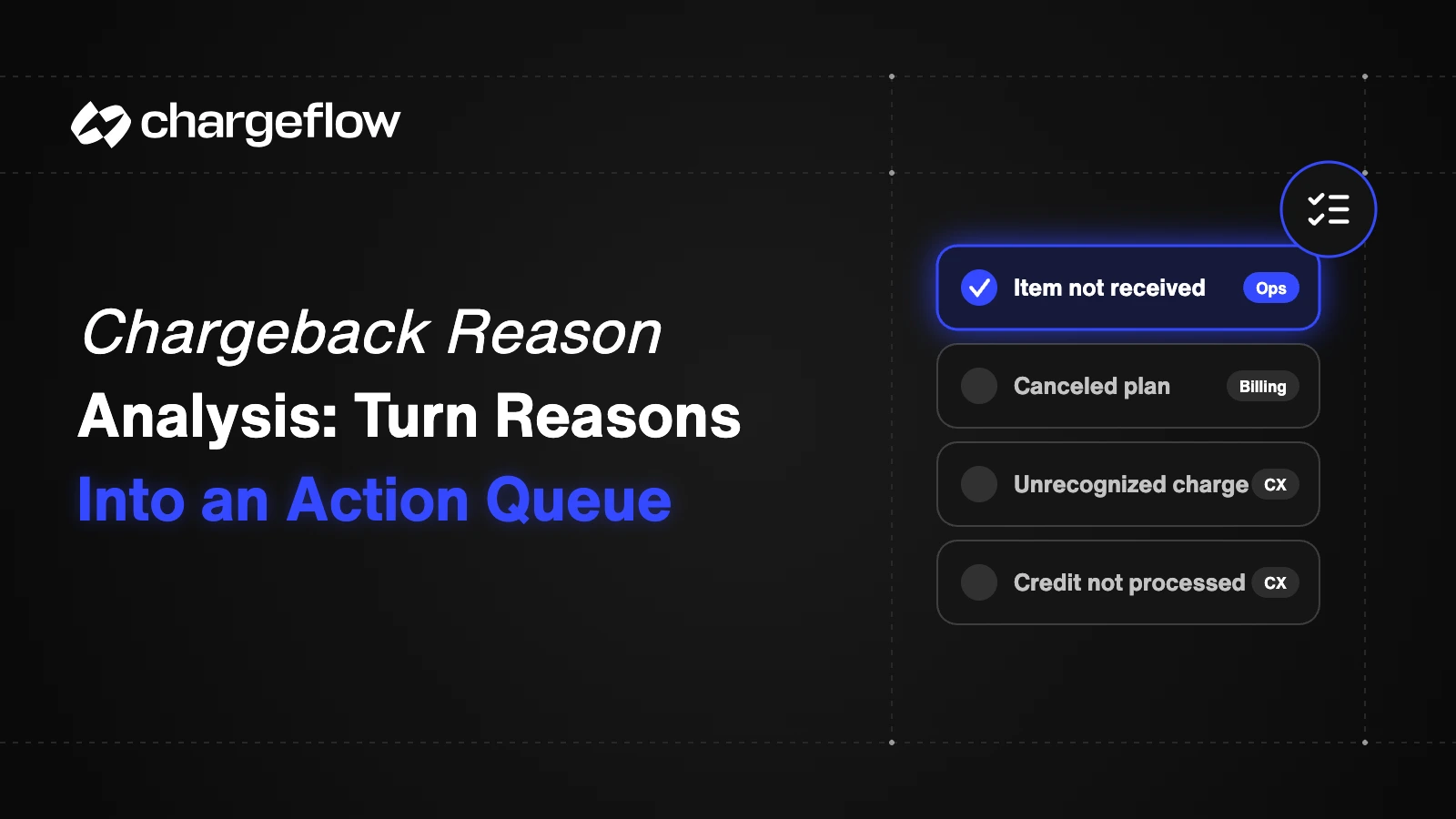
Chargeback reason analysis turns a reason report into a short list of real problems, each with an owner. Use categories to find a theme, reasons to pick a case sample, and source records to test what happened. A reason is the claim that started the dispute. It does not prove fraud or a merchant mistake.
This guide is for payments, CX, billing and operations teams. The goal is to leave each review with an action queue: what to inspect, who owns the next step and how you will judge the change.
{{cta}}
What Does a Chargeback Reason Actually Tell You?
A reason tells you what the cardholder or issuer claimed. It does not tell you why it happened. Keep three layers apart:
In Chargeflow Insights, category and reason breakdowns show how disputes are spread. A broad category shows where to look. A specific reason helps you pick records. Labels differ by processor and network, so keep the source wording next to any shared category. For reason-code basics, see the common chargeback reason codes guide.
Why Do Teams Disagree About the Cause?
Each team reads a different record. In a 2026 survey of 121 US and UK enterprises, risk leaders ranked friendly fraud the top cause of rising chargebacks, while finance leaders ranked it last of five. 43% of respondents believed friendly fraud is more than a quarter of their chargebacks. These are beliefs, not measured case counts.
Source: Juniper Research and Chargeflow, The State of Chargeback Management, September 2026.
That is why a reason review needs a confidence status on each case before anyone counts a cause. See how finance and risk teams rank friendly fraud for a shared review method.
How Do You Choose a Case Sample?
Start with one reason that has real volume, value or an urgent operational concern. Record the account and store scope, dispute creation period, extraction date and statuses included. A reason with many new open cases needs a different review from one with settled losses.
- Review several cases, not only the most memorable loss.
- Include contrasting outcomes where records exist.
- Write down an alternative explanation, such as product mix, a delivery incident, a billing migration or inconsistent reason mapping.
Example (hypothetical): a merchant sees 24 item-not-received claims in one month. Sixteen involve one carrier disruption and eight concern other shipments. The report shows a theme, but only shipping records prove the sixteen share one incident. Calling all 24 customer abuse would hide a real operations problem.
How Should Seasonal Reason Mix Change Your Review?
Peak season shifts the reason mix fast. Chargeflow Data Lab's 2025 Black Friday and Cyber Monday comparison followed 3,470 matched merchant accounts. Item not received rose from 19.9% to 34.7% of disputes, a 14.8-point shift.
Source: Chargeflow Data Lab, peak season Part 1. These are shares of disputes, not the chance an order was disputed.
So after peak season, review delivery claims first: check tracking and delivery records, assign a fulfillment owner, then check the next comparable cohort. See item-not-received chargebacks after Black Friday for the evidence to collect.
How Do You Turn Reasons Into an Action Queue?
Copy this matrix into your team review. The rows show possible investigations, not findings about your store.
A row is ready when it names a record-backed problem, an owner, a specific change and a follow-up date. "Improve fraud prevention" is too broad to assign. For subscription reasons, see subscription dispute analytics.
Record Confidence Before Counting a Cause as Confirmed
Give each reviewed case a status before you roll the sample into a root-cause claim. Keep the source reason separate from the reviewer's explanation.
If only two of five sampled cases have complete records, report two confirmed and three needing review. Do not call all five proof of the suspected failure, and do not stretch a small sample to the whole category.
Is Dispute Share the Same as a Dispute Rate?
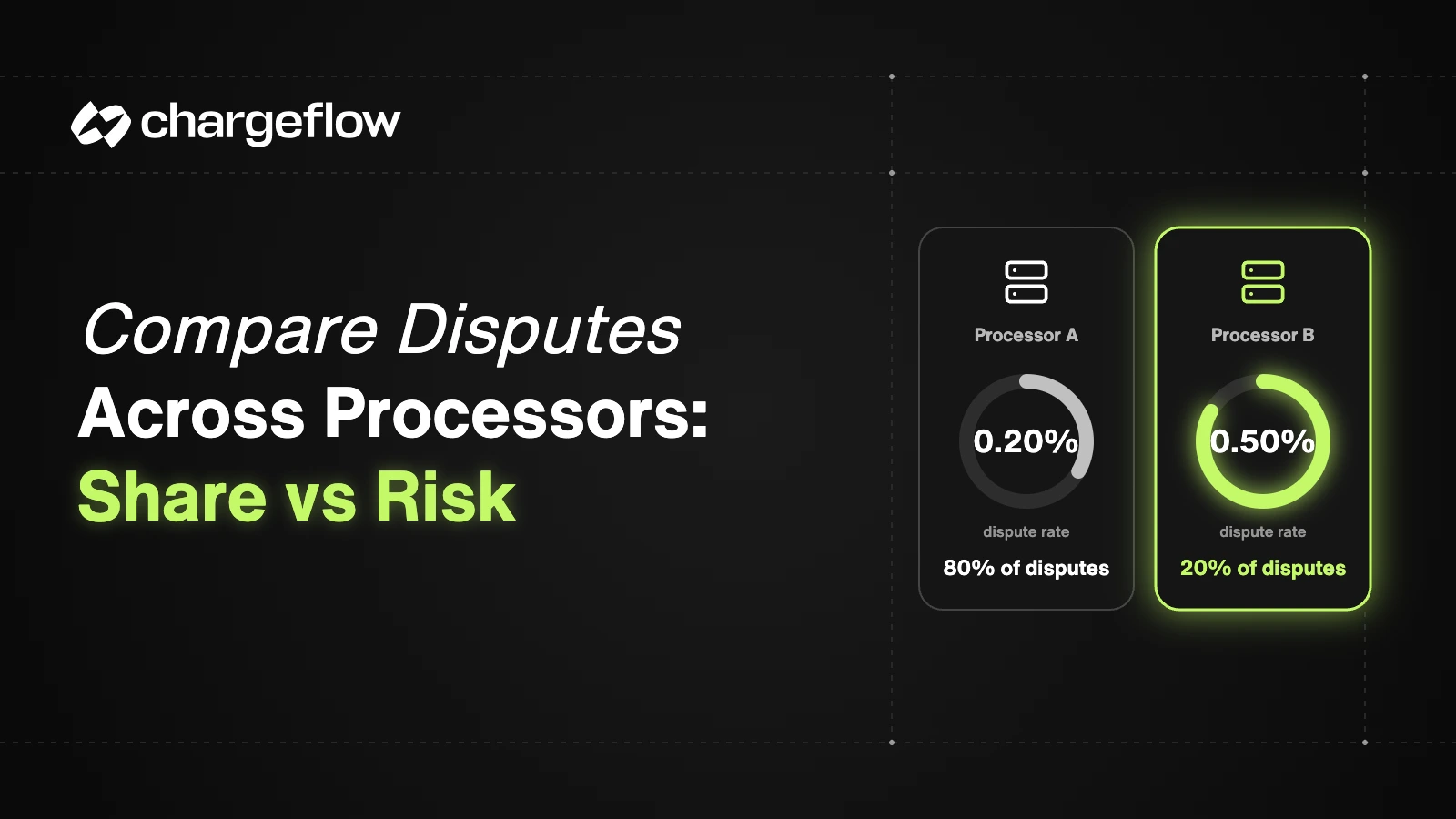
No. If item not received is 40 of 100 disputes, its share is 40%. That is not a 40% non-receipt rate across orders. A rate needs an order or transaction denominator with the same account scope and date rules.
10,000 → 5,000 orders in the review cohort | 40 → 30 disputes, so the count fell | 0.4% → 0.6% disputes per order, so the ratio rose |
In this hypothetical, the dispute count improved but the ratio got worse because sales fell. If you lack matching denominators, report a distribution finding and say so. For ratio math, see chargeback ratio.
Where Should Each Finding Go?
- A case that needs a response goes to the dispute-response owner.
- A recurring billing or delivery problem goes to the team that runs that process.
- A repeat-identifier signal may justify a reviewed prevention decision. See how to stop repeat chargeback abuse.
Analytics alone does not submit evidence, cancel an order or prove intent. Use the report to ground the review, then use the right workflow for the action.
How Do You Know the Fix Worked?
At follow-up, first confirm the change was actually made. Then compare a later cohort with the original one and note any change in sales, products, stores, processors and open cases. A control added mid-month did not run for the whole month.
Review count and value together. One large loss can dominate dollars while many small cases dominate count. See high-value chargeback loss analysis. For processor comparisons, see comparing disputes across processors. The chargeback analytics guide covers recovery and workload metrics.
Build a Reason Review Your Team Can Act On
End each review with one decision per row: keep the change, revise it, investigate further or close it with evidence. Chargeflow Insights breaks disputes down by category, reason, processor and outcome, so the review starts from one view.
{{cta}}
Frequently Asked Questions
Does a fraud reason prove the customer committed fraud?
No. It is a reported claim. Confirm what the case records support before you label a case intentional fraud.
Should we focus on the largest reason category?
Weigh count, value, urgency and whether a team can investigate a specific problem. A smaller category with a verified failure may give a clearer next action.
Can we compare reason names across processors?
Only after checking definitions and mappings. Keep the original source reason so a normalized label does not hide differences.
How do we know a corrective action worked?
Confirm it was implemented, then review a later cohort with comparable exposure and scope. Treat the result as an association unless you can rule out other changes.
What should the final action queue contain?
A signal, supporting records, an alternative explanation, an owner, a specific change and a review date.
Sources
- Chargeflow Data Lab: Black Friday chargebacks, peak season Part 1
- Juniper Research and Chargeflow: The State of Chargeback Management, 2026
- Shopify Help Center: chargeback monitoring
The matrix, status table and examples are Chargeflow editorial guidance with hypothetical numbers, not customer results.
Turn Dispute Reasons Into Owned Actions
Use Chargeflow Insights to break disputes down by reason and find the fixes your team can own. Free forever.
Chargebacks?
No longer your problem.
Recover 4x more chargebacks and prevent up to 90% of incoming ones, powered by AI and a global network of 20,000 merchants.