























%201.svg)


































What Should I Do When a Bank Requests More Evidence?
Chargebacks?
No longer your problem.
Recover 4x more chargebacks and prevent up to 90% of incoming ones, powered by AI and a global network of 15,000 merchants.


 600+ reviews
bank asking for more evidence means your first submission was not enough. You usually have one short window to respond, and what you send next often decides the outcome.
Short Answer
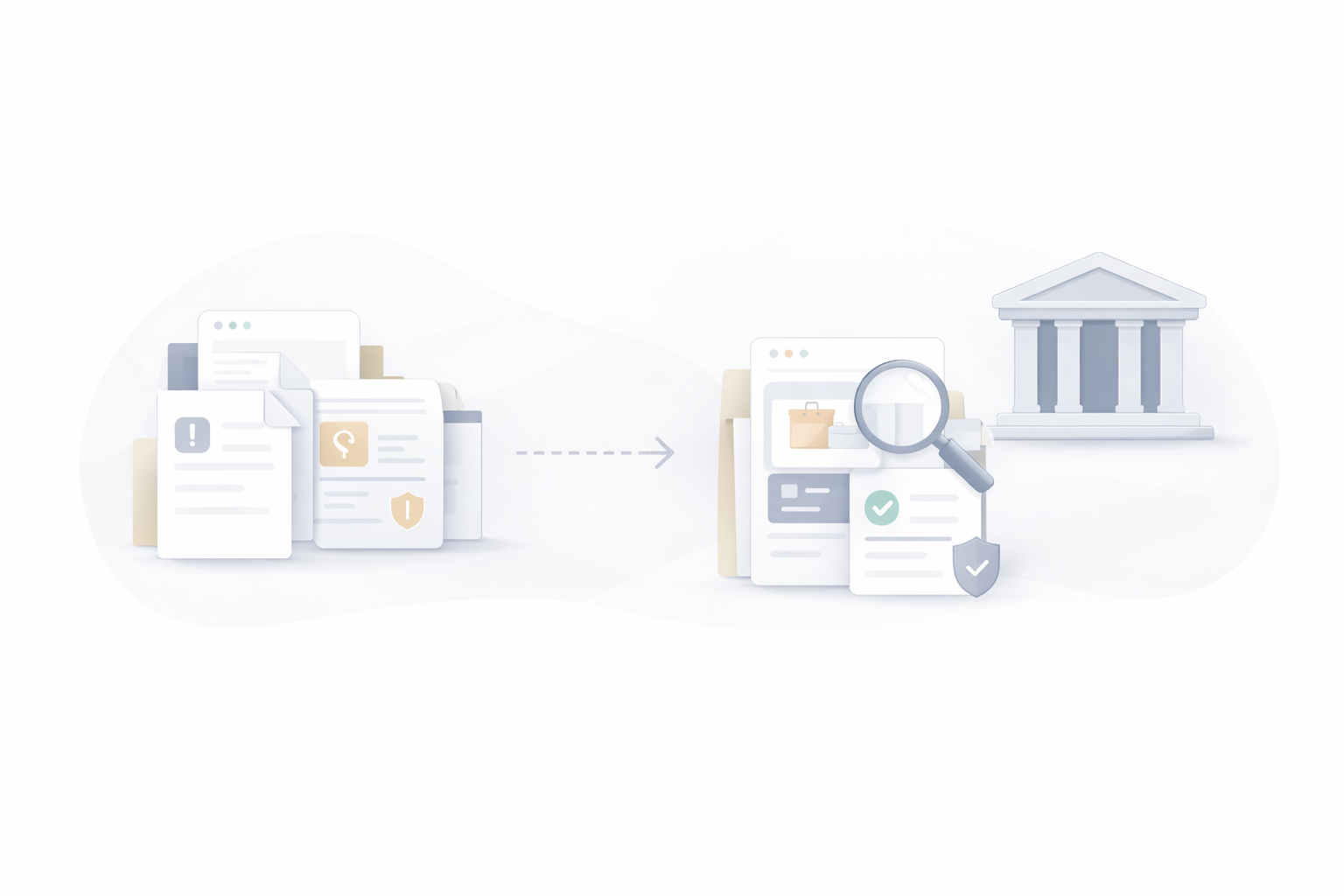
When a bank requests more evidence, respond fast and submit tighter, clearer proof that directly addresses the dispute reason. Do not resend the same documents. Banks escalate these cases because something was missing, unclear, or did not match their requirements.
Steps to Solve the Problem
- Check the exact reason for the request
Look at the dispute reason code and the bank note. Banks ask for more evidence when what you sent did not answer their core question. - Identify what was missing the first time
Common gaps include missing screenshots, unclear timelines, no proof of customer acknowledgment, or evidence that does not match the purchase date. - Replace weak evidence, do not repeat it
If tracking was rejected, add delivery confirmation and address match. If product pages were unclear, add archived screenshots from the purchase date. - Tighten your narrative
Banks scan fast. Use evidence that tells a clean story from purchase to fulfillment to resolution. Less volume, more relevance. - Respect the deadline
Follow-up evidence windows are short. Miss it, and the dispute is usually lost by default. - Automate second-round submissions
Chargeflow Automation helps ensure follow-up evidence is formatted correctly, submitted on time, and aligned with bank expectations.
Platform or Use Case Variations
Stripe: Evidence requests often mean the first submission failed issuer checks. Focus on clarity and date matching.
PayPal: Banks may request buyer communication or refund confirmation specifically.
Subscriptions: Renewal confirmation and cancellation policy visibility matter most.
Evidence Needed
What banks typically expect depends on the dispute type, but often includes:
• Clarified proof of delivery or service
• Archived product page or policy screenshots
• Customer communication logs
• Proof of customer acknowledgment
• A clear timeline tying all evidence together
Why This Happens
Banks request more evidence when the first submission leaves room for doubt. If the story is incomplete or subjective, the issuer pushes the burden back to the merchant.
When banks ask for more evidence, fast, focused follow-ups backed by Chargeflow help merchants
Chargebacks?
No longer your problem.
Recover 4x more chargebacks and prevent up to 90% of incoming ones, powered by AI and a global network of 15,000 merchants.


.png)
More articles.
Questions?
we’ve got answers.
Chargeflow collects data from dozens of third party signals, not just transaction data like Stripe Dispute does. This allows for much more coverage and much better win rates because the evidence submitted is much more comprehensive and compelling..
Chargeflow collects data like order info, customer messages, and payment details. It builds a full dispute case for you, so you don’t have to lift a finger.
Yes! Chargeflow works with many processors — not just Stripe. That means one tool for all your chargebacks, no matter how you process payments.
You only pay a percentage of the revenue we help you recover. No upfront fees, no subscriptions — just success-based pricing.
Yes. Chargeflow is SOC 2, GDPR, and ISO certified. We use top security standards to keep your data safe.
need more help?
Have a question? We’re here to help. Just hit the chat button to initiate a conversation with support.


